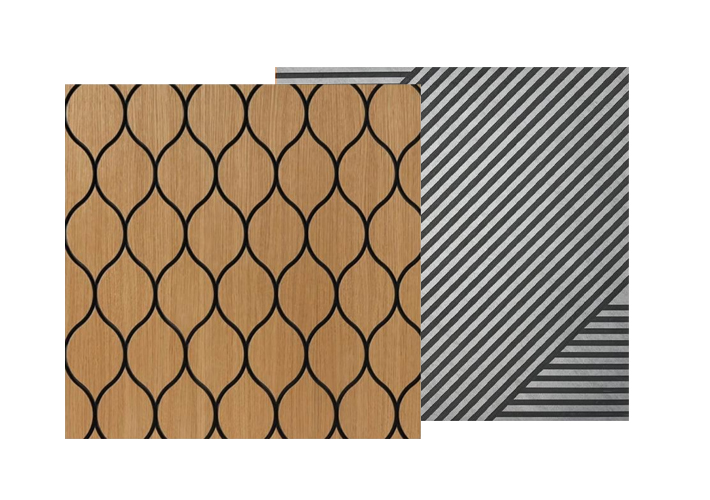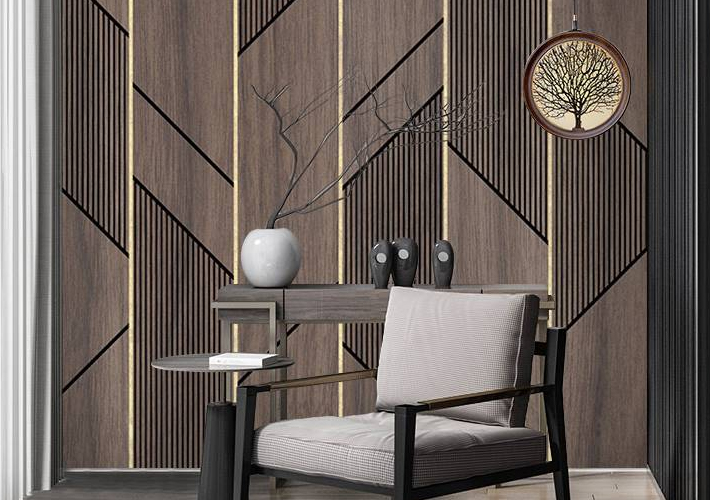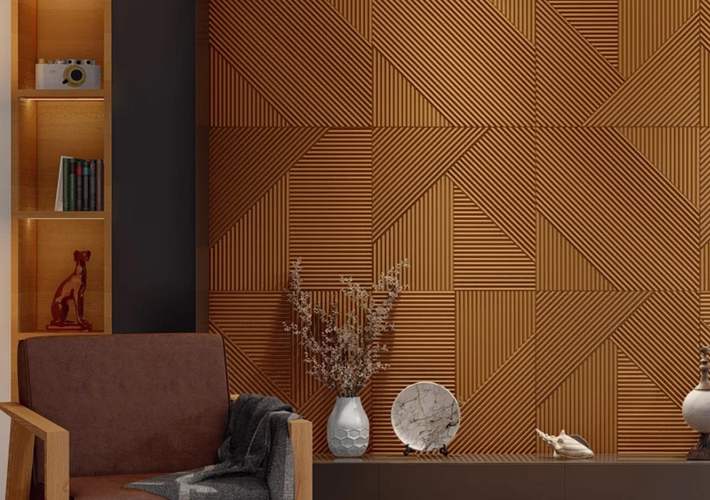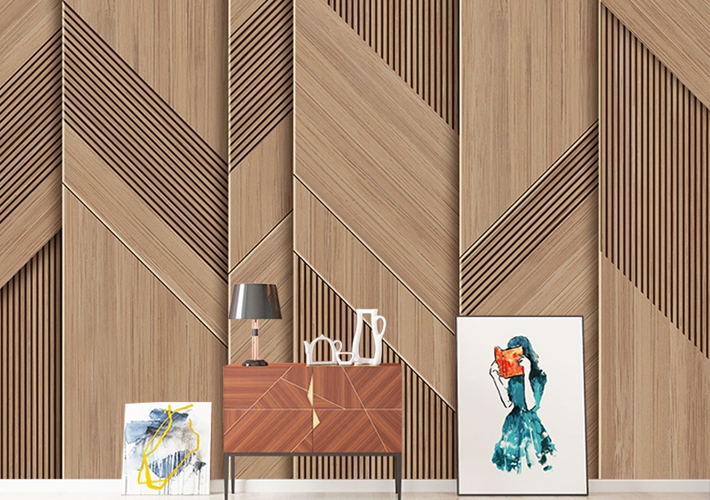
Dans l'architecture d'intérieur moderne, Panneaux muraux 3D DIY se sont imposés comme une solution innovante et rentable pour améliorer l'esthétique et la fonctionnalité. Ces panneaux transforment les murs ordinaires en surfaces élégantes et texturées, offrant un moyen unique de rehausser les intérieurs des maisons et des commerces. Leur popularité croissante s'explique par leur prix abordable, leur facilité d'installation et leurs options écologiques.
Cet article explore les avantages, les matériaux, les méthodes d'installation et les diverses applications des panneaux muraux 3D DIY afin d'aider les propriétaires, les concepteurs et les entreprises à faire des choix éclairés.

DIY 3D wall panels are decorative wall covering products designed to add three-dimensional texture, depth, and visual interest to interior surfaces without requiring complex professional installation. Depending on the product, they can be manufactured from PVC, PU foam, bamboo fiber, MDF, or other composite materials.
The main difference between 3D wall panels and conventional flat wall coverings is their raised or recessed surface pattern. Instead of relying only on paint or printed graphics, 3D panels create a physical texture that can enhance light, shadow, and architectural detail.
For homeowners and commercial buyers, DIY 3D wall panels are particularly attractive because they combine decorative performance with relatively simple installation. Many products can be installed using adhesive, nails, or other basic fixing methods, making them suitable for feature walls, bedrooms, living rooms, offices, retail spaces, hotels, restaurants, and exhibition areas.
In simple terms, DIY 3D wall panels are lightweight decorative panels that create a textured wall effect while reducing the installation complexity associated with traditional materials such as brick, stone, or ceramic tile.
1. l'attrait esthétique et le design moderne
L'une des principales raisons de la popularité croissante des panneaux muraux 3D est leur capacité à créer un environnement élégant et visuellement attrayant. Contrairement aux murs peints plats, ces panneaux introduisent de la texture et de la profondeur, ce qui donne aux espaces un aspect plus luxueux et dynamique.
2. installation facile à faire soi-même
Les panneaux muraux 3D DIY sont conçus pour rapide et sans tracas Ce qui en fait la solution idéale pour les propriétaires comme pour les designers professionnels.
3. une alternative économique aux matériaux muraux traditionnels
Les panneaux muraux 3D offrent la même sensation de luxe que les matériaux haut de gamme pour une fraction du coût.
| Comparaison des matériaux | Coût approximatif par m² | Durabilité | Maintenance |
|---|---|---|---|
| Panneaux muraux 3D | $5 - $25 | Haut | Faible |
| Carreaux de céramique | $20 - $50 | Haut | Modéré |
| Véritable brique | $40 - $80 | Très élevé | Haut |
| Panneaux en bois | $30 - $100 | Modéré | Haut |
En choisissant des panneaux muraux en 3D, les utilisateurs économiser de l'argent sur les matériaux, le travail d'installation et les coûts d'entretien.
4. léger et durable
La plupart des panneaux muraux 3D sont fabriqués à partir de matériaux légers mais robustes tels que :
Comme ces panneaux sont plus légers que des matériaux tels que les carreaux de céramique ou la brique véritable, ils sont plus faciles à nettoyer et à entretenir. plus facile à manipuler et ne pas exercer de pression excessive sur les murs.
5. avantages environnementaux
De nombreux panneaux muraux 3D DIY sont conçus avec la durabilité à l'esprit:

6. insonorisation et avantages acoustiques
Les panneaux muraux 3D sont souvent utilisés dans les home cinémas, les studios d'enregistrement et les bureaux pour le contrôle du bruit. Leurs surfaces texturées absorbent et diffusent les ondes sonores, réduisant ainsi l'écho et la pollution sonore.
7. résistance à l'eau et à l'humidité
Certains matériaux, tels que le PVC et la mousse de polyuréthane, sont totalement imperméables, ce qui les rend idéal pour les environnements humides comme :
Contrairement au papier peint ou aux murs peints, ces panneaux ne se décollent pas, ne forment pas de bulles et ne se déforment pas en raison de l'exposition à l'humidité.
8. peu d'entretien et longue durée de vie
Les panneaux muraux 3D nécessitent un entretien minimal. Contrairement aux traitements muraux traditionnels, ils ne se décolorent pas, ne se fissurent pas et ne nécessitent pas d'être repeints fréquemment. Pour le nettoyer, il suffit de l'essuyer à l'aide d'un chiffon humide ou d'un détergent doux.
9. polyvalence et personnalisation
Ces panneaux peuvent être appliqués à :
Certains modèles avancés permettent panneaux à emboîtementIl est donc facile de créer des des surfaces homogènes et d'aspect professionnel.
The best 3D wall panel material depends on the installation environment, required appearance, moisture exposure, durability requirements, and budget.
PVC 3D wall panels are a practical choice for areas where moisture resistance and easy maintenance are important. They are commonly considered for kitchens, bathrooms, commercial interiors, and other areas where occasional water exposure may occur.
PU foam 3D wall panels are lightweight and easy to handle. Their relatively low weight makes them suitable for decorative feature walls, TV backgrounds, bedrooms, and creative interior projects where installation flexibility is important.
Bamboo fiber wall panels are often selected by buyers who prioritize natural-looking decorative surfaces and material-related sustainability considerations. They can provide a warm visual appearance while maintaining the textured effect associated with 3D wall design.
MDF 3D wall panels can provide a wood-like appearance and are suitable for interior spaces where a more traditional or furniture-inspired aesthetic is preferred. However, MDF should generally be evaluated carefully for moisture exposure because its performance depends strongly on its construction and surface treatment.
| Matériau | Main Advantage | Suitable Applications |
|---|---|---|
| PVC | Moisture resistance and easy maintenance | Kitchens, bathrooms, commercial walls |
| PU Foam | Léger et facile à installer | Feature walls, bedrooms, TV walls |
| Bamboo Fiber | Natural appearance and decorative appeal | Residential and hospitality interiors |
| MDF | Wood-like appearance | Offices, bedrooms, furniture-style interiors |
For buyers choosing 3D wall panels, the material should be selected based on the actual installation environment rather than appearance alone.

1. décoration intérieure
Les panneaux muraux 3D DIY rehaussent les intérieurs résidentiels d'une esthétique élégante.
2) Espaces commerciaux et bureaux
Les entreprises utilisent les panneaux muraux 3D pour créer une professionnel et accueillant l'environnement.
3. panneaux muraux pour la télévision et le divertissement
L'installation de panneaux muraux 3D derrière les téléviseurs permet de créer une ambiance de fête. une toile de fond sophistiquée pour les médias. Voici quelques exemples de dessins Intégration de la lumière LED pour une touche de modernité.
4. dosserets de salle de bains et de cuisine
Les panneaux muraux 3D résistants à l'eau protègent contre les éclaboussures et les taches tout en ajoutant une valeur décorative. Panneaux en PVC et PU sont particulièrement adaptés à ces espaces.
5. Projets artisanaux et artistiques DIY
De nombreux bricoleurs utilisent ces panneaux pour des projets créatifs tels que :
6. stands de manifestations et d'expositions
Pour foires commerciales et événements spéciauxLes panneaux muraux légers en 3D offrent une facile à installer une solution décorative qui renforce l'image de marque et l'attrait visuel.
Although installation methods vary by product, most DIY 3D wall panels follow a relatively simple installation process.
Step 1: Prepare the wall.
Make sure the wall surface is clean, dry, smooth, and free from dust, grease, or loose paint. Uneven surfaces may affect adhesion and the final appearance.
Step 2: Measure the installation area.
Measure the height and width of the wall and calculate the required panel quantity. It is recommended to purchase some additional material to account for cutting and installation waste.
Step 3: Plan the panel layout.
Before applying adhesive, arrange the panels on the floor or mark reference lines on the wall. This helps maintain pattern alignment and reduces unnecessary cutting.
Step 4: Cut the panels if necessary.
Depending on the material, panels can often be cut with a utility knife, saw, or other suitable cutting tool. Always follow the manufacturer's recommended cutting method.
Step 5: Apply adhesive or fixing materials.
Apply the recommended construction adhesive to the back of the panel or use the specified fixing method. Self-adhesive products can be applied directly after removing the protective backing.
Step 6: Install and align the panel.
Press the panel firmly against the wall and check its horizontal and vertical alignment before moving to the next panel.
Step 7: Finish the edges and joints.
Use suitable trim, sealant, filler, or finishing accessories when required to create a cleaner and more professional appearance.
Step 8: Allow the adhesive to cure.
The curing time depends on the adhesive and environmental conditions. Avoid excessive movement or cleaning until the installation system has fully cured.
The key to a successful DIY installation is proper wall preparation, accurate measurement, correct adhesive selection, and careful panel alignment.
For commercial projects, 3D wall panels can provide a practical alternative to more labor-intensive decorative wall materials. Their lightweight construction, design flexibility, and relatively simple installation can help contractors and interior designers manage both material and installation requirements.
Common commercial applications include:
For B2B buyers, product appearance is only one part of the purchasing decision. Important factors may include panel dimensions, material composition, surface finish, fire-performance requirements, moisture resistance, packaging, MOQ, production capacity, customization options, and delivery time.
When sourcing 3D wall panels from a manufacturer, buyers should also confirm whether the supplier can provide OEM/ODM services, customized colors or patterns, samples, technical specifications, bulk packaging, and export support.

Before purchasing DIY 3D wall panels, consider the following factors:
Choose PVC, PU, bamboo fiber, MDF, or another material according to the application environment and performance requirements.
Larger panels can reduce the number of joints and installation time, while smaller panels may provide greater flexibility for complex layouts.
Choose geometric, wood-look, stone-look, wave, fluted, or other textures according to the interior design concept.
Check whether the product is self-adhesive, glue-fixed, nail-fixed, or designed for another installation system.
For kitchens, bathrooms, basements, and other humid areas, confirm the product's moisture-resistance specifications before purchasing.
Consider whether the surface can be easily cleaned and whether it is suitable for the expected level of daily use.
For wholesale and commercial projects, evaluate the supplier's production capacity, quality control, customization capability, packaging, MOQ, lead time, and export experience.
For large projects, requesting samples before bulk purchasing is recommended because color, texture, surface finish, installation method, and actual product quality can be evaluated more accurately from a physical sample.
1. la demande croissante de panneaux intelligents et écologiques
2. utilisation accrue dans les intérieurs luxueux et minimalistes
3. les progrès de la technologie d'impression 3D
Yes. Many 3D wall panels are specifically designed for relatively simple installation using adhesive, nails, or self-adhesive backing. However, installation difficulty varies according to the panel material, wall condition, panel size, and fixing method.
Some 3D wall panels, particularly certain unfinished or paintable products, can be painted. However, not every panel is designed to accept paint. Always check the manufacturer's surface-treatment recommendations before painting.
Some moisture-resistant or waterproof 3D wall panels can be used in bathrooms, but suitability depends on the material and product specification. Panels intended for wet areas should be selected according to the manufacturer's recommendations.
In many applications, 3D wall panels can reduce material and installation costs compared with more labor-intensive wall treatments. However, the actual project cost depends on the panel material, product quality, installation method, labor rates, and project size.
Some lightweight 3D wall panels can be installed on ceilings, but the fixing method and product weight must be considered carefully. Buyers should confirm that the specific panel is approved for ceiling applications.
There is no single best material for every application. PVC can be suitable where moisture resistance is important, PU is valued for its lightweight characteristics, bamboo fiber can provide a natural decorative appearance, and MDF can offer a wood-like interior finish.
Many manufacturers offer customization options such as colors, patterns, surface finishes, dimensions, packaging, and private-label solutions. For commercial projects, buyers should discuss customization requirements with the supplier before production.
For B2B purchasing, evaluate the manufacturer's production capability, quality control process, product range, customization services, sample policy, MOQ, packaging, lead time, export experience, and after-sales support rather than comparing price alone.
DIY 3D wall panels provide a practical way to add texture, depth, and decorative character to residential and commercial interiors. Compared with traditional wall finishes, their main advantages can include easier installation, lightweight construction, design flexibility, low maintenance, and cost-effective decorative performance.
The right panel, however, depends on the application. PVC may be preferred for moisture-resistant applications, PU foam for lightweight decorative projects, bamboo fiber for natural-looking interiors, and MDF for wood-inspired designs. Buyers should always evaluate the material, installation method, moisture resistance, maintenance requirements, and manufacturer's technical specifications before purchasing.
For homeowners, DIY 3D wall panels can provide an accessible way to create feature walls and upgrade interior spaces. For contractors, designers, hotels, retailers, and wholesalers, they can also serve as a scalable decorative wall solution for commercial projects.
If you are sourcing DIY 3D wall panels for a wholesale or commercial project, working directly with an experienced manufacturer can provide greater flexibility in product specifications, customization, packaging, MOQ, and project support.