A Complete Guide from Structural Design to On-Site Execution
As modern architecture and interior design increasingly pursue minimalist aesthetics, visual continuity, and concealed functionality, concealed door systems have become a popular solution in hotels, apartments, villas, and commercial spaces. Among various materials, WPC wall panel concealed door systems are gaining strong traction due to their stability, durability, and excellent visual integration.
However, in real construction projects, problems rarely come from the product itself. Most failures occur because of incorrect system understanding, poor pre-planning, or improper installation sequencing, leading to issues such as uneven door gaps, misalignment, deformation, or poor opening and closing performance.
This article provides an in-depth, professional analysis of the key installation points of WPC wall panel concealed door systems, covering structure design, preparation work, installation steps, critical control details, and common problems with solutions. It is designed to help contractors, designers, and overseas buyers achieve reliable performance, clean aesthetics, and efficient project delivery.
What Is a WPC Wall Panel Concealed Door System?
1.1 Concealed Doors Are Not Just “Hidden Panels”
In professional construction projects, a concealed door is not simply a door painted the same color as the wall. Instead, it is a complete system, typically consisting of:
Door leaf structure
Concealed door frame (aluminum or steel)
Hidden hinges
Magnetic lock or concealed latch
Integrated surface finishing matching the wall panels
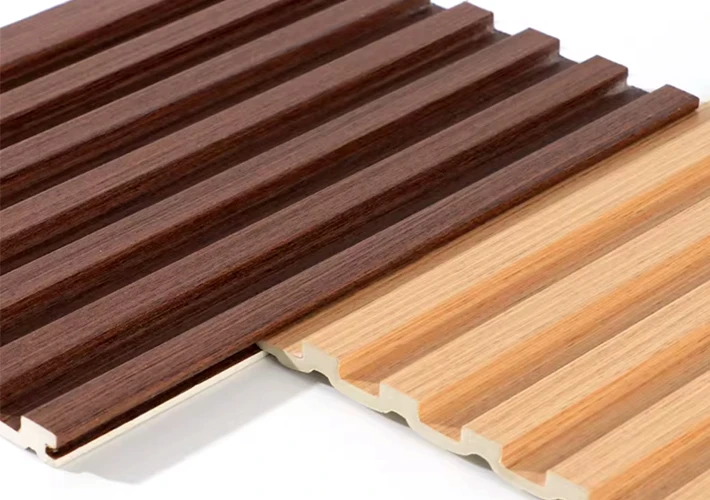
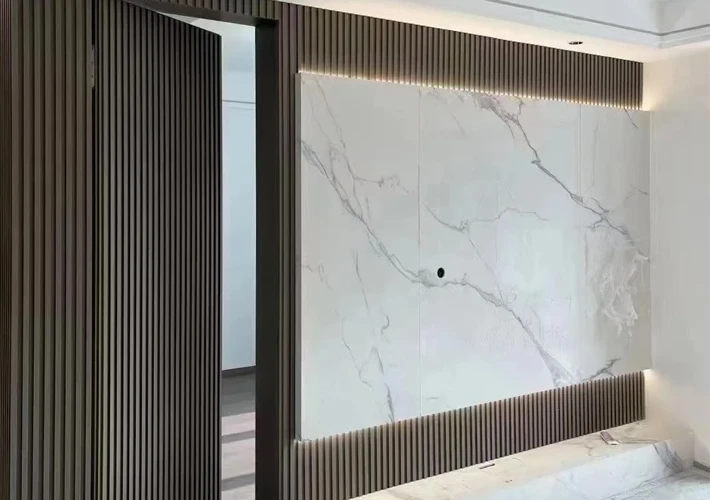
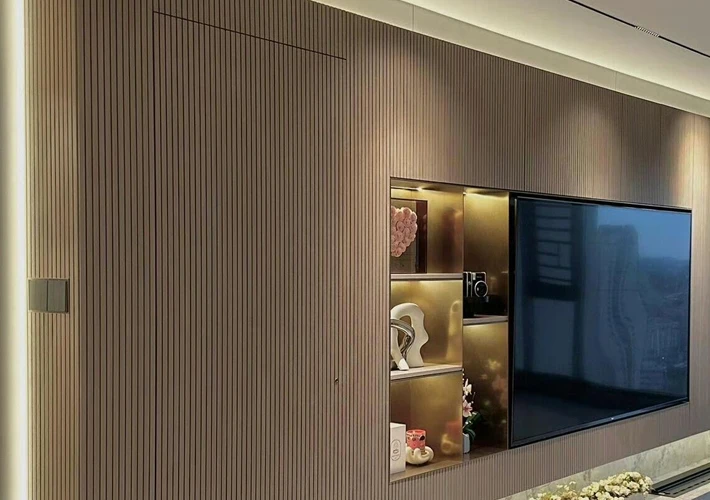
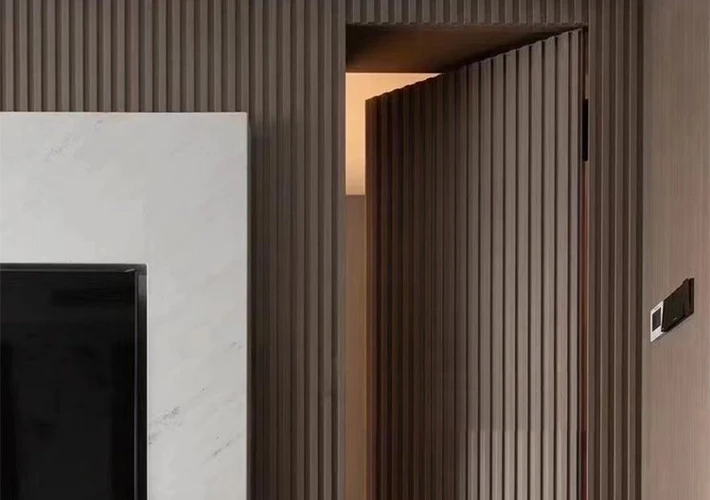
A WPC wall panel concealed door system uses WPC panels as the main wall material and applies the same material, texture, and installation logic to the door leaf, creating a true wall–door integration effect.
1.2 Why WPC Wall Panels Are Ideal for Concealed Doors
From a project and engineering perspective, WPC wall panels offer several clear advantages:
High dimensional stability, less affected by humidity
Consistent production quality, suitable for large-scale projects
Moisture and mold resistance, ideal for hotels and coastal areas
Uniform surface finishes, including wood grain, stone, and fabric textures
Fast dry installation, reducing labor time on-site
These characteristics make WPC panels particularly suitable for concealed door applications in overseas projects.
Structural Components of a WPC Concealed Door System
Understanding the system structure is essential before discussing installation.
2.1 Wall Substrate Requirements
Common wall structures include:
Light steel frame with gypsum board
Lightweight partition walls
Concrete or solid masonry walls
Key requirements:
Wall flatness and verticality must meet strict tolerances
Door openings must be reserved in advance
Post-cutting or forced adjustments should be avoided
2.2 Concealed Door Frame System (Core Component)
Most WPC concealed doors use:
Aluminum concealed frames
Or custom steel concealed frames
Installation characteristics:
Frame is fixed directly to the wall structure
WPC panels cover the frame edges
Only a minimal door gap (typically 2–4 mm) remains visible
ال installation accuracy of the frame determines the final concealed effect.
2.3 Door Leaf Structure
Common door leaf constructions include:
Full WPC core door leaf
Composite core (plywood or engineered board + WPC surface)
Internal honeycomb or solid core filling
The surface of the door leaf must match the wall panels in:
Color
نَسِيج
Grain direction
Joint alignment
2.4 Hardware System
Concealed doors place higher demands on hardware than standard doors:
Heavy-duty concealed hinges (load capacity must match door weight)
Magnetic locks or concealed latches
Multi-direction adjustable hinges for fine tuning
Critical Preparation Work Before Installation
Many installation problems originate from poor planning rather than workmanship.
3.1 Key Design Decisions at the Drawing Stage
Before production or installation, the following must be clearly defined:
Door opening direction (push or pull)
Door-to-wall joint details
Whether door trim is required (usually no trim)
Panel module sizes and alignment logic
If wall panel modules are ignored at the design stage, grain misalignment is almost unavoidable later.
3.2 Wall Panel Layout Must Be Planned Together with Door Position
This is one of the most overlooked yet most critical points.
Questions that must be answered in advance:
Vertical or horizontal panel installation?
Will the door leaf use full-size panels?
Will door gaps align with panel joints?
Professional approach:
Design the full wall panel layout first, then determine the door opening position accordingly.
3.3 Door Opening Size Allowance
Recommended practices:
Door opening width = door leaf width + installation allowance
Door opening height = door leaf height + installation allowance
Leave 2–5 mm adjustment space on all sides
Openings that are too tight limit adjustment; openings that are too large reduce concealment quality.
Standard Installation Process of WPC Concealed Door Systems
Step 1: Precise Installation of the Concealed Frame
This is the most critical step in the entire process.
Key points:
Use laser levels to ensure vertical and horizontal alignment
Secure the frame firmly to the wall structure
Ensure perfect right angles between frame, floor, and ceiling
Reserve space for wall panel thickness
Step 2: Pre-Installation of Hinges and Door Leaf
Before installing wall panels:
Install concealed hinges on both frame and door leaf
Test door opening and closing
Perform preliminary door gap adjustments
This step focuses on functional testing, not final fine tuning.
Step 3: Installation of WPC Wall Panels (Key Phase)
Panel installation must follow strict principles:
Start from the door opening and expand outward
Ensure continuous grain direction across door and wall
Use wall panels from the same production batch
Important details:
Door leaf panel thickness must match wall panel thickness
Door gaps should be controlled within 2–4 mm
Step 4: Final Door Adjustment and Hardware Installation
After wall panels are completed:
Fine-tune hinge adjustments (height, depth, alignment)
Ensure door leaf sits flush with the wall surface
Install magnetic locks and adjust holding force
Core Quality Control Points During Installation
5.1 Flatness and Verticality Control
Concealed doors require much stricter tolerances than standard doors:
Uneven walls lead to inconsistent gaps
Misaligned frames cause rebound or noise
5.2 Allowance for Thermal Expansion
Although WPC is dimensionally stable, expansion allowance is still required:
Door gaps should not be excessively tight
Panel edges should allow for movement
5.3 Same Material, Same Batch Principle
For concealed door applications:
Wall panels and door panels must come from the same batch
This avoids color differences, gloss variation, and texture mismatch
Common Installation Problems and Solutions
Problem 1: Door Not Flush with Wall After Installation
Causes:
Frame not accounting for panel thickness
Insufficient hinge adjustment
Solutions:
Re-calibrate frame depth
Use multi-direction adjustable concealed hinges
Problem 2: Uneven Door Gaps
Causes:
Wall not vertical
Door leaf dimensional deviation
Solutions:
Fine-tune hinge settings
Re-manufacture door leaf if necessary
Problem 3: Noise During Door Operation
Causes:
Hinges not rated for door weight
Weak internal door structure
Solutions:
Upgrade hinge specifications
Improve door leaf internal reinforcement
Recommended Application Scenarios for WPC Concealed Door Systems
Based on global project experience, WPC concealed doors are especially suitable for:
Hotel guestroom corridors
Apartment storage rooms and bathrooms
High-end residential feature walls
Commercial spaces with hidden functional rooms
Professional recommendation:
For large-scale projects, sourcing wall panels and concealed door systems from a single integrated supplier significantly reduces coordination risk.
Conclusion: Concealed Doors Are a System, Not a Single Product
The success of a WPC wall panel concealed door system does not depend on one component alone. It depends on:
Systematic design planning
Integration between wall panels and door structures
Installer understanding of concealed door logic
For overseas projects, hotels, and large residential developments, a mature and standardized WPC concealed door system:
Enhances spatial value
Improves visual consistency
Reduces long-term maintenance costs
If you are sourcing WPC wall panel concealed door systems for export projects, hotels, or bulk developments, working with a manufacturer that offers system-level solutions and project experience is far more important than choosing products based on price alone.