WPC slat wall panels have become an increasingly popular choice for modern interior decoration, commercial spaces, hospitality projects, and selected exterior applications. They combine the warm visual appearance of wood with the moisture resistance, dimensional stability, and low-maintenance characteristics of composite materials.
For architects, interior designers, contractors, importers, wholesalers, and project buyers, choosing the right WPC slat wall panel requires more than looking at color and texture. Material composition, waterproof performance, service life, installation method, application environment, and supplier capability can all affect the final project result.
This guide explains what WPC slat wall panels are, what they are made of, whether they are waterproof, how long they can last, how they are installed, and how they compare with wood and MDF. It also covers applications, pricing factors, and what to look for when sourcing from a WPC slat wall panel manufacturer in China.
What Are WPC Slat Wall Panels?
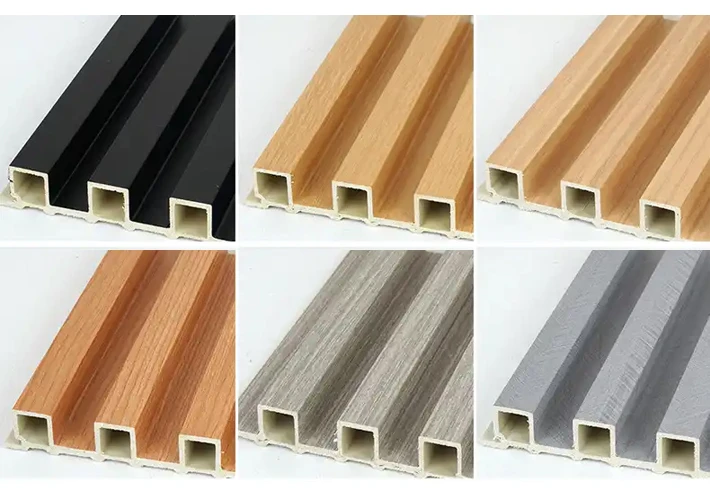
WPC stands for Wood Plastic Composite. WPC slat wall panels are decorative wall panels manufactured from a composite mixture of wood-based material, polymer resin, and functional additives. The material is processed into a linear slat or fluted profile to create a three-dimensional decorative wall surface.
Unlike a traditional flat wall board, a slat wall panel uses repeated raised strips and grooves. This creates shadows, depth, and visual rhythm across the wall.
Modern WPC slat wall panels are commonly designed to imitate the appearance of natural timber while providing more consistent dimensions and easier maintenance. Depending on the product structure and formulation, WPC panels can also provide good resistance to moisture, insects, cracking, and everyday wear.
Why Are WPC Slat Wall Panels Popular?
There are several reasons why WPC slat wall panels are increasingly specified for modern projects:
Wood-like appearance
Modern linear design
Moisture resistance
Easy cleaning
Low maintenance
Consistent color and dimensions
Fast installation
Multiple colors and surface finishes
Suitable for residential and commercial interiors
Optional acoustic backing for selected products
OEM/ODM customization for project buyers
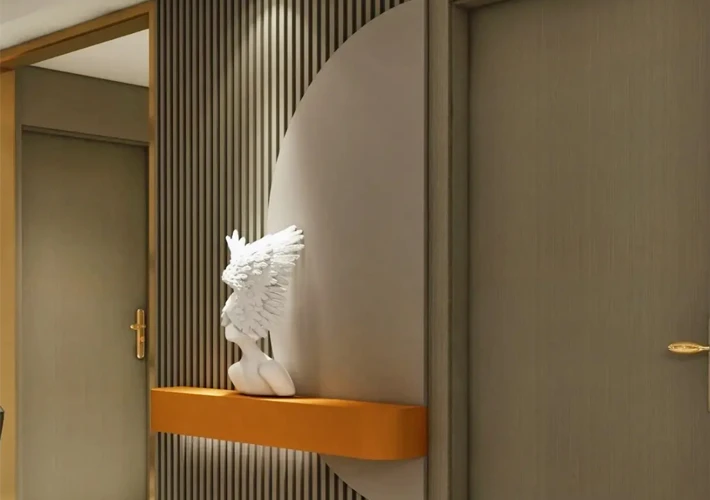
The slatted design is particularly attractive for feature walls because it can make a large, empty wall appear more architectural without requiring complicated decorative construction.
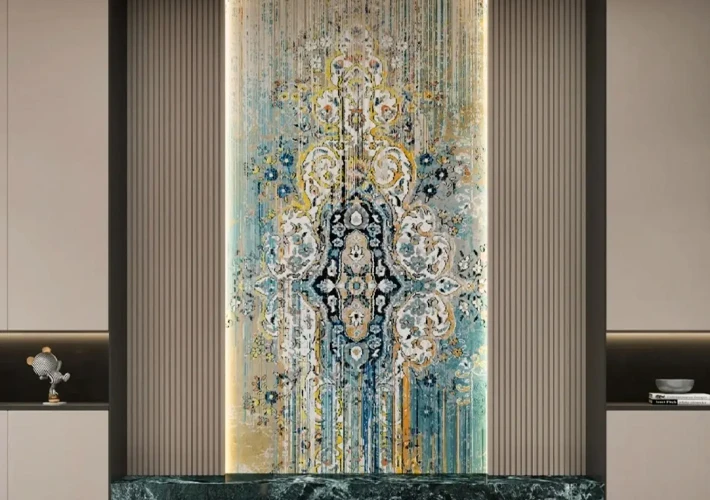
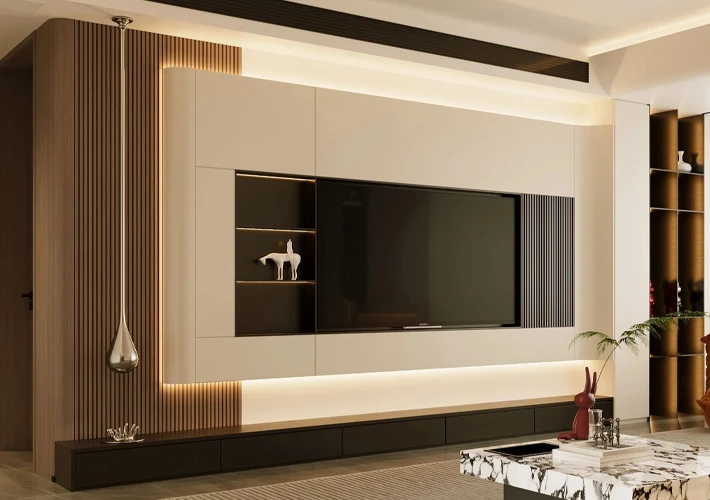
WPC slat panels can also be combined with stone, marble, metal, glass, lighting, furniture, flooring, and other decorative materials. This flexibility makes them suitable for both minimalist and luxury interior styles.
For B2B buyers, another important advantage is product consistency. Natural timber can have differences in grain, color, moisture content, and dimensions. Factory-produced WPC panels can provide much more consistent appearance across a large project.
What Are WPC Slat Wall Panels Made Of?
The basic components of WPC are wood fiber or wood powder, polymer resin, and functional additives. The exact formulation varies between manufacturers and product grades, so buyers should request the technical specification of the specific product rather than assuming that every WPC panel has the same formula.
1. Wood Fiber or Wood Powder
The wood component gives WPC its characteristic natural appearance and helps create a timber-like texture.
Depending on the manufacturing system, manufacturers may use wood flour, wood fiber, bamboo-based material, or other cellulose-based fillers.
The wood component can contribute to:
Natural-looking texture
Wood-like visual appearance
Surface feel
Material structure
Better utilization of wood-based resources
The percentage of wood material is not universal. Different manufacturers use different formulations depending on the intended application, density, strength, processing method, and target price.
2. Polymer Resin
The polymer component acts as the binding matrix.
Common polymer systems used in WPC products include PVC, PE, and PP. Decorative interior WPC slat wall panels frequently use PVC-based formulations, while other WPC applications may use different polymer systems.
The polymer helps improve:
Moisture resistance
Dimensional stability
Processing performance
Surface durability
Resistance to biological deterioration
This is one of the major differences between WPC and conventional untreated wood.
3. Functional Additives
Additives are used to improve specific properties of the finished panel.
Depending on the product, additives may include:
Stabilizers
Pigments
Processing aids
UV stabilizers
Flame-retardant components
Antimicrobial agents
Foaming regulators
Coupling agents
The formulation should be selected according to the intended application.
For example, an indoor decorative WPC slat panel does not necessarily have the same formulation as an exterior WPC cladding product exposed to direct sunlight and rain.
4. Decorative Surface
The WPC core is usually combined with a decorative surface treatment to create the final appearance.
Common finishes include:
Natural wood grain
Walnut
Oak
Teak
Dark wood
Light wood
Grey wood
Charcoal
Brushed textures
Contemporary solid colors
Some products also use additional decorative films or surface treatments to improve visual consistency.
Therefore, when purchasing WPC slat wall panels, it is important to evaluate both the core material and the surface finish.
Are WPC Slat Wall Panels Waterproof?
WPC slat wall panels are generally highly moisture-resistant, but buyers should distinguish between “waterproof material” and a completely waterproof wall system.
The polymer component and relatively dense composite structure reduce water absorption compared with many traditional wood-based materials. WPC products are therefore commonly selected for humid environments and areas where conventional untreated wood would require greater protection.
However, not every WPC slat panel is automatically suitable for every wet-area or exterior application.
WPC and Moisture
The main reason WPC performs well in humid environments is that the polymer matrix limits the ability of water to penetrate the material.
This can help reduce problems commonly associated with natural timber, such as:
Swelling
Rot
Moisture-related deformation
Mold-related problems
Frequent surface treatment
But the overall wall system still depends on installation.
For example, water can potentially enter through:
Panel joints
Wall penetrations
Unsealed edges
Incorrectly installed trims
Damaged surfaces
Gaps around windows or doors
Therefore, if a project is located in a bathroom, wet area, balcony, poolside environment, or exterior wall, the buyer should confirm that the specific WPC product is designed for that application.
Is WPC Suitable for Bathrooms?
Some WPC wall products are designed for humid interiors, and WPC has been used in bathrooms, kitchens, and other moisture-prone spaces.
However, a standard decorative interior slat panel should not automatically be specified for direct shower exposure.
For wet-area projects, buyers should ask the manufacturer about:
Water absorption
Core structure
Surface treatment
Joint design
Edge protection
Installation method
Recommended adhesive
Whether direct water exposure is permitted
This is particularly important for B2B projects because replacing wall panels after installation can be significantly more expensive than choosing the correct specification at the beginning.
How Long Do WPC Slat Wall Panels Last?
The service life of WPC slat wall panels depends on material formulation, product quality, installation, environment, and maintenance.
It is therefore better to avoid treating one fixed number as applicable to every WPC panel.
High-quality WPC wall systems can provide long-term service when correctly manufactured and installed. Some WPC wall-panel sources cite service-life expectations around 15–20 years or longer under appropriate conditions, while outdoor WPC products may have different performance requirements.
What Affects WPC Panel Lifespan?
Material Quality
A stable formulation and controlled manufacturing process are essential.
Low-quality products may contain excessive filler, have inconsistent density, poor surface treatment, or inadequate stabilizers. These factors can affect long-term performance.
تثبيت
Even a good panel can perform poorly if installed incorrectly.
Incorrect spacing, insufficient fixing points, poor substrate preparation, or failure to accommodate thermal movement can create problems.
Indoor vs Outdoor Use
Indoor WPC panels normally experience less severe environmental stress than exterior products.
Exterior applications may involve:
Direct UV exposure
Rain
Temperature fluctuations
Humidity
Wind
Thermal expansion and contraction
Therefore, exterior projects should use products specifically designed and tested for outdoor conditions.
صيانة
One reason buyers choose WPC is its relatively low maintenance requirement.
Routine cleaning generally involves dust removal and wiping with a suitable mild cleaning solution. Unlike natural timber, many WPC decorative products do not require regular oiling or staining.
How Are WPC Slat Wall Panels Installed?
One of the strongest advantages of WPC slat wall panels is their relatively straightforward installation.
The exact installation method depends on the panel structure and wall condition, but common methods include adhesive installation, screw fixing, clips, or a metal/wooden batten framework.
Step 1: Measure the Wall
Before installation, measure:
Wall width
Wall height
Door and window openings
Electrical outlets
Corners
Required trims
Calculate the required panel quantity and add a reasonable allowance for cutting and installation waste.
For commercial projects, accurate quantity calculation is particularly important because ordering too little material can cause delays.
Step 2: Prepare the Wall
The wall should be clean, dry, and reasonably flat.
Remove:
Dust
Loose paint
Grease
Weak surface material
Other contaminants
If the wall has significant unevenness, a supporting framework may be preferable to direct adhesive installation.
Step 3: Plan the Layout
Before fixing the panels, determine the starting position.
Consider how the slats will align with:
الأبواب
Windows
Lighting
Furniture
Ceiling lines
Flooring
Adjacent decorative materials
A symmetrical layout can make a major difference to the appearance of a large feature wall.
Step 4: Cut the Panels
WPC panels can generally be cut using appropriate woodworking tools.
Accurate cutting is important around:
Electrical sockets
Corners
Door frames
Ceiling edges
Skirting areas
Step 5: Fix the Panels
Depending on the product, panels can be installed with adhesive, clips, screws, or a supporting batten system.
For some projects, concealed fixing systems create a cleaner appearance because visible fasteners are minimized.
Step 6: Finish Corners and Edges
Professional projects should pay attention to:
External corners
Internal corners
Top edges
Bottom edges
Door transitions
Window transitions
Matching trims can create a more complete architectural appearance.
Installation Tips for B2B Projects
For large hotel, office, retail, and residential developments, we recommend confirming the following with the manufacturer before production:
Panel dimensions
Installation accessories
Fixing method
Expansion requirements
Recommended substrate
Cutting method
Joint treatment
Recommended adhesive
Packaging method
Spare-panel percentage
Proper installation is especially important when panels are used across hundreds or thousands of square meters.
WPC vs Wood vs MDF: Which Is Better?
WPC, natural wood, and MDF can all be used to create attractive slat-wall designs, but they are suitable for different project requirements.
ميزة
WPC Slat Wall Panels
Natural Wood
MDF Slat Panels
مظهر
Wood-like
Natural wood
Decorative wood effect
Moisture resistance
High for suitable products
Relatively low without treatment
Limited unless specially treated
صيانة
قليل
Higher
معتدل
Dimensional consistency
عالي
Natural variation
عالي
Termite resistance
Generally good
Requires protection
Requires protection
تثبيت
Relatively easy
Skilled installation may be required
Relatively easy
Outdoor suitability
Product dependent
Requires treatment
Generally unsuitable
Design flexibility
عالي
عالي
عالي
يكلف
Medium
متوسطة إلى عالية
Low to medium
Long-term maintenance
قليل
Higher
معتدل
WPC vs Natural Wood
Natural wood has an authentic appearance that is difficult to reproduce perfectly.
However, timber can be affected by moisture, insects, temperature changes, and biological deterioration. It may also require regular painting, staining, sealing, or oiling.
WPC is attractive to buyers who want the visual warmth of wood but prefer a more controlled and low-maintenance material.
WPC vs MDF
MDF is widely used for interior decorative wall panels because it is economical and easy to machine.
However, standard MDF is a wood-based engineered board and is not inherently suitable for prolonged moisture exposure.
WPC is generally a better option where moisture resistance is an important requirement.
For dry interior applications where cost is the main consideration, MDF can remain a practical option.
Which One Should Project Buyers Choose?
The answer depends on the application.
Choose WPC when the project prioritizes:
Moisture resistance
Low maintenance
Consistent appearance
Modern wood-look design
Commercial durability
Selected exterior applications
Choose natural wood when authentic timber and premium natural character are the primary priorities.
Choose MDF when the project is primarily indoors, dry, budget-sensitive, and focused on decorative appearance.
Applications in Hotels, Offices and Homes
WPC slat wall panels are versatile enough for a wide range of residential and commercial projects.
Hotels
Hotels are one of the most attractive applications for decorative WPC slat panels.
They can be used for:
Hotel lobbies
Reception areas
Guest-room feature walls
Corridors
Restaurant interiors
Lounge areas
Headboard walls
Meeting rooms
Public-area decoration
Hotels need materials that look attractive but can also withstand repeated daily use.
WPC's low-maintenance characteristics can be particularly useful for hospitality projects.
Offices
Modern offices increasingly use decorative wall materials to create a more comfortable and professional environment.
WPC slat wall panels can be installed in:
Reception areas
Conference rooms
Executive offices
Meeting rooms
Corridors
Breakout areas
Co-working spaces
Background walls
Slatted surfaces can also contribute to visual and acoustic design when used together with suitable acoustic backing systems.
Some WPC slat systems are specifically marketed with acoustic backing options for offices and commercial interiors.
Homes
Residential applications include:
Living-room TV walls
Bedroom feature walls
Headboards
Hallways
Dining rooms
Home offices
Entryways
Staircase walls
Ceiling decoration
The biggest residential advantage is design flexibility.
A WPC slat wall can make a simple wall look more sophisticated without requiring extensive masonry or complicated decorative construction.
Restaurants and Retail Stores
Restaurants, cafés, shops, showrooms, and retail spaces can use WPC slat panels to establish a recognizable interior style.
They can be combined with:
LED lighting
Metal strips
Marble-look panels
Mirrors
Glass
Stone
Furniture
Indoor plants
This makes WPC slat panels particularly useful as feature-wall materials rather than simply functional wall coverings.
Price & Buying Guide
The price of WPC slat wall panels can vary considerably.
There is no single universal price because manufacturers calculate cost based on material formulation, dimensions, surface finish, density, accessories, packaging, order volume, and customization.
For B2B buyers, comparing only the price per panel can therefore be misleading.
Main Factors Affecting WPC Slat Panel Price
1. Raw Material Formula
The composition of wood fiber, polymer resin, filler, and additives directly influences production cost and performance.
2. Panel Dimensions
Longer, wider, thicker, or customized panels can have different production and packaging costs.
3. Surface Finish
Special wood-grain textures, decorative films, customized colors, and premium finishes can increase the price.
4. Quantity
Factory pricing usually becomes more competitive as order quantity increases.
For importers and distributors, full-container purchasing can provide a different cost structure from small trial orders.
5. Accessories
The total project cost may include:
Trims
Corner profiles
Clips
Screws
Battens
Adhesives
Packaging
Therefore, buyers should compare the complete system cost, not simply the panel price.
6. OEM/ODM Requirements
Customized:
Colors
Slat widths
Slat spacing
Panel dimensions
Surface textures
Packaging
Logos
can influence tooling and production costs.
B2B WPC Slat Wall Panel Buying Checklist
Before placing a large order, importers and project buyers should ask the supplier:
مادة
What polymer is used?
What is the wood-fiber content?
Is the core solid or hollow?
What is the panel density?
Performance
What is the water absorption?
Is the product suitable for humid environments?
Is it suitable for outdoor use?
What is the fire rating?
Is UV resistance available?
Production
Where is the factory located?
What is the production capacity?
What is the MOQ?
What is the standard lead time?
Can the supplier provide samples?
Customization
Are colors customizable?
Can panel dimensions be customized?
Can slat width and spacing be customized?
Is OEM packaging available?
Export
How are panels packed?
How many pieces fit in a container?
What export documents are available?
Can the supplier arrange FOB, CIF, or other shipping terms?
These questions can help buyers distinguish a genuine manufacturer from a trading company with limited control over production.
For international buyers, selecting the right supplier is just as important as selecting the right product.
إيسث إيدج is a China-based manufacturer and supplier of decorative wall and interior building materials, providing WPC wall panels and related decorative solutions for international B2B customers.
Our focus is not simply on selling individual panels. We work with importers, distributors, contractors, interior designers, architects, and project buyers who need stable product quality and reliable export support.
What Buyers Can Expect From AesthEdge
Factory-Based Production
AesthEdge works with factory production systems designed for consistent panel dimensions, surface quality, and batch-to-batch appearance.
OEM & ODM Support
For distributors and project buyers, we can support customized requirements such as:
Colors
Surface finishes
Panel dimensions
Slat designs
Packaging
Branding
Project-Oriented Supply
Large commercial projects require more than product availability. They require stable production, consistent specifications, reliable packaging, and coordinated delivery.
AesthEdge can provide product support for:
Hotels
Offices
Residential developments
Restaurants
Retail stores
Showrooms
Commercial interiors
Export Experience
As a China-based B2B supplier, AesthEdge focuses on international customers and understands the importance of export packaging, production coordination, documentation, and shipping arrangements.
Request WPC Slat Wall Panel Samples
If you are comparing WPC slat wall panel suppliers, requesting samples before placing a bulk order is one of the most practical ways to evaluate quality.
A sample allows you to check:
Surface texture
Color consistency
Panel rigidity
Slat dimensions
Edge quality
Connection system
Overall appearance
For larger projects, buyers can also request technical specifications and discuss customized production requirements with the supplier.
Final Thoughts
WPC slat wall panels combine the visual appeal of wood-style architecture with the practical advantages of composite materials. Their moisture resistance, low-maintenance characteristics, dimensional consistency, and modern linear appearance make them suitable for a wide range of residential and commercial applications.
Compared with natural wood, WPC can reduce maintenance requirements. Compared with standard MDF, it can provide better moisture resistance. However, the actual performance depends heavily on the material formulation, manufacturing quality, installation method, and whether the selected product is appropriate for the intended environment.
For hotels, offices, restaurants, retail stores, villas, apartments, and other modern projects, WPC slat wall panels can provide an efficient way to create distinctive feature walls and architectural interiors.
For importers and distributors, the most important purchasing principle is simple: do not compare WPC slat wall panels only by price. Compare material composition, specifications, performance, factory capability, customization, packaging, and long-term supply reliability.
If you are looking for a WPC slat wall panel manufacturer in China, AesthEdge can provide factory-based supply, customized decorative solutions, OEM/ODM support, samples, and B2B export services for different project requirements.
Contact AesthEdge today to request WPC slat wall panel samples, product specifications, colors, and a factory quotation for your next project.



 Arabic
  English
  French
  Russian
  Spanish
  Portuguese
  Japanese