Introduction: Understanding Acoustic Wall Panels 2400 x 600 for Modern Interior Projects
In modern commercial and residential spaces, controlling unwanted noise has become an essential part of interior design. Offices, hotels, conference rooms, cinemas, schools, restaurants, studios, and public buildings increasingly require effective acoustic solutions to improve sound quality and create comfortable environments.
Among various acoustic products available on the market, acoustic wall panels 2400 x 600 mm have become one of the most popular choices for architects, contractors, interior designers, and building material distributors. This size offers an ideal balance between acoustic performance, installation efficiency, and design flexibility.
As a professional acoustic wall panel manufacturer in China, Aesthedge supplies high-quality acoustic panels for global B2B customers, including wholesalers, distributors, construction companies, and commercial project suppliers. With OEM/ODM capabilities, customized colors, finishes, and bulk production capacity, Aesthedge provides acoustic solutions for different architectural applications.
One of the most important factors when selecting acoustic wall panels is the NRC rating (Noise Reduction Coefficient). NRC helps buyers evaluate how effectively a panel absorbs sound energy. However, NRC performance depends not only on the surface material but also on thickness, structure, installation method, and surrounding environment.
This article explains the common materials, NRC ratings, specifications, applications, and purchasing considerations of acoustic wall panels 2400 x 600 mm, helping global buyers make better decisions.
What Are Acoustic Wall Panels 2400 x 600?
Acoustic wall panels 2400 x 600 refer to sound-absorbing wall panels with a standard dimension of:
Length: 2400 mm
Width: 600 mm
Thickness: Usually 9 mm to 25 mm, depending on material and design
The 2400 x 600 mm format is widely used because it covers a large wall area while remaining easy to transport, install, and combine with different interior styles.
Unlike traditional decorative wall coverings, acoustic wall panels are engineered to reduce sound reflection and control reverberation. When sound waves hit hard surfaces such as concrete, glass, or metal, they bounce repeatedly and create excessive noise. Acoustic panels absorb part of this sound energy and convert it into minimal heat energy inside the material structure.
For commercial projects, acoustic wall panels provide two major benefits:
1. Improved Sound Quality
By reducing echoes and reverberation, acoustic panels make conversations clearer and improve listening experiences.
Typical applications include:
Meeting rooms
Conference centers
Recording studios
Classrooms
Restaurants
Hotels
Auditoriums
2. Enhanced Interior Design
Modern acoustic panels combine functionality with decorative appearance. Many products feature:
Wood veneer finishes
Fabric surfaces
PET felt colors
3D textures
Slatted designs
Custom patterns
Therefore, acoustic wall panels are no longer only technical products but also important elements of architectural decoration.
Common Materials of Acoustic Wall Panels 2400 x 600
Different materials provide different acoustic absorption levels, visual effects, durability, and price ranges. The following are the most common materials used for 2400 x 600 acoustic wall panels.
1. PET Felt Acoustic Panels
PET felt acoustic panels are among the fastest-growing acoustic products in global markets.
They are usually manufactured from recycled polyester fibers and compressed into a dense acoustic board.
Main Features:
Environmentally friendly material
Lightweight structure
Excellent sound absorption
Available in various colors
Easy cutting and installation
Suitable for creative interior designs
Typical thickness:
9 mm
12 mm
18 mm
24 mm
NRC Rating:
PET acoustic panels generally achieve:
NRC: 0.45 – 0.90
The exact rating depends on:
Panel thickness
كثافة
Installation method
Air gap behind the panel
For example:
PET Panel Thickness
Approximate NRC
9 mm
0.45–0.55
12 mm
0.55–0.65
18 mm
0.65–0.80
24 mm with air gap
0.80–0.90
PET felt acoustic panels are commonly used in offices, educational buildings, meeting spaces, and creative commercial interiors.
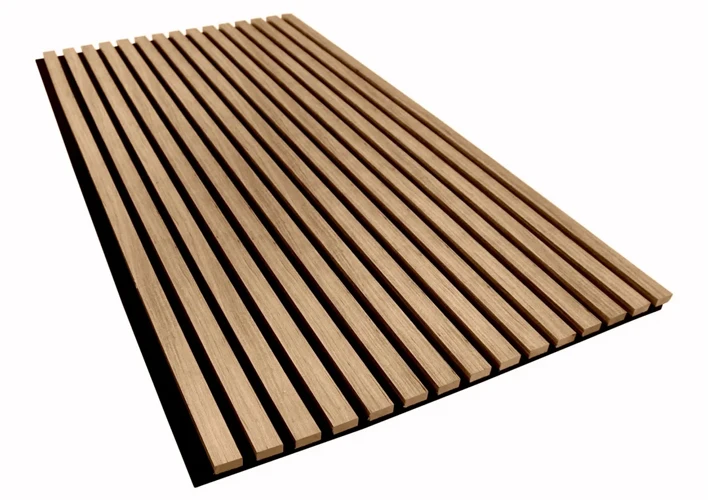
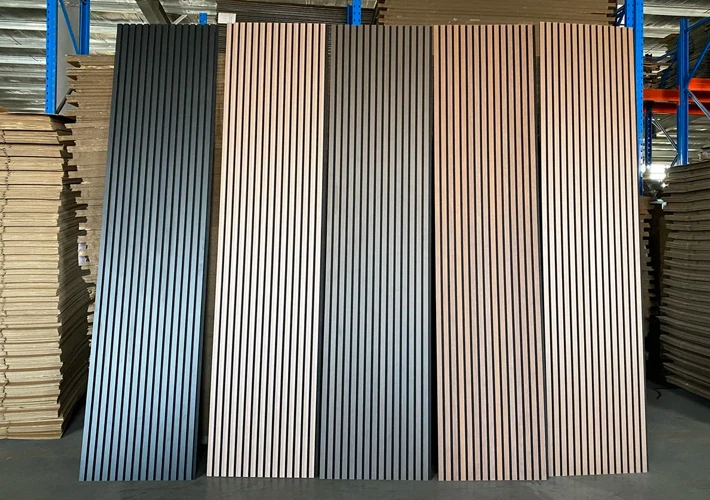
2. Wood Slat Acoustic Panels
Wood slat acoustic panels have become extremely popular because they combine natural aesthetics with sound absorption.
A typical structure includes:
Decorative wood veneer surface
MDF or plywood slats
PET acoustic backing layer
The combination of wooden slats and acoustic felt creates both visual appeal and acoustic performance.
المزايا:
Premium wood appearance
Modern architectural style
Easy installation
Suitable for large wall areas
Provides both decoration and acoustic control
Common finishes include:
Walnut
Oak
Black ash
Natural wood
Custom veneer colors
NRC Rating:
Wood slat acoustic panels usually provide:
NRC: 0.65 – 0.95
Performance depends heavily on the backing material and cavity design.
Typical structure:
12 mm PET backing
27 mm MDF slats
Acoustic gaps between slats
can achieve NRC values around:
0.75–0.90
Wood slat acoustic panels are widely used in:
Luxury hotels
Restaurants
Office headquarters
Residential interiors
Conference rooms
3. Fabric Wrapped Acoustic Panels
Fabric acoustic panels are traditional sound absorption products commonly used in professional acoustic environments.
The structure usually consists of:
Fabric outer layer
Fiberglass or mineral wool core
Acoustic frame
المزايا:
High sound absorption performance
Wide fabric color options
Suitable for professional acoustic applications
NRC Rating:
Fabric acoustic panels typically achieve:
NRC: 0.70 – 1.20
Some professional panels can exceed NRC 1.0 because NRC values are measured using standardized testing methods where additional absorption effects may be included.
Applications include:
Recording studios
Cinemas
Conference rooms
Music halls
4. Polyester Fiber Acoustic Panels
Polyester fiber panels are similar to PET felt panels but usually have higher density and stronger structural stability.
They are manufactured using polyester fibers compressed into rigid boards.
المزايا:
Non-toxic
Moisture resistant
خفيف الوزن
Impact resistant
Easy maintenance
NRC Rating:
Most polyester fiber acoustic panels achieve:
NRC: 0.50 – 0.90
With increased thickness and proper installation:
12 mm panels: around 0.55–0.65 NRC
24 mm panels: around 0.75–0.90 NRC
They are popular for:
Schools
Libraries
Offices
Public buildings
5. Wood Wool Acoustic Panels
Wood wool acoustic panels are made from wood fibers combined with mineral binders.
They provide a natural appearance and strong acoustic performance.
Features:
Eco-friendly
Fire-resistant options available
Good thermal insulation
Durable structure
NRC Rating:
Typical range:
NRC: 0.45 – 0.85
They are commonly installed in:
Industrial buildings
Public facilities
Sports halls
Commercial spaces
What Is NRC Rating and Why Is It Important?
NRC stands for Noise Reduction Coefficient.
It measures how much sound energy a material absorbs instead of reflecting back into the room.
The NRC value ranges from:
0.00: No sound absorption
1.00: Excellent sound absorption
For example:
Concrete wall: NRC approximately 0.05
Carpet: NRC around 0.30–0.50
Professional acoustic panel: NRC 0.80+
A higher NRC means the material absorbs more sound energy.
The NRC test normally evaluates absorption performance at four frequencies:
250 Hz
500 Hz
1000 Hz
2000 Hz
The average result becomes the NRC value.
For commercial projects, recommended NRC levels are usually:
طلب
Recommended NRC
Office
0.60–0.80
Conference Room
0.75–0.95
Restaurant
0.70–0.90
Classroom
0.60–0.85
Recording Studio
0.90+
Hotel Lobby
0.70–0.90
Factors Affecting the NRC Rating of Acoustic Wall Panels 2400 x 600
Although material selection is important, the NRC rating of acoustic wall panels 2400 x 600 is not determined by the raw material alone. The overall acoustic performance depends on multiple factors, including thickness, density, surface structure, installation method, and room conditions.
Understanding these factors helps architects, contractors, and distributors choose the right acoustic solution for different projects.
1. Panel Thickness
Thickness is one of the most important factors influencing sound absorption performance.
Generally, thicker acoustic panels can absorb a wider range of sound frequencies, especially low-frequency noise.
For example:
سماكة
Typical Acoustic Performance
9 mm
Basic sound absorption
12 mm
Medium absorption performance
18 mm
Better broadband absorption
24 mm+
High acoustic performance
Thin panels mainly absorb high-frequency sounds, such as:
Human voices
Keyboard sounds
Office conversations
Thicker panels provide better performance for:
Low-frequency noise
Music
Mechanical equipment sounds
For commercial applications, many buyers choose 18 mm or 24 mm acoustic wall panels 2400 x 600 because they provide a good balance between cost and performance.
2. Density of Acoustic Material
The density of the acoustic core directly affects sound absorption.
A material with appropriate density can create more internal friction when sound waves enter the panel. This converts sound energy into a small amount of heat energy.
However, extremely high density is not always better.
If the material is too dense:
Sound waves cannot penetrate easily
Absorption efficiency may decrease
If the material is too loose:
Structural stability may be reduced
Long-term performance may decline
Professional acoustic panel manufacturers carefully control density during production to achieve the best balance between durability and absorption.
3. Air Gap Behind the Panel
Installation method has a significant impact on NRC performance.
Installing acoustic panels directly onto a wall provides sound absorption, but leaving an air gap behind the panel can improve performance.
For example:
Direct installation: NRC around 0.60–0.75
Installation with 50 mm air cavity: NRC may increase to 0.80–0.95
The air space allows sound waves to travel deeper into the acoustic structure, improving absorption efficiency.
For high-end projects such as:
Recording rooms
Conference centers
Luxury hotels
designers often install acoustic wall panels with supporting frames or battens to create an acoustic cavity.
4. Surface Structure and Design
The surface design of acoustic panels also affects performance.
Different structures include:
Flat Acoustic Panels
Flat panels provide basic sound absorption and are suitable for simple interior designs.
Slatted Acoustic Panels
Wood slat designs create gaps that allow sound waves to enter the acoustic backing layer.
They generally provide better broadband absorption.
3D Acoustic Panels
Three-dimensional textures increase surface area and improve sound diffusion.
They are often selected for:
Creative offices
Restaurants
Entertainment spaces
Advantages of Acoustic Wall Panels 2400 x 600 for Commercial Projects
The 2400 x 600 mm size has become a standard choice in many international markets because it provides several practical advantages.
1. Large Coverage Area and Faster Installation
A single 2400 x 600 panel covers:
1.44 square meters
of wall area.
Compared with smaller panels, this reduces:
Installation time
Labor costs
Number of joints
For large projects such as hotels, office buildings, and commercial spaces, this size significantly improves construction efficiency.
2. Easy Transportation and Handling
Although the panel size is large enough for efficient installation, 2400 x 600 remains practical for:
Container loading
Warehouse storage
Site handling
This makes it suitable for international shipping.
For overseas distributors and importers, standardized dimensions simplify:
Packaging
Inventory management
Project planning
3. Flexible Design Applications
Acoustic wall panels 2400 x 600 can be used for full-wall coverage or combined with other decorative materials.
Common design combinations include:
Wood flooring + acoustic wall panels
Marble panels + acoustic panels
Metal finishes + acoustic panels
LED lighting + acoustic panels
This flexibility makes them suitable for modern architectural projects.
Applications of Acoustic Wall Panels 2400 x 600
Due to their combination of acoustic performance and decorative appearance, these panels are widely used in different industries.
1. Office and Corporate Spaces
Modern offices often use open-plan layouts, which can create noise problems.
Acoustic wall panels help reduce:
Employee conversation noise
Meeting room echoes
Background distractions
Applications:
Open offices
Executive offices
Conference rooms
Reception areas
Recommended NRC:
0.65–0.85
2. Hotels and Hospitality Projects
Hotels require both visual appeal and acoustic comfort.
Acoustic panels are commonly installed in:
Hotel lobbies
Guest rooms
Restaurants
Conference halls
Benefits include:
Improved guest experience
Reduced noise transmission
Premium interior appearance
3. Restaurants and Cafes
Hard surfaces such as glass, tile, and concrete often create excessive noise in restaurants.
Acoustic wall panels help control:
Customer conversations
Kitchen noise
Background sound reflection
Recommended NRC:
0.70–0.90
4. Educational Buildings
Schools and universities need good acoustic environments for learning.
Acoustic panels improve:
Teacher voice clarity
Student concentration
Classroom communication
Applications:
Classrooms
Libraries
Lecture halls
Training centers
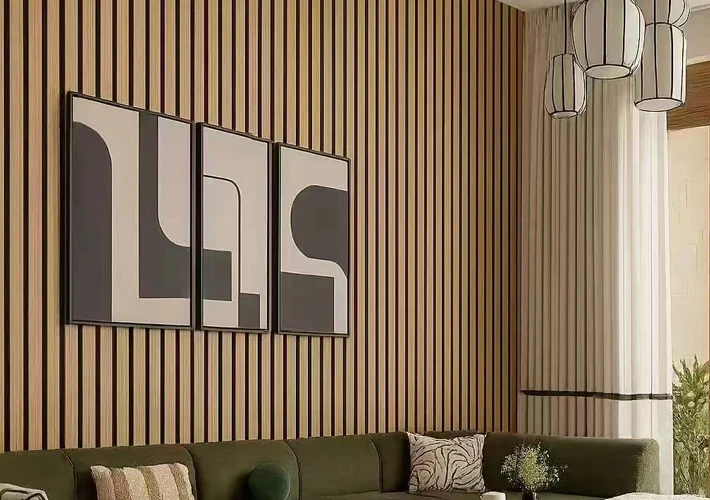
5. Residential Interiors
Homeowners increasingly use acoustic panels for both decoration and comfort.
Common areas:
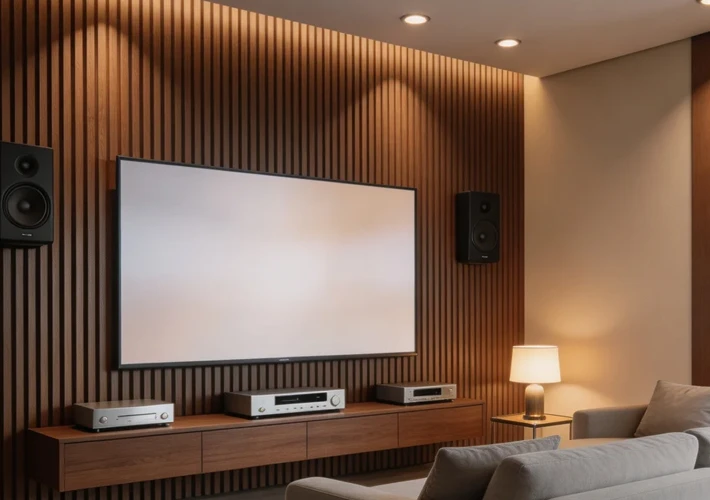
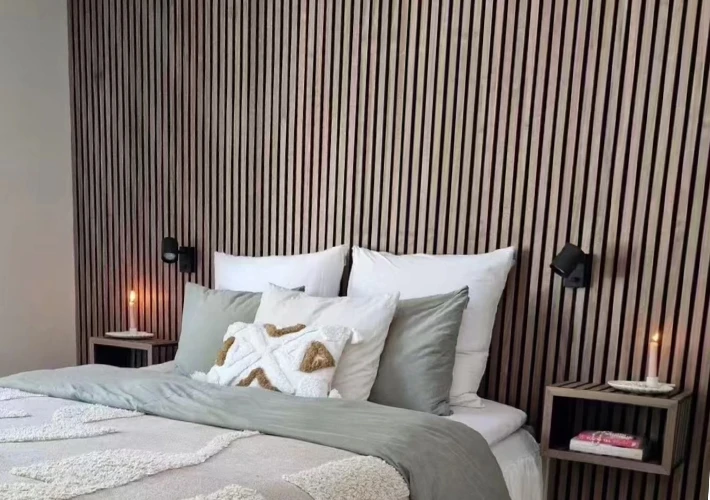
Living rooms
Home theaters
غرف النوم
Home offices
Wood slat acoustic panels are especially popular because they create a warm natural atmosphere.
How to Choose the Right Acoustic Wall Panels 2400 x 600?
For B2B buyers, selecting acoustic panels requires considering more than appearance. The following factors should be evaluated.
1. Define the Project Requirements
Different spaces require different acoustic solutions.
Consider:
Room size
Noise level
Function of the space
Required NRC rating
For example:
A small office may only require NRC 0.60–0.70.
A professional recording room may require NRC 0.90 or higher.
2. Choose the Appropriate Material
A simple guide:
مادة
NRC Range
Best Applications
PET Felt
0.45–0.90
Offices, schools, creative spaces
Wood Slat
0.65–0.95
Hotels, offices, luxury interiors
Fabric Panel
0.70–1.20
Studios, cinemas
Polyester Fiber
0.50–0.90
Public buildings
Wood Wool
0.45–0.85
Industrial and commercial spaces
3. Consider Fire Safety Requirements
For international projects, fire performance is often an important requirement.
Buyers should confirm:
Fire rating certificates
Testing standards
Material safety reports
Professional suppliers can provide technical documents according to project requirements.
4. Check Supplier Manufacturing Capability
For importers and distributors, supplier capability directly affects product quality and delivery reliability.
Important factors include:
Factory production capacity
Quality control system
OEM customization ability
Packaging solutions
Export experience
Working with a direct manufacturer helps reduce supply chain costs and ensures consistent quality.
Why Choose Aesthedge Acoustic Wall Panels from China?
Aesthedge is a professional Chinese manufacturer specializing in decorative building materials and acoustic solutions.
For global B2B customers, Aesthedge provides:
Factory Direct Supply
As a manufacturer, Aesthedge supports:
Competitive factory pricing
Stable production capacity
Large-volume orders
Long-term distributor cooperation
OEM and ODM Customization
Different markets and projects require different designs.
Aesthedge supports customization including:
Panel colors
Surface finishes
Sizes
Packaging
Branding options
This allows importers and distributors to develop products under their own brands.
Quality Control and Export Experience
Aesthedge focuses on consistent product quality through:
Raw material inspection
Production monitoring
Finished product inspection
Export packaging standards
The products are supplied to international markets including:
Europe
North America
South America
Southeast Asia
Middle East
Complete Decorative Material Solutions
Besides acoustic wall panels, Aesthedge also supplies:
ألواح الجدران WPC
SPC wall panels
صفائح الرخام البلاستيكية
UV marble panels
Decorative interior panels
Flooring solutions
This allows customers to source multiple interior materials from one reliable supplier.
Frequently Asked Questions About Acoustic Wall Panels 2400 x 600
What is the standard size of acoustic wall panels?
The most common size is:
2400 x 600 mm
because it provides efficient wall coverage while remaining easy to transport and install.
What NRC rating is good for acoustic wall panels?
For most commercial applications:
Office: NRC 0.60–0.80
Hotel: NRC 0.70–0.90
Studio: NRC 0.90+
Higher NRC means better sound absorption performance.
Are 2400 x 600 acoustic panels suitable for large projects?
Yes. This size is widely used in:
Hotels
Office buildings
Schools
Commercial interiors
because fewer panels are needed to cover large areas.
Which acoustic panel material has the highest NRC?
Fabric-wrapped acoustic panels and professionally designed PET/wood slat acoustic systems can achieve very high NRC values, often between:
0.80–1.20
depending on construction and installation.
Can acoustic wall panels be customized?
Yes. Professional manufacturers can customize:
Colors
Sizes
Surface designs
Packaging
Brand labels
Aesthedge provides OEM and ODM services for global customers.
Conclusion: Selecting the Right Acoustic Wall Panels 2400 x 600 for Your Project
Acoustic wall panels 2400 x 600 have become a popular choice for modern architecture because they combine sound absorption, decorative design, and installation efficiency.
Different materials provide different acoustic performance:
PET felt panels offer excellent value and design flexibility
Wood slat panels combine natural aesthetics with strong absorption
Fabric panels provide professional acoustic performance
Polyester fiber panels offer durability and environmental benefits
When choosing acoustic wall panels, buyers should consider NRC rating, thickness, installation method, fire requirements, and supplier capability.
As an experienced acoustic wall panel manufacturer in China, Aesthedge provides reliable bulk supply, OEM customization, and competitive factory solutions for global distributors, contractors, and project buyers.
Contact Aesthedge today to get acoustic wall panel samples, product specifications, and factory pricing for your next project.



 Arabic
  English
  French
  Russian
  Spanish
  Portuguese
  Japanese