Why Malaysian Buyers Source Acoustic Panels from China

Published on: 23 Jan, 2026
Table des matières

Introduction: Malaysia’s Growing Demand for Acoustic Panels

Over the past decade, Malaysia has experienced rapid urbanization, commercial expansion, and infrastructure development. From Kuala Lumpur’s booming office towers and co-working spaces to hospitality projects in Penang, Johor, and Sabah, the demand for modern interior building materials has surged. Among these materials, panneaux acoustiques have become increasingly important.

Noise control is no longer a luxury—it is a necessity. Offices require better speech privacy, hotels aim to enhance guest comfort, restaurants focus on ambience, and schools need improved learning environments. As a result, acoustic wall panels, ceiling panels, slat wood acoustic panels, PET polyester panels, and fabric-wrapped panels are widely specified in Malaysian construction and renovation projects.

Interestingly, when Malaysian distributors, contractors, developers, and interior designers look for reliable acoustic panel suppliers, China consistently emerges as their top sourcing destination. This trend is not accidental. It is driven by a combination of cost efficiency, manufacturing scale, product variety, customization capability, and mature export experience.

Overview of the Malaysian Acoustic Panel Market

1.1 Key Application Sectors in Malaysia

Acoustic panels are widely used across multiple sectors in Malaysia, including:

  • Commercial offices & co-working spaces
  • Hotels, resorts, and serviced apartments
  • Shopping malls and retail spaces
  • Educational institutions (schools, universities, training centers)
  • Healthcare facilities
  • Recording studios, auditoriums, and mosques
  • Residential apartments and landed houses

With Malaysia positioning itself as a regional business and tourism hub, developers increasingly follow international interior standards, where acoustic performance is a key requirement.

1.2 Local Supply vs Imported Products

While Malaysia does have local suppliers and installers of acoustic solutions, many of them import semi-finished or finished panels rather than manufacturing at scale. Reasons include:

  • Limited local production capacity
  • Higher raw material costs
  • Restricted product range
  • Less flexibility in design customization

As a result, imported acoustic panels—especially from China—play a major role in meeting market demand.

Cost Advantage: A Primary Driver for Malaysian Buyers

2.1 Competitive Manufacturing Costs in China

One of the most decisive factors influencing Malaysian buyers is price competitiveness. China’s acoustic panel industry benefits from:

  • Large-scale production
  • Integrated supply chains (raw materials to finished panels)
  • Lower per-unit manufacturing costs
  • Advanced automation in mass production

Even after factoring in sea freight, import duties, and local logistics, Chinese acoustic panels often remain 20–40% more cost-effective compared to alternatives from Europe, Japan, or Australia.

2.2 Price Stability for Long-Term Projects

Malaysian developers and contractors often handle large-scale or phased projects, tels que

  • Hotel chains
  • Office park developments
  • Government or institutional projects

Chinese factories can offer stable pricing across large volumes and long production cycles, which helps buyers control budgets and reduce cost uncertainty.

Unmatched Product Variety and Design Options

3.1 Wide Range of Acoustic Panel Types

Chinese manufacturers typically offer a comprehensive acoustic panel portfolioy compris :

  • PET polyester acoustic panels
  • Wood slat acoustic panels with felt backing
  • Fabric-wrapped fiberglass panels
  • Perforated MDF acoustic boards
  • Grooved wooden acoustic panels
  • Ceiling baffles and hanging acoustic clouds

This diversity allows Malaysian buyers to source multiple acoustic solutions from a single supplier, reducing coordination and procurement complexity.

3.2 Design Trends Aligned with Malaysian Interiors

Modern Malaysian interiors emphasize:

  • Natural wood tones
  • Minimalist and modern aesthetics
  • Warm textures with functional performance
  • Tropical-friendly materials

Chinese acoustic panel factories closely follow global and Southeast Asian design trends, offering finishes such as:

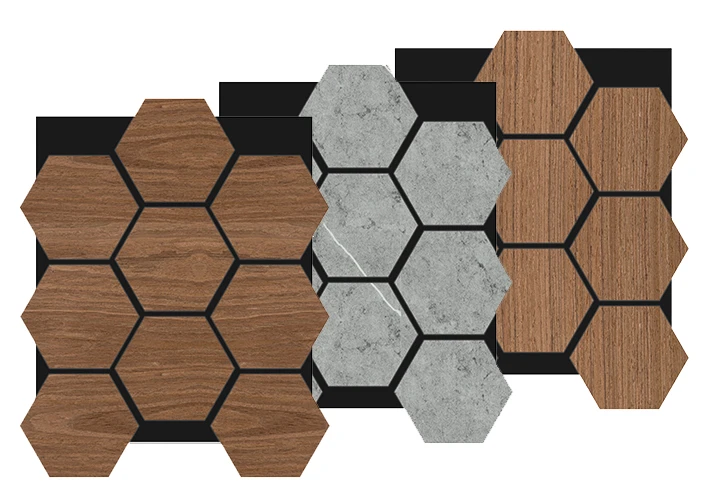
  • Oak, walnut, teak, and ash wood grains
  • Neutral and earth-tone PET felt colors
  • Custom fabric textures
  • Fire-retardant and moisture-resistant options

This makes Chinese products highly adaptable to local Malaysian tastes and architectural styles.

Strong Customization Capability for Project-Based Needs

4.1 Custom Sizes, Colors, and Patterns

Unlike off-the-shelf products from some markets, Chinese factories excel in OEM and ODM production. Malaysian buyers can easily request:

  • Custom panel dimensions
  • Bespoke color matching
  • Logo-engraved or branded panels
  • Special perforation or slat spacing
  • Project-specific acoustic performance levels

This flexibility is especially valuable for hotels, commercial branding projects, and premium office interiors.

4.2 Support for Architects and Designers

Many Chinese acoustic panel suppliers provide:

  • Acoustic test reports (NRC values)
  • CAD drawings and installation diagrams
  • Sample kits for approval
  • Mock-up panels for project verification

These services help Malaysian architects and interior designers specify Chinese acoustic panels with confidence, ensuring compliance with project requirements.

Mature Export Experience and Malaysia-Friendly Logistics

5.1 Deep Experience in Southeast Asian Exports

China has long been Malaysia’s largest trading partner. Acoustic panel manufacturers are highly familiar with:

  • Malaysian import procedures
  • HS codes and documentation
  • Packaging standards for sea transport
  • Working with Malaysian freight forwarders

This experience significantly reduces transaction risks for Malaysian buyers.

5.2 Efficient Shipping Routes

Shipping acoustic panels from China to Malaysia is relatively efficient due to:

  • Frequent sailings from ports such as Shenzhen, Guangzhou, Foshan, Xiamen, and Shanghai
  • Short transit times (typically 7–14 days)
  • Competitive container freight rates

For Malaysian importers, this means shorter lead times and predictable delivery schedules, even for large orders.

Compliance with International and Malaysian Standards

6.1 Acoustic Performance Standards

Reputable Chinese acoustic panel manufacturers conduct laboratory testing according to international standards such as:

  • NRC (Noise Reduction Coefficient)
  • ISO acoustic testing methods
  • ASTM standards

These performance metrics are widely accepted in Malaysian projects, particularly those following international building practices.

6.2 Fire Safety and Environmental Compliance

Many Chinese factories now offer products that meet:

  • Fire-retardant classifications
  • Low VOC emission requirements
  • Formaldehyde emission limits
  • Green building material standards

This is especially important as Malaysia sees growing adoption of green building concepts and sustainability certifications.

Manufacturing Scale and Supply Chain Reliability

7.1 Large Production Capacity

Chinese acoustic panel factories often operate:

  • Multiple production lines
  • Automated cutting and lamination systems
  • High-volume PET felt and MDF processing

This allows them to handle large-scale orders without compromising delivery schedules—an advantage for Malaysian wholesalers and project suppliers.

7.2 Consistent Quality Across Batches

For Malaysian buyers, consistency is crucial—especially when projects span multiple phases. Chinese manufacturers are well-equipped to provide:

  • Standardized raw materials
  • Batch consistency
  • Repeat orders with identical specifications

This reliability builds long-term trust between Malaysian buyers and Chinese suppliers.

China vs Other Sourcing Countries: A Comparative View

8.1 China vs Europe

European acoustic panels are known for premium design and branding but often come with:

  • Much higher prices
  • Longer lead times
  • Limited customization for overseas buyers

For cost-sensitive Malaysian projects, China offers a better balance of quality and affordability.

8.2 China vs Local Malaysian Suppliers

While local suppliers offer faster installation and after-sales services, they often rely on imported materials. Chinese factories provide:

  • Lower factory-direct pricing
  • Broader product selection
  • Stronger customization options

As a result, many Malaysian companies choose to import from China and handle local installation themselves.

Digital Communication and Transparency in Procurement

9.1 Online Catalogs and Virtual Factory Tours

Chinese acoustic panel suppliers increasingly support buyers through:

  • Professional websites
  • Detailed product catalogs
  • Virtual factory tours
  • Online video inspections

This transparency makes it easier for Malaysian buyers to evaluate suppliers remotely, reducing the need for frequent travel.

9.2 Faster Quotation and Sampling Process

Compared to many traditional markets, Chinese suppliers are known for:

  • Quick quotation turnaround
  • Efficient sampling procedures
  • Clear technical communication

This responsiveness is highly valued by Malaysian buyers working under tight project timelines.

Long-Term Partnership Opportunities

10.1 Private Label and Distribution Models

Many Malaysian importers and distributors work with Chinese factories to:

  • Develop private-label acoustic panels
  • Secure exclusive distribution rights
  • Build their own local brands

China’s OEM capability makes these long-term partnerships feasible and scalable.

10.2 Growing Trust Through Repeat Orders

As trust builds through consistent quality and delivery, Malaysian buyers often transition from:

  • Small trial orders
  • To full container loads
  • To long-term annual supply agreements

This evolution strengthens the China–Malaysia acoustic panel trade relationship.

The Role of China in Malaysia’s Future Acoustic Market

11.1 Increasing Urban Density and Noise Challenges

As Malaysian cities grow denser, acoustic solutions will become even more essential in:

  • High-rise residential buildings
  • Mixed-use developments
  • Public and commercial spaces

Chinese suppliers are well-positioned to meet this rising demand at scale.

11.2 Alignment with Smart and Green Buildings

China’s acoustic panel industry is increasingly investing in:

  • Sustainable raw materials
  • Recyclable PET felt panels
  • Energy-efficient production processes

These trends align well with Malaysia’s green building and smart city initiatives.

Conclusion: Why China Remains the Preferred Source for Malaysian Buyers

From cost efficiency and product variety to customization flexibility and export reliability, the reasons are clear. Chinese acoustic panel manufacturers offer Malaysian buyers a unique combination of affordability, quality, scale, and service that few other sourcing regions can match.

For Malaysian distributors, contractors, developers, and designers seeking reliable acoustic solutions, sourcing from China is not just a cost-driven decision—it is a strategic supply chain choice.

As Malaysia’s construction and interior design markets continue to evolve, China is expected to remain a key partner in supplying acoustic panels that meet modern performance, design, and sustainability requirements.

Appelez-nous

Envoyez-nous un message sur whatsapp +86 189 5395 5575et nous vous répondrons immédiatement !

    fr_FRFrench