White Linen WPC Fluted 3D Wall Panels are becoming an attractive option for interior design projects that require a balance of modern aesthetics, practical performance, and efficient installation. Combining the soft, elegant appearance of white linen textures with the three-dimensional depth of fluted profiles, these decorative wall panels are suitable for residential developments, hotels, office buildings, commercial spaces, retail interiors, and hospitality projects.
For international importers, wholesalers, building material distributors, interior decoration contractors, and project procurement companies, sourcing White Linen WPC Fluted 3D Wall Panels directly from a China factory can offer significant advantages. These include competitive manufacturing costs, flexible customization, a wider selection of surface finishes, scalable production capacity, and access to OEM and ODM services.
However, importing decorative wall panels from China involves more than finding an attractive product and negotiating a price. Buyers need to evaluate the manufacturer's production capabilities, confirm product specifications, understand packaging and shipping requirements, calculate the total landed cost, and establish quality inspection procedures before placing a bulk order.
This guide explains how to import White Linen WPC Fluted 3D Wall Panels from a China factory, covering product selection, supplier evaluation, customization, pricing, quality control, shipping, and international procurement considerations. It also introduces how AesthEdge supports overseas B2B buyers looking for a reliable Chinese manufacturing partner.
Understanding White Linen WPC Fluted 3D Wall Panels Before Importing
Before contacting manufacturers, international buyers should understand the product's construction, decorative characteristics, technical specifications, and commercial applications. Having clear purchasing requirements makes supplier communication more efficient and reduces the risk of receiving products that do not match the intended project.
What Are White Linen WPC Fluted 3D Wall Panels?
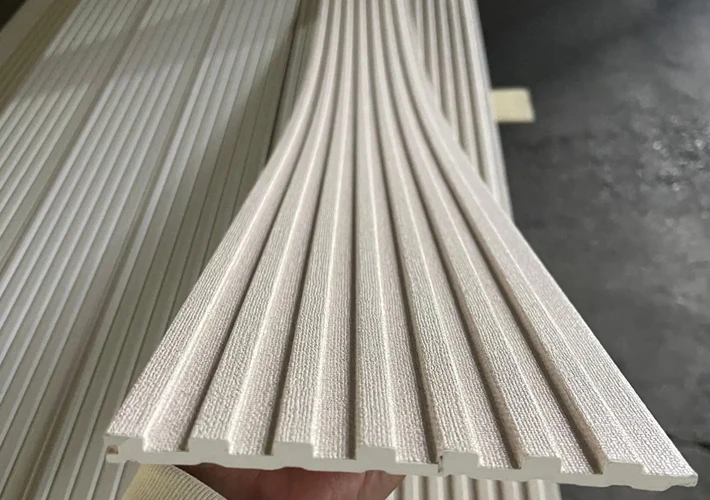
White Linen WPC Fluted 3D Wall Panels are decorative interior wall materials manufactured using wood-plastic composite (WPC) technology. They combine a wood-based component with polymer materials to create a composite substrate that can be processed into decorative profiles and finished with different surface textures.
The term "White Linen" describes the panel's decorative surface appearance. Rather than presenting a completely flat, ordinary white finish, the surface is designed to resemble the subtle texture of linen fabric. This creates a softer visual effect and adds understated detail to interior spaces.
The fluted design introduces regularly spaced grooves, ridges, or curved profiles across the panel surface. These three-dimensional structures create visual depth and make otherwise plain walls more attractive.
The combination of these two design elements provides several aesthetic advantages:
Soft neutral appearance: White linen finishes complement a wide range of interior color schemes.
Three-dimensional texture: Fluted profiles create depth, rhythm, and visual interest.
Contemporary styling: The panels work well in modern, minimalist, Scandinavian, and luxury-inspired interiors.
Flexible design combinations: They can be paired with wood finishes, stone-look materials, metal details, and decorative lighting.
Consistent decorative effect: Factory production helps maintain a relatively uniform appearance across large orders.
For B2B buyers, this combination is particularly useful when sourcing materials for projects that require a consistent decorative style across multiple rooms or buildings.
Why Are White Linen Finishes Popular in Commercial Interiors?
White remains one of the most widely used colors in interior architecture because it offers flexibility across different design concepts. However, completely smooth white surfaces can sometimes appear visually plain.
White linen finishes address this design limitation by introducing subtle surface texture without making the wall visually overwhelming.
In hotel interiors, these panels can create a clean and welcoming atmosphere in guest rooms, reception areas, and corridors. In offices, they can contribute to a professional environment while maintaining a contemporary appearance.
For retail and commercial developments, white linen fluted panels provide designers with a neutral decorative material that can be combined with brand-specific colors, signage, furniture, and lighting.
Their main commercial advantage is design versatility. Distributors and wholesalers can introduce them into their product portfolios without limiting their potential customers to one particular interior design style.
Common Applications of White Linen WPC Fluted 3D Wall Panels
Typical applications include:
Application
Potential use
Hotels
Guest rooms, reception walls, corridors, and decorative feature walls
Apartments
Living rooms, bedrooms, and entrance areas
Bureaux
Reception backgrounds, meeting rooms, and collaborative spaces
Retail stores
Display backgrounds, product presentation walls, and fitting areas
Restaurants
Decorative dining walls and reception spaces
Commercial buildings
Lobbies, waiting areas, and shared interior spaces
Interior renovation
Feature wall upgrades and decorative wall improvements
When selecting products for commercial projects, buyers should confirm whether the specific panel construction and surface finish meet the project's fire, environmental, and building material requirements.
Key Product Specifications to Confirm
Not every White Linen WPC Fluted 3D Wall Panel available from Chinese manufacturers has identical specifications. Buyers should request a technical datasheet before making a purchasing decision.
Important specifications include:
Specification
What buyers should confirm
Product material
WPC composition and substrate construction
Panel dimensions
Length, width, and thickness
Fluted profile
Groove depth, width, spacing, and shape
Surface finish
White linen texture and decorative treatment
Color consistency
Color tolerance between production batches
Weight
Weight per panel or square meter
Installation
Recommended fixing method and accessories
Performance
Moisture resistance, dimensional stability, and other tested properties
Emballage
Protective film, corner protection, and carton or pallet specifications
For international procurement, do not rely exclusively on product photographs. Request physical samples and technical documentation to verify the actual product.
How to Find a Reliable White Linen WPC Fluted Wall Panel Manufacturer in China
China is one of the major sourcing destinations for decorative interior building materials. Buyers can find manufacturers offering WPC wall panels, PVC decorative sheets, bamboo charcoal wood veneer, acoustic wall panels, and other interior finishing products.
Nevertheless, not every supplier operates as a direct manufacturer. Some companies are trading businesses, wholesalers, or intermediaries purchasing products from other factories. Understanding the difference is important when importing White Linen WPC Fluted 3D Wall Panels in commercial quantities.
Search for Manufacturers with Relevant Production Experience
The first step is to identify manufacturers that specialize in WPC decorative wall materials rather than general building material suppliers with limited product knowledge.
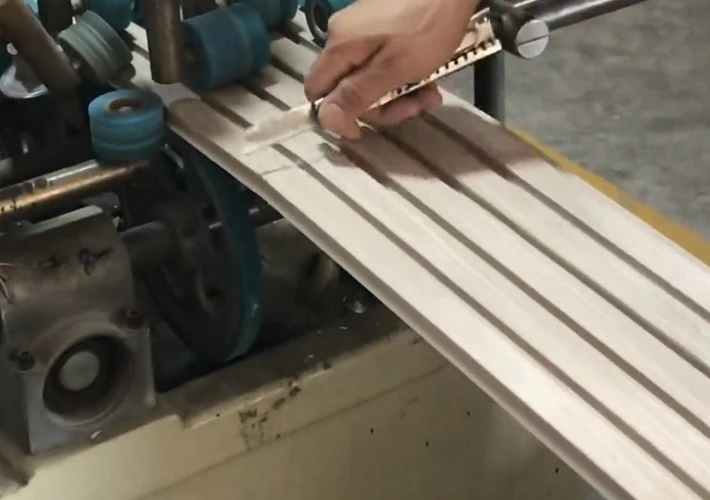
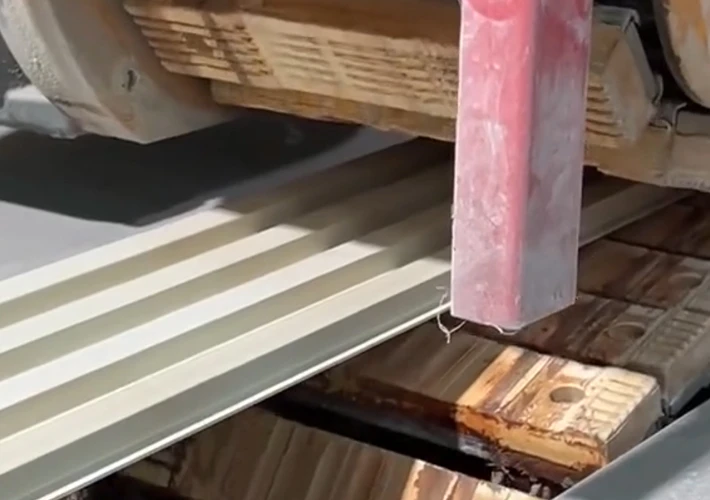
A qualified manufacturer should understand the entire production process, including raw material preparation, extrusion or profile processing, surface finishing, quality inspection, and packaging.
When evaluating a Chinese factory, buyers should consider the following:
1. Product specialization
Check whether the manufacturer regularly produces WPC fluted wall panels, Great Wall panels, 3D decorative panels, or similar interior wall products. Experience with comparable profiles is more valuable than simply having a large general product catalog.
2. Production facilities
Ask for factory videos, production line photographs, and information about manufacturing equipment. A factory with relevant production facilities is generally better positioned to control manufacturing schedules and product consistency.
3. Product development capabilities
Different markets may prefer different panel widths, groove patterns, colors, and surface finishes. Manufacturers with product development capabilities can provide more flexible solutions for distributors and project contractors.
4. Quality management
Ask how the factory manages raw materials, dimensional tolerances, surface appearance, and finished product inspections. A reliable manufacturer should have a clear inspection process rather than relying only on visual checks before shipment.
5. Export experience
International trade experience is another important consideration. Manufacturers familiar with export packaging, container loading, commercial invoices, packing lists, and international shipping arrangements can make procurement more efficient.
Where Can You Find Chinese WPC Wall Panel Factories?
International buyers can use several sourcing channels to identify potential suppliers.
Alibaba: A useful platform for comparing manufacturers, product specifications, prices, and export services.
Made-in-China: Another sourcing platform for identifying Chinese building material manufacturers and suppliers.
Google Search: Useful for discovering independent factory websites, product catalogs, and manufacturer information.
International building material exhibitions: Trade fairs provide opportunities to inspect physical samples and communicate directly with factory representatives.
Factory referrals: Existing business partners and industry contacts may recommend manufacturers with proven export records.
Online sourcing platforms are useful for initial research, but buyers should independently verify supplier information before placing large orders.
How to Distinguish a Factory from a Trading Company
A trading company is not necessarily an unreliable supplier. Some trading businesses provide valuable sourcing and coordination services. However, buyers looking for direct factory pricing, customized production, and long-term supply relationships should understand who actually manufactures the product.
Evaluation factor
Direct factory
Trading company
Production control
Direct control over manufacturing
Depends on manufacturing partners
Customization
Usually communicates directly with production teams
Depends on factory cooperation
Production scheduling
More direct coordination
May involve additional communication
Product sourcing
Primarily its own production range
May offer products from multiple factories
Factory inspection
Direct access may be available
Access depends on the manufacturer
Pricing structure
Factory-based quotation
May include additional service margins
Before making a purchasing decision, request the company's registered business information, factory address, production evidence, and relevant product documentation.
A video call or third-party factory inspection can also help verify whether the supplier operates its own manufacturing facilities.
Why Choose AesthEdge as Your China WPC Wall Panel Supplier?
AesthEdge is a China-based manufacturer and supplier of decorative interior materials, with its factory located in Linyi City, Shandong Province, China.
The company focuses on providing interior decorative material solutions for international B2B buyers, including importers, wholesalers, distributors, contractors, and commercial project procurement companies.
Its product portfolio includes:
WPC fluted 3D wall panels and decorative wall profiles.
Bamboo charcoal wood veneer.
PVC marble sheets.
SPC and LVT flooring.
Acoustic wall panels.
Other decorative interior wall materials.
For overseas buyers, working with a supplier that understands multiple categories of interior materials can simplify product sourcing and help coordinate different decorative materials within one procurement program.
AesthEdge focuses on product supply, customized product solutions, design consultation, and installation guidance. Buyers can discuss product dimensions, colors, surface finishes, and project requirements with the company's sales team before confirming an order.
For distributors, AesthEdge can also support the development of product selections suitable for different market preferences.
The objective is not simply to sell individual wall panels, but to establish a stable supply relationship with international business partners.
How to Select the Right Specifications and Customize Your Order
Selecting the correct specifications is one of the most important steps when importing White Linen WPC Fluted 3D Wall Panels.
A product that looks attractive in a catalog may not be suitable for every installation environment. Buyers need to consider the project design, installation conditions, local market preferences, transportation limitations, and technical requirements.
Confirm Panel Dimensions and Profile Design
WPC fluted wall panels are available in different dimensions and profile configurations. These variations influence the overall decorative appearance, material consumption, installation efficiency, and transportation costs.
When requesting quotations, buyers should specify:
Overall panel width and length.
Panel thickness.
Groove depth and spacing.
Fluted profile shape.
Panel weight.
Installation and fixing requirements.
For example, narrow fluted profiles create a more delicate and visually detailed wall appearance, while wider profiles can produce a stronger architectural effect.
The choice should depend on the scale of the interior space and the design concept.
For hotel projects, buyers may prefer a consistent profile across guest rooms and public areas. For residential developments, different panel profiles may be selected for bedrooms, living rooms, and entrance walls.
It is also important to confirm whether the quoted dimensions represent the overall panel size or the effective coverage width after installation.
This distinction directly affects quantity calculations.
Choose the Appropriate White Linen Surface Finish
White linen is a decorative finish, not a universal technical specification. Different manufacturers may use different surface treatments, textures, and decorative processes.
Buyers should therefore request actual samples before approving mass production.
When checking a sample, pay attention to:
Color appearance: Determine whether the white tone is warm white, cool white, creamy white, or neutral white.
Texture definition: Check whether the linen pattern is subtle, pronounced, smooth, or embossed.
Surface consistency: Inspect whether the decorative finish is evenly distributed across the panel.
Lighting performance: Compare the sample under natural light and artificial lighting to understand how the white finish changes in different environments.
Scratch and stain resistance: Ask whether the specific surface treatment has relevant test results.
For large projects, the approved sample should be retained as the reference standard for mass production.
Consider OEM and ODM Customization
Customization can be an important advantage when importing from a Chinese manufacturer.
For wholesalers and distributors, OEM services can help establish a differentiated product range. For project contractors, customized dimensions and finishes can help match the requirements of a particular interior design.
Typical customization options include:
Customization item
Buyer requirements
Couleur
White linen, warm white, grey, beige, and other finishes
Surface texture
Linen texture, wood grain, matte, or other decorative finishes
Panel dimensions
Customized length, width, and thickness where production permits
Fluted design
Different groove widths, depths, and profile shapes
Emballage
Neutral cartons or customized branded packaging
Accessories
Compatible trims, corner profiles, and installation components
Branding
OEM labels and product identification
Not every customization option is available for every product. Buyers should confirm technical feasibility, minimum order quantities, development costs, and production lead times before finalizing the design.
For distributors planning to develop a private-label product line, it is especially important to establish clear agreements concerning approved designs, packaging artwork, product identification, and repeat-order consistency.
Calculate the Required Quantity Accurately
One common procurement mistake is calculating the order quantity based only on the total wall area.
The effective coverage area of each panel must be considered.
The basic formula is:
For example, assume a project requires 500 square meters of decorative wall coverage, and each panel provides 0.6 square meters of effective coverage.
The theoretical quantity is:
Therefore, the project requires at least 834 panels before adding any allowance for cutting, installation, and damage.
An additional allowance should be calculated according to the wall layout, installation pattern, and project conditions.
For simple rectangular walls, the additional quantity may be relatively small. For projects with numerous corners, openings, irregular surfaces, or complex decorative patterns, a larger allowance may be necessary.
Buyers should also consider whether future maintenance will require replacement panels from the same production batch.
For large commercial projects, ordering a reasonable reserve quantity can help reduce the risk of color or texture differences in later purchases.
How Much Does It Cost to Import White Linen WPC Fluted 3D Wall Panels from China?
Price is one of the most important factors in international procurement. However, the lowest factory quotation does not necessarily represent the lowest total purchasing cost.
For importers, the correct approach is to compare the complete procurement cost, including product manufacturing, packaging, transportation, customs duties, and other related expenses.
Main Factors Affecting Factory Prices
There is no universal price for White Linen WPC Fluted 3D Wall Panels because product specifications and manufacturing processes vary between factories.
The following factors influence the quotation:
1. Raw material composition
Different WPC formulations may use different proportions and types of wood-based materials and polymers. Material composition can influence product density, weight, mechanical properties, and manufacturing costs.
Buyers should compare equivalent specifications rather than choosing products based on price per panel alone.
2. Panel dimensions and thickness
Larger panels and thicker profiles generally require different material consumption and processing arrangements.
A quotation should clearly state the panel dimensions and thickness to avoid misunderstandings.
3. Surface finishing
Special decorative finishes, embossed textures, and customized colors may involve additional production processes or setup costs.
White linen finishes should be compared based on actual sample quality rather than their names alone.
4. Order quantity
Larger orders can help manufacturers optimize production and packaging arrangements. Some factories offer more competitive unit prices for full-container orders compared with small trial orders.
5. Packaging requirements
Standard export packaging and customized retail packaging have different costs. Buyers requiring branded cartons, special protective materials, or individual product labeling should include these requirements in the quotation request.
Understand the Difference Between EXW, FOB, CIF, and DDP
International buyers should understand the quotation terms before comparing suppliers.
Trade term
General meaning
What buyers should understand
EXW
Ex Works
Buyer takes responsibility for collection and subsequent transportation under the agreed arrangement
FOB
Free on Board
Seller handles the agreed delivery and export-clearance responsibilities up to loading on board at the named port
CIF
Cost, Insurance and Freight
Seller arranges cost, insurance, and freight to the named destination port
DDP
Delivered Duty Paid
Seller assumes broad delivery and import-clearance responsibilities, including applicable duties, under the agreed terms
The responsibilities of each party should always be checked against the applicable Incoterms version and the named place or port.
For new importers, comparing FOB and CIF quotations can provide a clearer understanding of the factory-side cost and the international freight component.
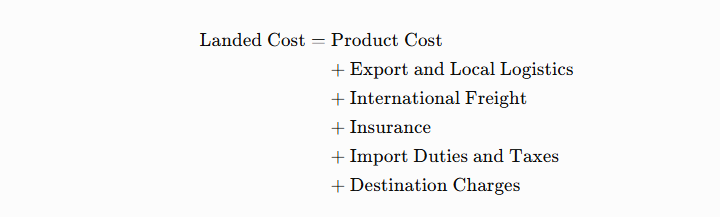
Calculate the Total Landed Cost
The total landed cost is more useful than the factory unit price when evaluating the profitability of an imported product.
A practical calculation is:
Depending on the trade term, some costs may already be included in the supplier's quotation.
For example, if an importer purchases White Linen WPC Fluted 3D Wall Panels for distribution in Europe, the procurement calculation should include the factory price, inland transportation in China, export handling, ocean freight, destination port charges, customs duties, applicable taxes, and final delivery.
Importers should also verify the product's correct customs classification and applicable import requirements with a customs broker or relevant authorities in the destination country.
Why Extremely Low Quotations Can Be Risky
When comparing multiple Chinese suppliers, a quotation significantly below the market range deserves further investigation.
Potential reasons include:
Different WPC material formulations.
Lower panel density or different thickness.
Inconsistent surface finishing.
Shorter or narrower panel dimensions.
Reduced packaging protection.
Different product grades.
Excluded accessories or additional charges.
A reliable purchasing decision should compare product specifications, quality evidence, packaging, delivery terms, and after-sales support alongside the quoted price.
For distributors, a slightly higher purchase price may be commercially worthwhile if it provides better product consistency and fewer customer complaints.
How to Place an Order and Manage Quality Control Before Shipment
After selecting a suitable Chinese manufacturer and confirming the product specifications, the next step is to establish a clear purchasing process.
A structured ordering procedure helps international buyers avoid misunderstandings and ensures that the delivered products match the approved samples and contractual requirements.
Step 1: Send a Detailed RFQ to the Manufacturer
An RFQ (Request for Quotation) should contain enough information for the manufacturer to prepare an accurate quotation.
For White Linen WPC Fluted 3D Wall Panels, buyers should provide:
Product name and reference photographs.
Required panel dimensions.
Thickness and fluted profile specifications.
White linen surface finish requirements.
Estimated order quantity.
Customization requirements.
Destination country and port.
Preferred shipping terms.
Expected delivery schedule.
Packaging and branding requirements.
Providing these details at the beginning reduces unnecessary communication and makes quotations easier to compare.
For project procurement, buyers should also provide architectural drawings or wall measurements when available.
Step 2: Request Samples Before Bulk Production
Sample approval is an essential part of importing decorative wall materials.
A digital photograph cannot accurately communicate every detail of a physical panel. Differences in lighting, screen settings, surface texture, and photography can make the actual product look different from the online presentation.
When receiving samples, inspect the following:
Color accuracy compared with the approved design.
Linen texture and surface finishing.
Panel thickness and dimensional accuracy.
Profile shape and groove consistency.
Surface defects, scratches, and visible imperfections.
Weight and general product construction.
Compatibility with the intended installation method.
For commercial projects, it is advisable to obtain enough samples for evaluation by the procurement team, designer, and project manager.
Once approved, the sample should be documented and used as the reference for subsequent production inspections.
Step 3: Confirm the Purchase Contract
Before transferring the deposit, both parties should confirm the commercial and technical details in a formal purchase contract or proforma invoice.
Important items include:
Contract item
Details to confirm
Product description
White Linen WPC Fluted 3D Wall Panels
Spécifications
Dimensions, thickness, profile, and surface finish
Quantity
Total panels and agreed quantity tolerance
Unit price
Price per panel or square meter
Total amount
Total contract value and currency
Payment terms
Deposit and balance payment arrangements
Lead time
Production completion and shipment schedule
Emballage
Carton, pallet, labeling, and protection requirements
Inspection
Quality standards and inspection procedures
Shipping terms
EXW, FOB, CIF, or another agreed Incoterm
Garantie
Agreed product warranty and claim procedures
The contract should clearly identify which specifications are mandatory and which are subject to mutually agreed tolerances.
This is particularly important for customized decorative products because even small differences in dimensions, color, or profile can affect the final installation.
Step 4: Monitor Production Progress
For large orders, buyers should maintain communication with the factory during manufacturing.
A professional supplier should be able to provide updates on:
Raw material preparation.
Production scheduling.
Panel processing.
Surface finishing.
Finished product inspection.
Packaging preparation.
Estimated completion date.
Production monitoring is particularly important for projects with fixed construction schedules.
If the imported materials are required for a hotel opening, commercial renovation, or property development, delayed production can affect other construction activities.
For this reason, buyers should discuss the delivery schedule before confirming the order rather than assuming that production can be completed immediately.
For White Linen WPC Fluted 3D Wall Panels, inspection should cover several areas.
Dimensional inspection
Check panel length, width, thickness, and profile dimensions against the approved specifications.
Appearance inspection
Inspect the white linen surface for scratches, stains, color inconsistencies, deformation, and other visible defects.
Profile consistency
Check whether the grooves, fluted structures, and decorative patterns are consistent throughout the production batch.
Quantity verification
Confirm the number of panels, cartons, pallets, and other included accessories.
Packaging inspection
Check carton strength, corner protection, protective film, moisture protection where appropriate, and shipping labels.
Documentation inspection
Verify that the commercial invoice, packing list, shipping information, and product descriptions are consistent.
For high-value orders, buyers can appoint an independent third-party inspection company in China.
An agreed inspection checklist provides a clear standard for determining whether the shipment is ready for release.
Shipping White Linen WPC Fluted 3D Wall Panels from China to Overseas Markets
Transportation is another important consideration when importing decorative wall panels.
WPC wall panels are generally lightweight compared with many traditional construction materials, but their length, shape, packaging, and volume can influence the most suitable shipping method.
Choose the Right Shipping Method
The three common international transportation options are sea freight, air freight, and express courier services.
Shipping method
Suitable situations
Main consideration
Sea freight
Bulk orders and container shipments
Lower transportation cost per unit for larger shipments, but longer transit times
Air freight
Urgent samples or smaller high-priority shipments
Faster transportation but higher cost
Express courier
Small samples and documents
Convenient for initial product evaluation, with size and weight limitations
For wholesalers, importers, and large commercial projects, sea freight is generally the most practical option for bulk WPC wall panel orders.
Air freight and express services are more suitable for samples, urgent replacement materials, or small trial orders.
FCL vs. LCL Shipping
Buyers importing WPC wall panels should understand the difference between FCL and LCL.
FCL (Full Container Load)
FCL means the buyer uses an entire shipping container for the shipment.
It is generally suitable for large orders where the volume of goods justifies booking a full container.
Advantages include:
More direct control over container loading.
Less handling compared with consolidated cargo.
Better coordination for large-volume shipments.
Potentially lower freight cost per unit at sufficient shipment volumes.
LCL (Less than Container Load)
LCL means the buyer shares container space with cargo from other shippers.
It is suitable for smaller orders that do not justify booking a full container.
However, LCL shipments may involve additional consolidation and deconsolidation handling charges.
Because fluted WPC panels can be relatively long and require protective packaging, buyers should compare the volumetric shipping cost and handling arrangements carefully.
How to Calculate Container Loading Quantity
The loading quantity depends on the product dimensions, packaging method, carton arrangement, container dimensions, cargo weight, and shipping restrictions.
Do not calculate container capacity based only on the nominal container volume.
For example, if panels are packed in long cartons, the available loading space may be affected by carton orientation and stacking limitations.
Before placing a large order, request a loading plan from the manufacturer or freight forwarder.
The loading plan should include:
Carton dimensions.
Number of panels per carton.
Carton quantity.
Total shipment volume in CBM.
Gross weight and net weight.
Pallet dimensions, if applicable.
Estimated loading quantity for the selected container.
This information helps buyers estimate transportation expenses and avoid unexpected loading problems.
Export Packaging Requirements for WPC Fluted Wall Panels
Decorative wall panels need appropriate packaging because their edges, profiles, and surface finishes may be damaged during transportation.
A suitable export packaging system may include:
Individual protective film or surface protection.
Protective foam or cushioning materials.
Reinforced cartons.
Edge and corner protection.
Appropriate palletization when required.
Clear product identification labels.
Moisture protection suitable for the transportation environment.
For long-distance sea transportation, packaging should be designed to withstand loading, unloading, stacking, and changes in transportation conditions.
Buyers should also confirm whether the packaging materials meet the destination country's applicable import requirements.
Important Documents for Importing from China
The exact documentation depends on the destination country, product classification, shipping arrangement, and applicable regulations.
Common international trade documents include:
Commercial Invoice.
Packing List.
Bill of Lading or Air Waybill.
Certificate of Origin, when required or applicable.
Product technical datasheet.
Relevant test reports or compliance documents.
Insurance documentation, where applicable.
Customs declaration information.
Some destinations may require additional documentation concerning product safety, chemical substances, fire performance, or building material regulations.
Buyers should confirm these requirements before shipment rather than waiting until the cargo arrives.
Check Import Regulations in Your Target Market
Different countries have different requirements for decorative interior building materials.
For example, buyers importing WPC wall panels into the United States, European Union, Australia, or Middle Eastern markets should verify the applicable product standards and documentation requirements.
Depending on the intended application, relevant considerations may include:
Fire performance and reaction-to-fire classification.
Chemical emissions and indoor air quality.
Formaldehyde-related requirements where applicable to the product composition.
Restricted substances and chemical compliance.
General product safety and labeling.
Customs classification and import duties.
It is important not to assume that one test report automatically satisfies every market's regulations.
The importer should identify the specific requirements applicable to the finished product, its material composition, and its intended use.
How to Build a Long-Term Partnership with a China WPC Wall Panel Factory
Importing White Linen WPC Fluted 3D Wall Panels should not be viewed only as a one-time purchasing activity.
For wholesalers, distributors, and building material importers, a stable relationship with a Chinese factory can support long-term business development.
A reliable manufacturing partner can help buyers maintain consistent product specifications, introduce new decorative finishes, coordinate repeat orders, and respond to changing market demand.
Develop a Consistent Product Range
Distributors should consider building a complete decorative wall panel collection rather than relying on one individual design.
For example, White Linen WPC Fluted 3D Wall Panels can be positioned alongside:
White and beige fluted wall panels.
Walnut-colored WPC decorative panels.
Oak-look decorative wall panels.
Grey and neutral-tone wall finishes.
Bamboo charcoal wood veneer.
PVC marble sheets.
Acoustic decorative wall panels.
Offering multiple finishes allows distributors to serve different customer preferences while maintaining a coherent product category.
For project contractors, combining complementary wall materials can also create more design options for hotels, offices, residential developments, and commercial buildings.
Establish Repeat-Order Quality Standards
One challenge in international sourcing is maintaining product consistency between different production batches.
A product that meets the required standard in the first shipment should maintain comparable specifications in subsequent orders.
To improve repeat-order consistency, buyers should establish written standards covering:
Approved product samples.
Panel dimensions and tolerances.
Surface finish and color reference.
Profile structure.
Packaging requirements.
Inspection procedures.
Acceptable defect criteria.
For distributors, maintaining these records is particularly important because different orders may be supplied to different customers over several months.
A standardized product specification also makes it easier to compare quotations and identify changes in manufacturing costs.
Discuss Long-Term Pricing and Production Planning
Importers purchasing regularly can discuss annual procurement plans with the factory.
A long-term purchasing arrangement may help both parties coordinate:
Estimated monthly or quarterly demand.
Raw material purchasing.
Production scheduling.
Seasonal shipping arrangements.
Product development plans.
Packaging and branding requirements.
For example, a distributor planning to introduce White Linen WPC Fluted 3D Wall Panels into a new market may begin with a trial shipment and gradually increase order quantities as sales develop.
This approach reduces the pressure of committing to large quantities before understanding actual market demand.
Use Samples and Marketing Materials to Support Sales
For B2B distributors, selling decorative wall materials requires more than providing a price list.
Customers often need to understand the product's appearance, dimensions, surface texture, installation method, and suitable applications.
Manufacturers can support their distribution partners by providing:
Product catalogs.
High-resolution product photographs.
Installation videos.
Technical specifications.
Physical samples.
Packaging information.
Product application references.
A well-prepared product presentation helps distributors communicate technical details and demonstrate the product's value to contractors, designers, and project procurement teams.
Practical Import Checklist for International B2B Buyers
Before confirming a bulk purchase, importers should review the complete procurement process to ensure that no important details have been overlooked.
The following checklist can be used by purchasing managers, distributors, and project procurement teams.
Procurement stage
Key actions
Supplier research
Verify factory identity and production capabilities
Product selection
Confirm WPC composition, dimensions, profile, and finish
Sample approval
Inspect physical samples and approve the reference finish
Quotation
Compare unit prices, MOQ, and trade terms
Order confirmation
Sign the contract and confirm payment arrangements
Production
Monitor manufacturing progress and delivery schedules
Quality control
Arrange pre-shipment inspection
Emballage
Confirm carton specifications and loading arrangements
Shipping
Select a suitable freight method and destination port
Customs
Prepare the required import documentation
After-sales
Establish procedures for damage claims and quality issues
Understand Payment Terms and Transaction Risks
Payment arrangements should be agreed upon before production begins.
A common international manufacturing arrangement involves an advance deposit followed by payment of the remaining balance according to the agreed production and inspection conditions. The exact payment ratio is negotiable and should be documented in the purchase contract.
Buyers should pay attention to the following:
Confirm that the beneficiary bank account matches the verified supplier or an officially authorized receiving entity.
Avoid transferring money to unverified personal accounts.
Confirm the currency and total payment amount.
Document payment milestones and the conditions for releasing the balance.
Keep commercial invoices, payment records, and order confirmations.
Agree on how shortages, transportation damage, and manufacturing defects will be handled.
For first-time buyers, an independent inspection before the final payment can provide additional purchasing confidence, subject to the agreed payment contract.
Evaluate the Supplier Beyond the First Order
A successful first shipment is only the beginning of a long-term sourcing relationship.
For importers planning to distribute White Linen WPC Fluted 3D Wall Panels in their local markets, the manufacturer's ability to support repeat orders is equally important.
Consider whether the supplier can maintain approved specifications, provide updated product information, support new product development, and communicate clearly when production or shipping schedules change.
These factors influence inventory planning, customer satisfaction, and the overall profitability of a distribution business.
Frequently Asked Questions About Importing White Linen WPC Fluted 3D Wall Panels from China
Q1: Why should I import White Linen WPC Fluted 3D Wall Panels directly from a China factory?
Direct factory sourcing can provide access to manufacturing-based pricing, customized specifications, flexible product development, and more direct production communication. It can also help importers establish long-term supply relationships and reduce unnecessary sourcing intermediaries.
Q2: Can I customize the color and dimensions of White Linen WPC Fluted 3D Wall Panels?
Many Chinese manufacturers offer customization options, including panel dimensions, surface finishes, decorative textures, and packaging. However, available options and minimum order quantities depend on the factory's production capabilities and manufacturing process. Buyers should confirm customization details before placing an order.
Q3: Can I order samples before purchasing a full container?
Yes. Sample orders are a practical way to evaluate color, texture, profile design, dimensions, and general product quality before committing to a larger shipment. Buyers should confirm sample availability, sample costs, and international courier charges with the manufacturer.
Q4: Are WPC fluted wall panels suitable for hotels and commercial buildings?
They can be used in hotel guest rooms, reception areas, offices, retail interiors, and other decorative interior applications. However, suitability depends on the specific product construction and the project's technical requirements. Fire performance, chemical emissions, and other applicable building regulations should be verified before installation.
Q5: Are White Linen WPC Fluted 3D Wall Panels waterproof?
WPC materials generally offer better moisture resistance than many untreated wood-based decorative materials. However, this does not mean every WPC wall panel is completely waterproof or suitable for continuous water exposure. Buyers should request product-specific test information and follow the manufacturer's installation recommendations.
Q6: How do I calculate the quantity needed for a project?
Divide the total wall coverage area by the effective coverage area of one panel. Then add an appropriate allowance for cutting, installation waste, and possible future replacements. Always use the manufacturer's actual effective panel coverage rather than the nominal panel width.
Q7: How long does it take to manufacture and ship an order from China?
The production lead time depends on order quantity, product specifications, customization requirements, and the factory's current schedule. Shipping time depends on the destination, transportation method, and logistics conditions. Buyers should obtain a project-specific production and shipping schedule before confirming the order.
Q8: What should I check before paying a deposit to a Chinese WPC wall panel supplier?
Verify the supplier's business information, factory capabilities, product specifications, approved samples, quotation terms, payment details, packaging arrangements, and production lead time. A formal purchase agreement should clearly state the product requirements and responsibilities of both parties.
Q9: Can a China factory provide OEM services for WPC wall panels?
Many manufacturers offer OEM services, including customized branding, product labeling, packaging, and selected product specifications. Buyers should confirm whether their requested designs and branding arrangements are supported and whether additional development or setup fees apply.
Q10: What is the most important factor when choosing a WPC fluted wall panel supplier?
There is no single factor that determines supplier reliability. Buyers should evaluate manufacturing capability, product consistency, customization support, quality control, export experience, communication, and long-term supply capacity together.
Conclusion: Source White Linen WPC Fluted 3D Wall Panels from AesthEdge, China
Importing White Linen WPC Fluted 3D Wall Panels from China can be a valuable sourcing opportunity for international building material importers, wholesalers, distributors, and commercial project contractors.
The key to a successful procurement process is choosing the right manufacturer and establishing clear requirements before production begins.
Buyers should carefully evaluate product dimensions, surface finishes, WPC material specifications, customization options, factory capabilities, quality inspection procedures, packaging, and international shipping arrangements.
AesthEdge, a China-based decorative interior material manufacturer in Linyi City, Shandong Province, provides WPC decorative wall panels and a range of complementary interior finishing materials for overseas B2B customers.
With a focus on product supply, customization, design consultation, and installation guidance, AesthEdge aims to support importers and project contractors seeking dependable Chinese manufacturing partners.
Whether you are developing a new decorative wall panel collection, expanding your building material distribution business, or sourcing materials for a commercial interior project, working directly with a qualified factory can make your procurement process more efficient.
Looking for a White Linen WPC Fluted 3D Wall Panel manufacturer in China?
Contact AesthEdge to discuss your product specifications, request samples, and receive a factory quotation for your next project.






 French
 English
 Russian
 Spanish
 Arabic
 Portuguese
 Japanese