Best Acoustic Panels for Music Studios

Published on: 30 Déc, 2025
Table des matières

Creating a professional music studio—whether a home studio, project studio, or commercial recording facility—requires more than high-end microphones and studio monitors. One of the most critical yet often misunderstood elements is acoustic treatment. Among all acoustic solutions, panneaux acoustiques play the most important role in shaping sound clarity, balance, and accuracy.

This in-depth guide explains what makes the best acoustic panels for music studios, how to select the right type, how they perform in real recording environments, and why working directly with a China-based acoustic panel factory can offer significant advantages for studios, brands, and project buyers worldwide.

Why Acoustic Panels Are Essential for Music Studios

Music studios are highly sensitive acoustic environments. Without proper treatment, sound reflections from walls, ceilings, and corners create serious problems such as:

  • Uncontrolled reverberation
  • Flutter echo
  • Standing waves
  • Bass buildup
  • Inaccurate monitoring and mixing

Even expensive studio monitors cannot compensate for poor room acoustics.

Acoustic Panels vs Soundproofing (Important Clarification)

Many buyers confuse acoustic panels with soundproofing materials. They serve different purposes:

  • Soundproofing prevents sound from entering or leaving a room
  • Panneaux acoustiques improve sound quality inside the room

For music studios, acoustic panels are the first and most cost-effective solution to achieve professional sound.

How Acoustic Panels Improve Studio Performance

High-quality acoustic panels help studios:

  • Produce cleaner vocal recordings
  • Improve stereo imaging
  • Achieve flatter frequency response
  • Reduce listening fatigue
  • Ensure mixes translate well across different playback systems

This is why professional studios, podcast rooms, broadcast facilities, and music schools all rely heavily on acoustic panels.

How Acoustic Panels Work: Materials, Thickness, and Performance

Understanding how acoustic panels function is essential when choosing the right solution.

Sound Absorption Principle

Acoustic panels work by converting sound energy into heat through friction inside porous materials. When sound waves enter the panel, their energy is reduced instead of being reflected back into the room.

Key Performance Indicators

NRC (Noise Reduction Coefficient)

  • NRC ranges from 0.0 to 1.0
  • Professional music studios typically require NRC 0.85–1.00
  • Higher NRC means better sound absorption

Thickness Matters

  • 25mm (1”) panels → High-frequency control
  • 50mm (2”) panels → Mid-frequency absorption
  • 75mm–100mm (3”–4”) panels → Low-frequency improvement

Professional studios often combine multiple thicknesses.

Common Acoustic Panel Materials

MatériauAcoustic PerformanceStudio Suitability
FiberglassExcellent broadband absorptionProfessional studios
Polyester fiberStable, eco-friendly, cost-effectiveHome & project studios
Acoustic foamLimited low-frequency controlEntry-level use
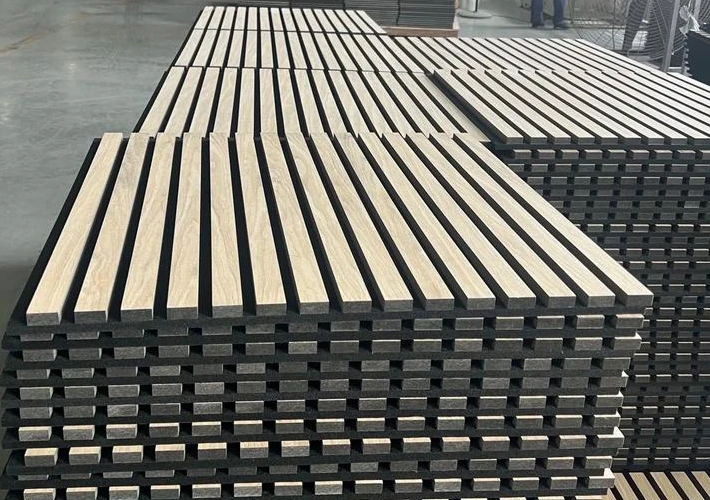
Wood slat + PETAbsorption + diffusionHigh-end studios

As an acoustic panel manufacturer in China, we produce panels using high-density polyester fiber and fiberglass cores, customized for different studio requirements.

Best Types of Acoustic Panels for Music Studios

Different studio areas require different acoustic solutions. Below are the most effective acoustic panel types used in music studios worldwide.

Broadband Acoustic Panels

These are the most commonly used panels in recording and mixing rooms.

Applications :

  • Side walls
  • Rear walls
  • First reflection points

Avantages :

  • Balanced absorption across mid and high frequencies
  • Improves clarity and detail
  • Suitable for vocals, instruments, and mixing

Bass Traps (Low-Frequency Control)

Low frequencies accumulate in corners and cause muddy bass.

Applications :

  • Vertical room corners
  • Ceiling-wall intersections

Avantages :

  • Reduces bass boominess
  • Improves low-end accuracy
  • Essential for mixing and mastering rooms

Ceiling Acoustic Panels (Cloud Panels)

Often overlooked, ceiling reflections are critical.

Applications :

  • Above mixing position
  • Above drum kits or vocal booths

Avantages :

  • Reduces vertical reflections
  • Improves stereo imaging
  • Enhances recording clarity

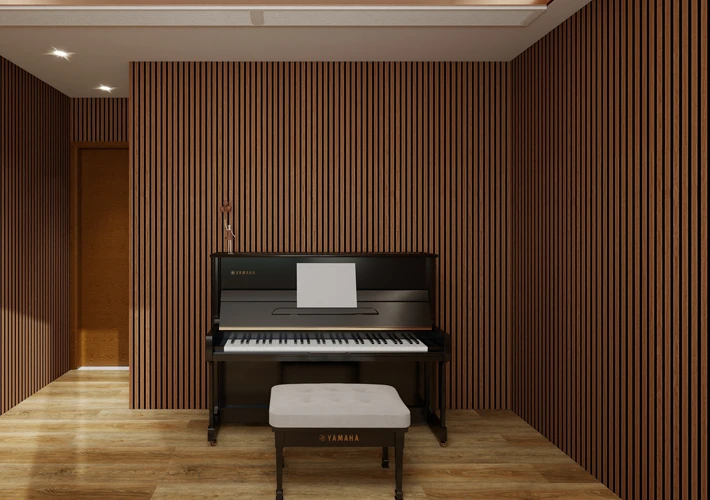
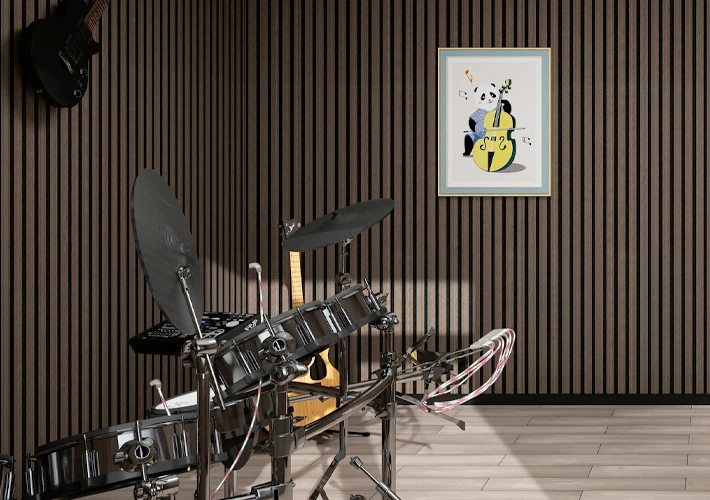
Wooden Slat Acoustic Panels

Combining absorption and diffusion, these panels are increasingly popular.

Applications :

  • Rear walls
  • Creative studios
  • High-end music spaces

Avantages :

  • Natural sound diffusion
  • Premium aesthetics
  • Excellent for modern studios

As a China acoustic panel factory, we offer custom wood slat acoustic panels with PET backing designed specifically for music studio acoustics.

How to Choose the Best Acoustic Panels for Your Studio

Selecting the right acoustic panels depends on multiple factors.

Studio Size and Purpose

Studio TypeRecommended Solution
Home studio50mm panels + corner bass traps
Project studio50–75mm panels + ceiling clouds
Professional studioFull broadband system + diffusion

Panel Quantity Guidelines

Approximate recommendations:

  • Small studio (10–15㎡): 8–12 panels + 2–4 bass traps
  • Medium studio (20–30㎡): 16–24 panels + 4–6 bass traps
  • Large studio: Customized acoustic design

Customization Options (Important for B2B Buyers)

Working directly with a Chinese acoustic panel manufacturer, buyers can customize:

  • Panel size and thickness
  • Fabric color and texture
  • Fire-retardant standards
  • Eco-friendly materials
  • OEM & private labeling
  • Bulk packaging for export

This flexibility is often impossible with retail brands.

Advantages of Buying Acoustic Panels Directly from a China Factory

As a professional acoustic panel factory in China, we serve global clients including studio brands, distributors, contractors, and project developers.

Cost Advantage

  • Factory-direct pricing
  • No brand premium
  • Better margins for distributors

Quality Control

  • In-house raw material sourcing
  • Density and NRC testing
  • Fire resistance compliance (EN, ASTM options)
  • Consistent batch quality

Large-Scale Production Capability

  • Bulk orders supported
  • Stable lead times
  • OEM / ODM services

Export Experience

We export acoustic panels to:

  • United States
  • Europe
  • Middle East
  • Australia
  • Southeast Asia

With professional packaging and international logistics support.

Ideal for B2B Projects

Our acoustic panels are widely used in:

  • Music studios
  • Recording rooms
  • Podcast studios
  • Broadcasting rooms
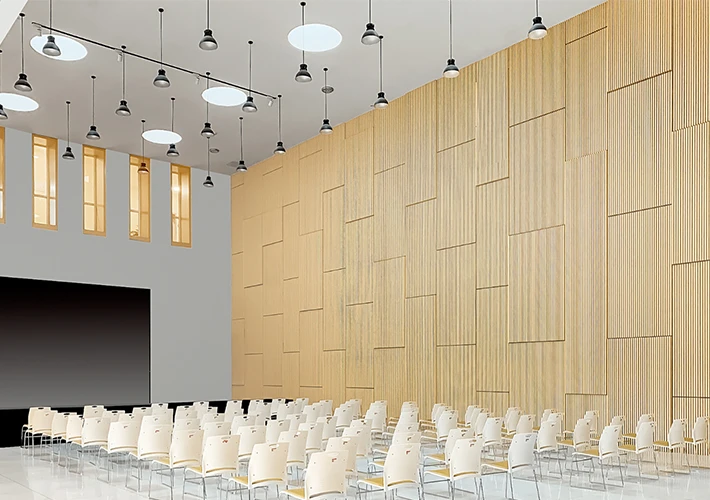
  • Music schools
  • Commercial audio projects

Installation Tips and Final Recommendations

Proper Panel Placement

For best performance:

  • Treat first reflection points on side walls
  • Install bass traps in corners
  • Add ceiling panels above listening position
  • Keep left and right symmetry
  • Leave small air gaps behind panels for better low-frequency absorption

Les erreurs courantes à éviter

  • Overusing thin foam panels
  • Ignoring low-frequency treatment
  • Treating only one wall
  • Choosing aesthetics over performance

Final Thoughts: Best Acoustic Panels for Music Studios

The best acoustic panels for music studios are not defined by brand names alone, but by:

  • Correct material selection
  • Proper thickness
  • Strategic placement
  • Reliable manufacturing quality

By sourcing directly from a professional acoustic panel factory in China, studios and distributors can achieve high-performance acoustic treatment at competitive prices, with full customization and stable supply.

Si vous cherchez OEM acoustic panels, bulk supply, or project-based studio solutions, working with an experienced Chinese manufacturer gives you a strong advantage in quality, cost, and flexibility.

Appelez-nous

Envoyez-nous un message sur whatsapp +86 189 5395 5575et nous vous répondrons immédiatement !

    fr_FRFrench