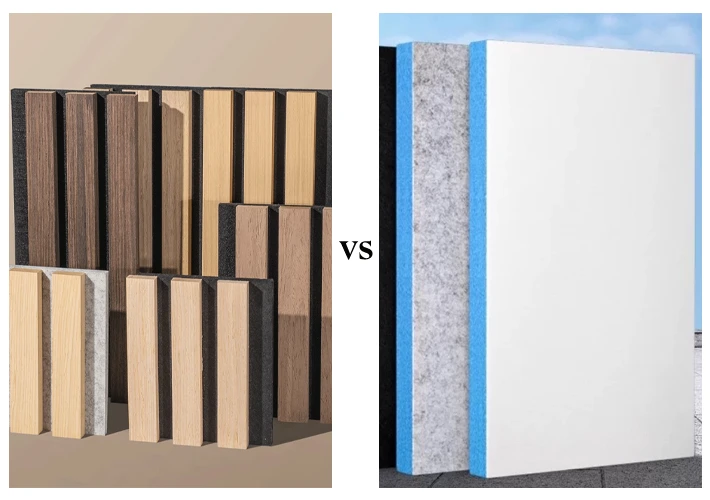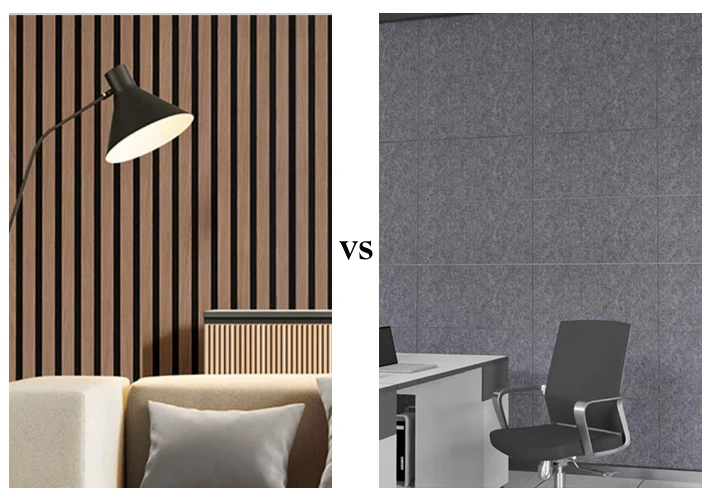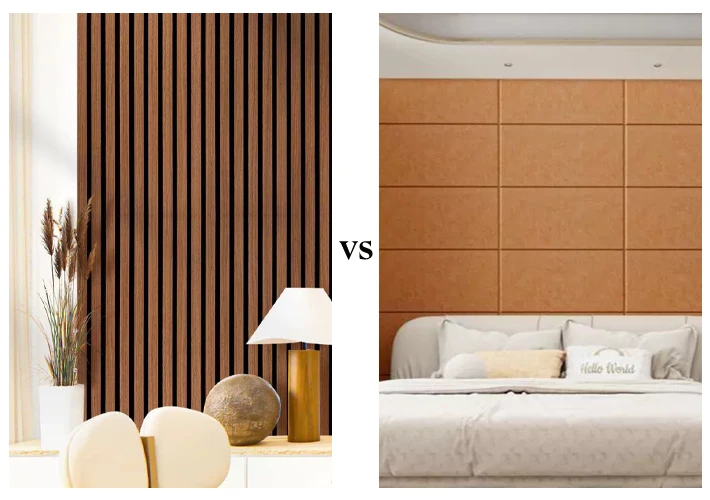
Noise control has become an essential consideration in modern architecture, commercial spaces, offices, hotels, schools, recording studios, and residential buildings. However, many buyers still confuse acoustic absorption panels with soundproof panels, assuming they perform the same function.
In reality, these two products solve completely different acoustic problems.
If you are an importer, distributor, contractor, architect, or project owner, understanding the difference between acoustic absorption and soundproofing can help you choose the right materials, reduce costs, and achieve better acoustic performance.
This comprehensive guide explains everything you need to know about acoustic absorption panels and soundproof panels, including their working principles, applications, costs, and how to choose the best solution for your projects.
Acoustic absorption panels and soundproof panels serve different purposes.
Neither product is universally "better." The right choice depends on whether your goal is improving sound quality or blocking noise transmission.
For offices, conference rooms, restaurants, and home theaters, acoustic panels are usually the preferred option.
For apartments, hotels, studios, and machinery rooms, soundproof systems are generally more effective.
Many modern commercial projects combine both solutions to achieve the best acoustic performance.
Acoustic absorption panels are materials specifically designed to reduce sound reflections and echoes within a room.
Instead of preventing sound from entering or leaving a space, these panels absorb sound waves after they are generated inside the room.
When sound waves hit a hard surface such as concrete, glass, marble, or ceramic tiles, they bounce back into the room. These repeated reflections create:
Acoustic absorption panels contain porous materials that convert sound energy into small amounts of heat, thereby reducing reflected noise.
Common materials include:
At Aesthedge, our acoustic panels combine decorative aesthetics with excellent sound absorption performance, making them ideal for both commercial and residential applications.

Soundproof panels are designed to block sound transmission between spaces.
Their purpose is not to reduce echo but to prevent noise from passing through walls, ceilings, floors, or partitions.
Soundproofing products rely on four primary principles:
Soundproof panels typically use dense materials such as:
The higher the density and mass, the better the sound blocking capability.
| Feature | Acoustic Absorption Panels | Soundproof Panels |
|---|---|---|
| Main Purpose | Reduce echo and reverberation | Block sound transmission |
| Working Principle | Absorb reflected sound waves | Prevent sound from passing through |
| Installation Location | Interior surfaces | Walls, ceilings, partitions |
| Material Density | Medium | High |
| Acoustic Rating | NRC Rating | STC Rating |
| Best For | Offices, cinemas, conference rooms | Apartments, hotels, studios |
| Cost | Lower | Higher |
| Decorative Effect | Excellent | Limited |
The biggest misconception is believing acoustic panels can completely soundproof a room.
Unfortunately, this is not true.
Installing acoustic absorption panels alone will not stop external noise from entering the room.
Acoustic absorption panels are ideal when the main issue is poor sound quality inside the room.
Open-plan offices often suffer from excessive reverberation, reducing employee concentration.
Echo can significantly affect speech intelligibility during meetings.
Acoustic panels create a more comfortable dining experience by reducing background noise.
They improve audio clarity and deliver a better entertainment experience.
Reducing reverberation enhances communication and learning efficiency.
Acoustic decorative panels improve guest comfort while maintaining elegant interiors.
Soundproof panels should be selected when you need to isolate noise between different spaces.
For example, if guests in adjacent hotel rooms can hear conversations through the walls, soundproof panels are the proper solution.
Different materials perform differently across frequency ranges.
Examples:
Low frequencies are extremely difficult to control and usually require heavy soundproof systems.
Examples:
Acoustic absorption panels perform very well in these ranges.
Therefore, the answer to "Which is better?" largely depends on the type of noise you are trying to control.

Absolutely.
In fact, the best acoustic projects combine both systems.
Step 1: Install soundproof wall structures to block room-to-room noise.
Step 2: Add decorative acoustic absorption panels to reduce reverberation inside each room.
This integrated approach provides:
Many luxury hotels and commercial projects use both systems simultaneously.
Understanding these two measurements is essential.
Measures how much sound a material absorbs.
Typical values:
The higher the NRC, the better the sound absorption.
Measures how effectively a wall blocks sound.
Typical values:
Many buyers incorrectly compare NRC and STC values directly, but they measure entirely different acoustic performances.
Advantages:
Advantages:
Disadvantages:
For many commercial projects, acoustic panels offer the highest return on investment.

Modern architects increasingly seek materials that combine aesthetics with acoustic performance.
Decorative acoustic panels can provide:
This explains why decorative PET acoustic panels are rapidly replacing traditional acoustic solutions.
At Aesthedge, we manufacture a wide range of:
Our products are widely exported to Europe, North America, South America, Southeast Asia, and the Middle East.
Ask yourself the following questions:
Do you hear echo inside the room?
If yes, choose acoustic absorption panels.
Do you hear noise coming from neighboring rooms?
If yes, choose soundproof panels.
Do you need both privacy and sound quality?
If yes, combine both systems.
This simple decision process can prevent costly mistakes.
As a professional Chinese manufacturer, Aesthedge provides complete acoustic wall solutions for global distributors and project contractors.
Whether you are sourcing for hotels, offices, schools, cinemas, or commercial buildings, Aesthedge can provide cost-effective and aesthetically pleasing acoustic solutions.
So, Acoustic Absorption Panels vs Soundproof Panels: Which Is Better?
The answer depends entirely on your project requirements.
Choose acoustic absorption panels if your goal is to:
Choose soundproof panels if your goal is to:
For premium acoustic performance, the most effective solution is often a combination of both systems.
As a trusted Chinese factory, Aesthedge offers high-performance decorative acoustic panels tailored to global B2B buyers, helping contractors, distributors, and developers create quieter, more comfortable, and visually appealing spaces.