< img height="1" width="1" style="display:none" src="https://www.facebook.com/tr?id=573800378452652&ev=PageView&noscript=1" />

Comprehensive Introduction to Hexagon Acoustic Panels

Published on: 29 Oct, 2024
Table of Contents

In recent years, the demand for effective sound management solutions has surged, particularly in commercial and residential spaces. Hexagon Acoustic Panels have emerged as a popular choice, not only for their aesthetic appeal but also for their functional benefits. This article explores the various aspects of Hexagon Acoustic Panels, including their design, materials, applications, installation methods, and advantages.

What Are Hexagon Acoustic Panels?

Hexagon Acoustic Panels are decorative sound-absorbing panels designed to help reduce unwanted reflections, echo, and background noise while adding a geometric visual element to interior spaces. They are commonly manufactured from materials such as acoustic foam, fabric-wrapped acoustic cores, wood, MDF, or other composite materials.

For commercial projects, the acoustic performance of a hexagon panel should be evaluated according to measurable specifications such as NRC, panel thickness, core density, mounting method, and tested frequency range rather than based on shape alone. The hexagonal format mainly provides design flexibility and modular installation; the actual sound absorption performance depends primarily on the panel's material construction and installation configuration.

Hexagon Acoustic Panels can be used on walls or ceilings in offices, meeting rooms, restaurants, hotels, classrooms, studios, home theaters, and other spaces where both acoustic treatment and interior design are important.

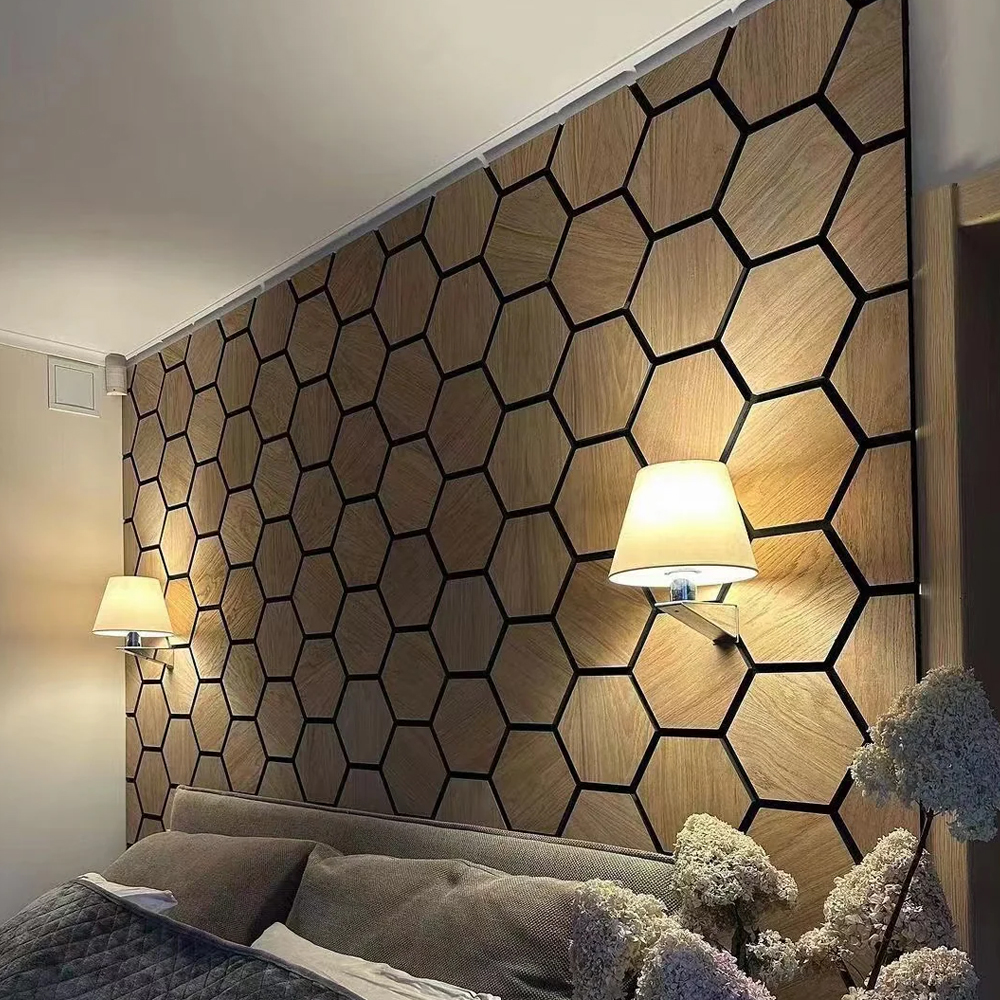
home theater acoustic panels

Design and Aesthetics of Hexagon Acoustic Panels

Hexagon Acoustic Panels are distinguished by their unique geometric shape, which allows for versatile design applications. Their interlocking design can create visually striking patterns on walls and ceilings, making them a favored choice for interior designers and architects.

1.Visual Appeal of Hexagon Acoustic Panels

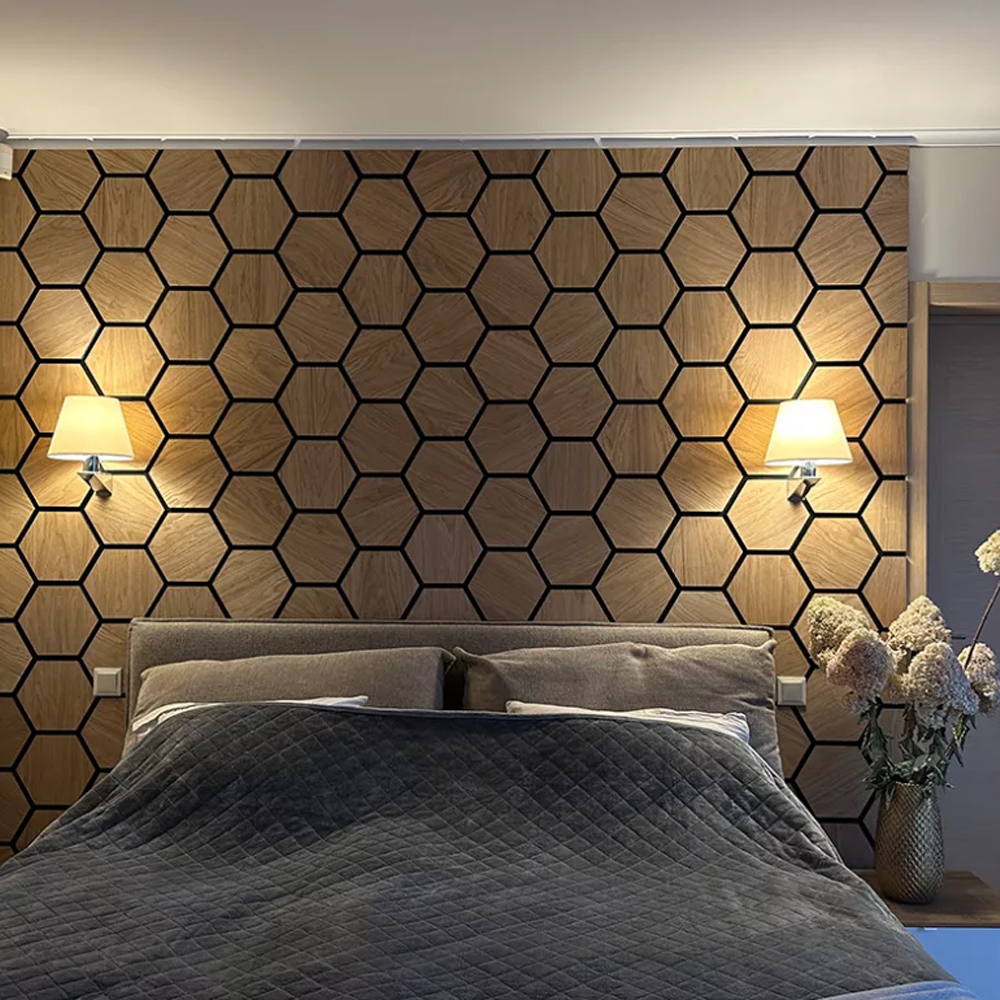
The hexagonal shape allows for creativity in design, providing options for various color combinations and finishes. Hexagon Acoustic Panels can be used to create dynamic feature walls or to enhance the overall ambiance of a space. Their modular nature makes them easy to arrange in different configurations, allowing for personalization in both commercial and residential settings.

2.Integration with Other Design Elements

Hexagon Acoustic Panels can be seamlessly integrated with other design elements such as lighting, furniture, and flooring. This flexibility makes them suitable for diverse environments, from modern offices to cozy cafes and elegant homes.

Materials Used in Hexagon Acoustic Panels

The performance of Hexagon Acoustic Panels largely depends on the materials used in their construction. Various materials are employed to achieve different acoustic properties, durability, and aesthetic finishes.

1.Acoustic Foam

Acoustic foam is a common material used in the production of Hexagon Acoustic Panels. It effectively absorbs sound waves, reducing echo and noise levels. Foam panels are lightweight and easy to install, making them a practical choice for many applications.

2.Fabric-Wrapped Panels

Fabric-wrapped Hexagon Acoustic Panels combine an acoustic core with a decorative fabric layer. These panels not only offer excellent sound absorption but also contribute to the room's aesthetics. The choice of fabric can greatly influence the panel's overall look and feel.

3.Wood and Composite Materials

Wooden Hexagon Acoustic Panels can provide a warm, natural aesthetic while maintaining acoustic properties. Composite materials, such as MDF or HDF, can also be used for their cost-effectiveness and versatility.

How Do Materials Affect Hexagon Acoustic Panel Performance?

The material structure is one of the most important factors determining the performance of Hexagon Acoustic Panels. Acoustic foam is lightweight and commonly used for sound absorption, while fabric-wrapped panels can combine an acoustic core with a wide range of decorative finishes. Wood, MDF, and HDF-based solutions can provide a more architectural appearance and are often selected for commercial interior projects.

For B2B buyers, material selection should consider more than appearance. Key specifications include panel thickness, density, acoustic core composition, surface finish, fire performance where required, dimensions, installation method, and available test reports.

A useful distinction is that the hexagonal shape itself does not automatically determine acoustic performance. Two hexagon panels with the same dimensions can provide different results if their cores, thicknesses, densities, or mounting systems are different. Buyers should therefore compare the complete product specification rather than comparing shape alone.

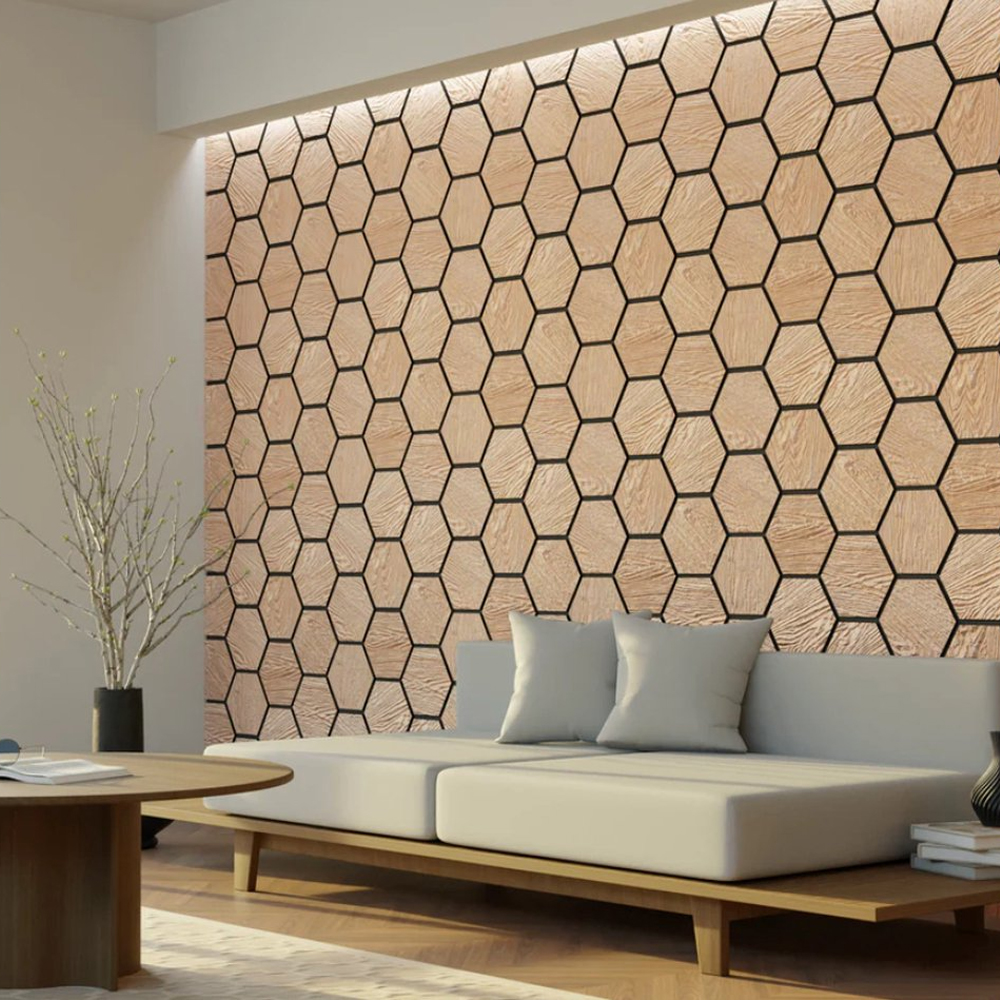
acoustic panel design

Acoustic Properties of Hexagon Acoustic Panels

Hexagon Acoustic Panels are designed to improve sound quality within a space. Their effectiveness is often measured in terms of Noise Reduction Coefficient (NRC), which quantifies how much sound is absorbed by a material.

What Is the NRC of Hexagon Acoustic Panels?

The NRC, or Noise Reduction Coefficient, is a commonly used measurement for describing the sound absorption performance of acoustic materials. A higher NRC generally indicates greater sound absorption under the applicable test conditions.

However, there is no single NRC value that applies to all Hexagon Acoustic Panels. NRC can vary according to the panel's material, thickness, density, surface construction, air gap behind the panel, and installation method. For this reason, a manufacturer should provide the specific tested NRC value for the product being supplied rather than presenting a general NRC figure for all hexagonal panels.

For architects, contractors, and importers, it is useful to request the following information before specifying a product:

  • NRC or equivalent acoustic test results
  • Panel thickness and dimensions
  • Core material and density
  • Installation method
  • Whether an air gap is used behind the panel
  • Applicable fire-performance documentation
  • Available colors, finishes, and customization options

This information makes it easier to determine whether a particular Hexagon Acoustic Panel is appropriate for an office, hotel, restaurant, classroom, studio, or other commercial environment.

1.Sound Absorption

The unique shape of Hexagon Acoustic Panels helps in dispersing sound waves, minimizing reflections and echoes. The design maximizes surface area, enhancing the sound absorption capacity of the panels.

2.Impact on Acoustic Environment

By reducing unwanted noise, Hexagon Acoustic Panels can significantly enhance the acoustic environment in various settings. This is particularly beneficial in spaces like recording studios, conference rooms, and open-plan offices, where sound clarity is crucial.

Applications of Hexagon Acoustic Panels

Where Are Hexagon Acoustic Panels Commonly Used?

Hexagon Acoustic Panels are particularly suitable for interior projects where acoustic treatment needs to work together with a decorative design concept. In offices, they can be installed in meeting rooms, collaboration areas, reception spaces, and open-plan workspaces. In hospitality projects, they can be incorporated into hotel lobbies, restaurants, cafes, and entertainment areas.

Educational facilities can use acoustic panels in classrooms, lecture rooms, libraries, and multipurpose spaces where reducing excessive reverberation can support clearer communication. Residential applications include home theaters, music rooms, living areas, and other spaces where decorative sound absorption is required.

For commercial projects, the most appropriate panel configuration depends on the room's size, existing finishes, noise sources, target acoustic performance, and installation conditions. A larger quantity of panels is not necessarily the only consideration; panel positioning and coverage can also affect the overall acoustic result.

Hexagon Acoustic Panels are versatile and can be used in a variety of settings, including:

1.Commercial Spaces Utilizing

In offices and workplaces, Hexagon Acoustic Panels can help create a more conducive environment for collaboration and communication. They can be strategically placed in meeting rooms, break areas, and open office spaces to manage sound levels.

2.Educational Institutions

Schools and universities can benefit from the sound-absorbing properties of Hexagon Acoustic Panels, particularly in classrooms, auditoriums, and lecture halls. Improved acoustics can enhance learning experiences and communication.

3.Hospitality Sector

In hotels, restaurants, and cafes, Hexagon Acoustic Panels can be used to create an inviting atmosphere while controlling noise levels. Their aesthetic appeal can enhance the overall design of the space.

4.Residential Spaces Featuring

Homeowners can use Hexagon Acoustic Panels to improve sound quality in living rooms, home theaters, or music studios. Their decorative aspect allows for creative interior design solutions.

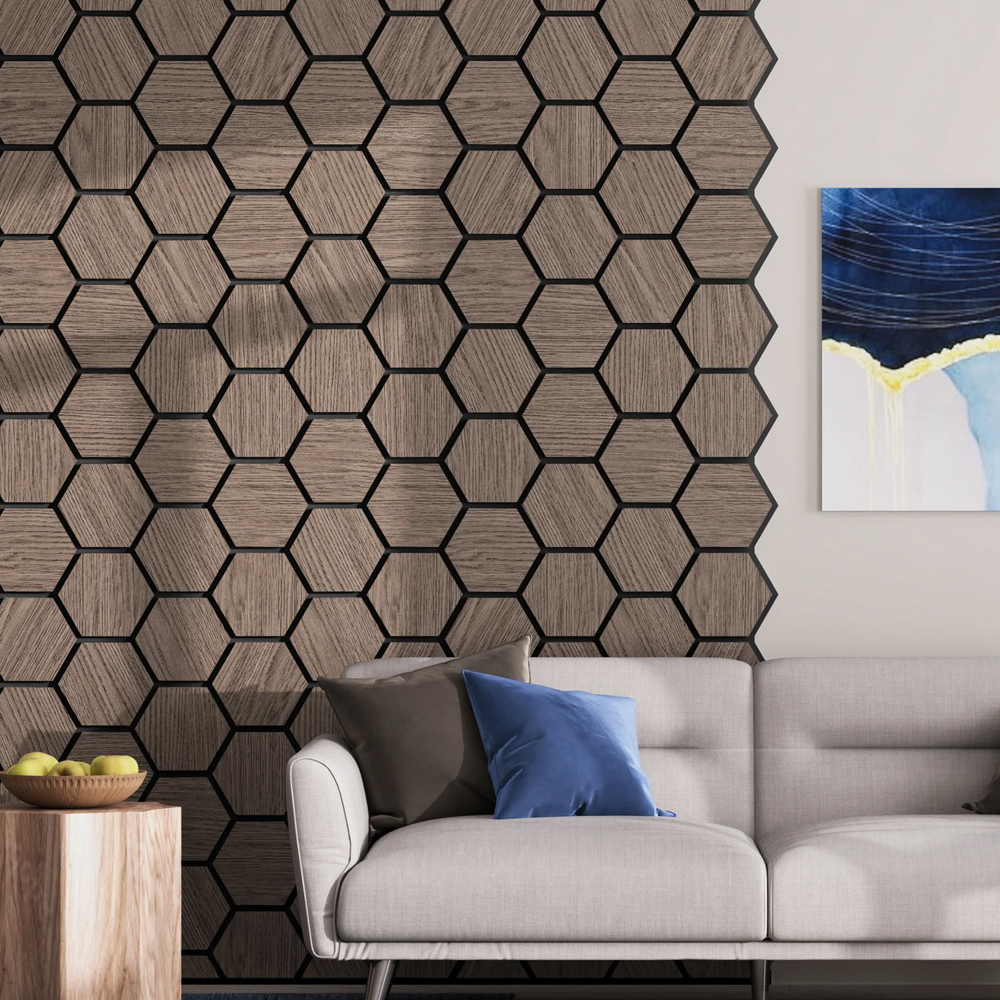
decorative acoustic wall panels 日

Installation Methods for Hexagon Acoustic Panels

The installation of Hexagon Acoustic Panels is straightforward, making them a convenient choice for both professionals and DIY enthusiasts.

1.Wall Installation

Hexagon Acoustic Panels can be adhered directly to walls using adhesive or can be mounted on frames for a more elevated look. Proper placement is essential to maximize their acoustic benefits.

2. Ceiling Installation

For spaces where wall installation is not feasible, Hexagon Acoustic Panels can also be suspended from ceilings. This approach can help in managing sound reflection from overhead surfaces.

3. Custom Solutions

Some manufacturers offer custom solutions for installation, ensuring that the Hexagon Acoustic Panels fit specific space requirements and design preferences.

What Should Buyers Consider When Purchasing Hexagon Acoustic Panels?

For importers, distributors, architects, contractors, and project buyers, purchasing Hexagon Acoustic Panels involves more than selecting a color and geometric pattern. A professional specification should cover acoustic performance, dimensions, materials, finish, installation, packaging, and customization requirements.

Before placing an order, buyers can ask the manufacturer for:

  1. Product specifications – including dimensions, thickness, weight, and material composition.
  2. Acoustic data – such as NRC or other applicable test results.
  3. Surface options – including fabric, wood, MDF, HDF, or other available finishes.
  4. Installation solutions – adhesive mounting, framed mounting, ceiling suspension, or project-specific systems.
  5. Customization – colors, sizes, shapes, finishes, and packaging where available.
  6. Project support – drawings, installation guidance, samples, and technical documentation.
  7. Production and packaging information – particularly important for wholesale and international orders.

For large commercial projects, requesting samples before mass production can also help buyers evaluate the actual appearance, surface finish, installation method, and compatibility with the project's interior design.

Advantages of Hexagon Acoustic Panels

The use of Hexagon Acoustic Panels presents several advantages:

  • Enhanced Aesthetics of Hexagon Acoustic Panels.Their unique design allows for artistic expression, making them a preferred choice for designers looking to create distinctive spaces.
  • Improved Acoustics with Hexagon Acoustic Panels.With their ability to absorb sound and reduce noise levels, Hexagon Acoustic Panels significantly enhance the acoustic quality of various environments.
  • Versatile Applications of Hexagon Acoustic Panels.Their adaptability to different settings, from commercial to residential, broadens their appeal and usability.
  • Easy Installation of Hexagon Acoustic Panels.With simple installation methods, Hexagon Acoustic Panels can be quickly set up, saving time and labor costs.
  • Eco-Friendly Options for Hexagon Acoustic Panels.Many manufacturers now offer eco-friendly materials for Hexagon Acoustic Panels, catering to the growing demand for sustainable building products.

Frequently Asked Questions About Hexagon Acoustic Panels

Are Hexagon Acoustic Panels good for sound absorption?

They can be effective sound-absorbing products when manufactured with an appropriate acoustic core and correctly installed. Their actual performance depends on material construction, thickness, density, mounting method, and room conditions rather than the hexagonal shape alone.

Can Hexagon Acoustic Panels be installed on ceilings?

Yes. Depending on the product design and mounting system, hexagon panels can be suspended from ceilings to help address sound reflections from overhead surfaces. The manufacturer’s recommended installation method should be followed.

What materials are used for Hexagon Acoustic Panels?

Common materials include acoustic foam, fabric-wrapped acoustic cores, wood, MDF, HDF, and other composite materials. The choice affects appearance, acoustic performance, durability, weight, and cost.

Do Hexagon Acoustic Panels reduce outside noise?

Acoustic absorption and sound insulation are different functions. Hexagon Acoustic Panels are primarily used to absorb sound reflections and reduce reverberation within a room. They should not automatically be considered a substitute for a sound-isolation system designed to block sound transmission between spaces.

Can Hexagon Acoustic Panels be customized?

Many manufacturers offer customization options such as colors, dimensions, finishes, layouts, and project-specific installation solutions. Buyers should confirm the available customization range, MOQ, lead time, and sample policy with the manufacturer.

How should I choose Hexagon Acoustic Panels for a commercial project?

Start with the room's acoustic requirements and then compare panel material, thickness, NRC or equivalent test data, installation method, fire-performance requirements, appearance, and project quantity. For larger projects, obtaining samples and technical documentation before mass production is recommended.

Conclusion

Hexagon Acoustic Panels represent a harmonious blend of functionality and aesthetics. Their unique design, coupled with effective sound absorption properties, makes them a valuable addition to various environments. Whether in commercial spaces, educational institutions, hospitality venues, or residential homes, these panels enhance acoustic quality while elevating interior design. As the demand for effective sound management solutions continues to grow, Hexagon Acoustic Panels will undoubtedly play a significant role in shaping modern interiors.

Search
Latest blog

How to Cut and Install WPC Wall Panels for Commercial Projects

Sep 20, 2026

Oak vs Walnut Wood Veneer for Luxury Hotels

Sep 16, 2026

Why Are SPC Shower Wall Panels Becoming Increasingly Popular?

Sep 14, 2026

How to Choose a Hexagon Acoustic Panel Manufacturer in China

Sep 09, 2026

How to Cut PVC Marble Sheet Wall Panels: Tools, Methods and Installation Tips

Sep 07, 2026

What Are WPC Slat Wall Panels?

Sep 04, 2026
en_USEnglish