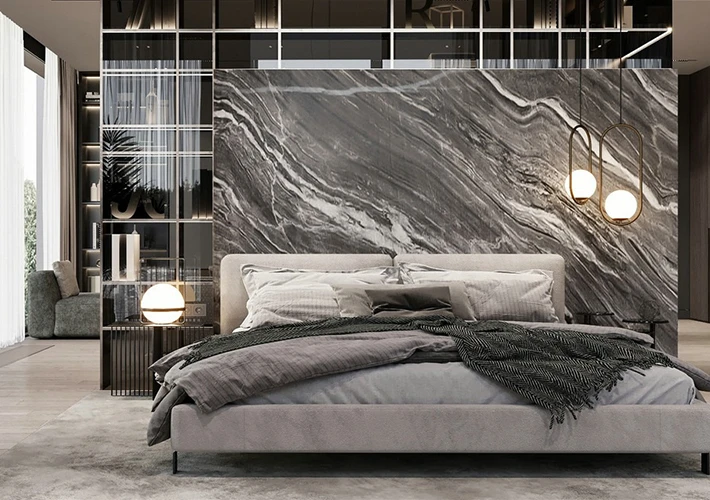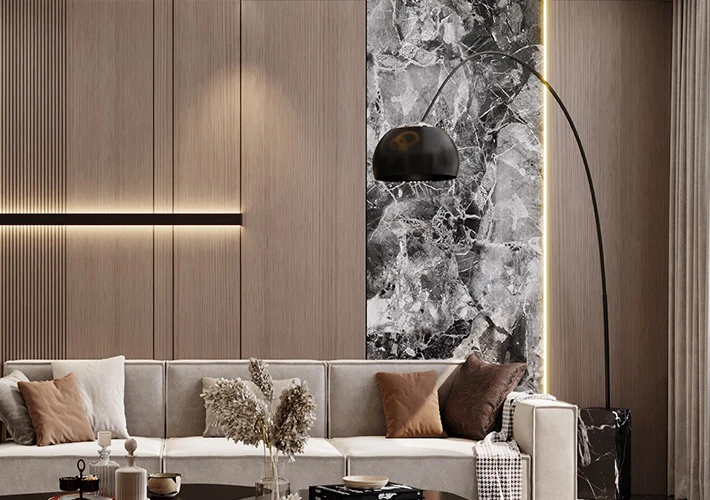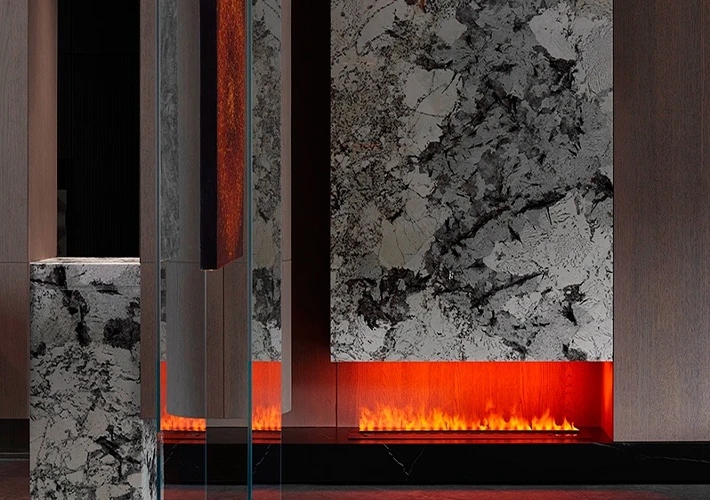
In today’s global construction and interior decoration market, UV marble sheets have become one of the most widely used decorative wall materials, especially in commercial spaces, hotels, residential projects, shopping malls, and prefabricated buildings. They are often promoted as a lightweight, cost-effective, and visually appealing alternative to natural marble.
However, for importers, wholesalers, project contractors, developers, and distributors, one critical question comes up repeatedly:
What exactly are UV marble sheets made of?
Understanding the material composition of UV marble sheets is not just a technical concern—it directly affects:
Product quality and lifespan
Fire resistance and safety compliance
Environmental performance
Surface durability and scratch resistance
Export standards and certifications
Installation performance in real projects
This article provides a comprehensive, in-depth explanation of what UV marble sheets are made of, how each layer works, how raw materials influence performance, and why composition matters for global buyers.
What Are UV Marble Sheets?
Before diving into the materials, it is important to clearly define what a UV marble sheet is.
A UVマーブルシート is a multi-layer decorative panel, primarily used for interior wall cladding, designed to imitate the appearance of natural marble. It is manufactured using PVC-based substrates, printed marble patterns, and a UV-cured protective coating on the surface.
Despite the name, UV marble sheets contain no real marble or stone. Instead, their marble appearance is achieved through high-definition film printing combined with UV coating technology.
Core Structure of UV Marble Sheets
A standard UV marble sheet consists of four main layers, each made of specific materials and each serving a distinct function:
1.PVC Base Layer (Substrate)
2.Decorative Marble Film Layer
3.Adhesive Bonding Layer
4.UV Protective Coating Layer
1.PVC Base Layer: The Structural Foundation
What Is the PVC Base Made Of?
The core material of UV marble sheets is PVC (Polyvinyl Chloride). This base layer typically accounts for 70–85% of the sheet’s total thickness.
The PVC base is composed of:
PVC resin powder
Calcium carbonate (CaCO₃) filler
Stabilizers
Plasticizers (in controlled quantities)
Impact modifiers
Processing additives
Why PVC Is Used as the Core Material
PVC is chosen because it offers an ideal balance of:
Lightweight structure
Moisture resistance
Chemical stability
Easy extrusion or calendering
Cost efficiency for mass production
Compared with stone, wood, or cement-based panels, PVC provides excellent dimensional stability without cracking or warping.
Role of Calcium Carbonate in the Base
Calcium carbonate is added to:
Increase rigidity and hardness
Improve cost efficiency
Enhance flatness and dimensional control
High-quality UV marble sheets use refined calcium carbonate with controlled particle size, ensuring:
Smooth extrusion
Reduced brittleness
Better screw-holding and cutting performance
Density and Thickness Considerations
Typical PVC base thickness ranges from:
2.5 mm to 4 mm for wall applications
Up to 5 mm for higher-impact commercial use
A higher-density base improves:
Impact resistance
Load-bearing performance
Long-term durability
2.Decorative Marble Film Layer: Creating the Marble Appearance
What Is the Decorative Film Made Of?
The decorative layer is a printed PVC film, sometimes referred to as:
Marble film
Decorative foil
Printed pattern layer
This film is made of:
Thin PVC or PET material
High-definition ink printing
Marble texture simulation
Printing Technology Used
High-quality UV marble sheets use:
Gravure printing
Digital inkjet printing (for custom patterns)
These technologies allow:
Realistic marble veins
Depth perception and layering
Consistent color accuracy
Repeatable mass production
The marble effect is not painted directly on the base; it is printed on a separate film and laminated onto the PVC substrate.
Importance of Film Quality
Film quality determines:
Visual realism
Color stability
Resistance to fading
Consistency between batches
Low-grade films often cause:
Color mismatch
Blurred patterns
Visible repetition lines
Premature discoloration
3.Adhesive Layer: Bonding the Structure
What Is the Adhesive Layer Made Of?
Between the PVC base and decorative film lies a specialized adhesive layer, typically made of:
PUR (Polyurethane Reactive Adhesive)
Hot-melt adhesive
Pressure-sensitive adhesive (in some cases)
Why This Layer Is Critical
The adhesive layer ensures:
Strong bonding between layers
No delamination over time
Resistance to temperature changes
Stability in humid environments
Poor adhesive quality leads to:
Bubble formation
Film peeling
Surface wrinkling
Reduced lifespan
High-end manufacturers strictly control:
Adhesive thickness
Curing temperature
Bonding pressure
4.UV Coating Layer: The Protective Surface
What Is UV Coating Made Of?
The top layer of a UV marble sheet is a UV-cured resin coating, made from:
UV-curable acrylic resins
Photoinitiators
Hardening agents
Anti-scratch additives
Optional anti-UV stabilizers
Once applied, the coating is cured using ultraviolet light, forming a hard, transparent surface.
Functions of the UV Coating
The UV layer provides:
Scratch resistance
Wear resistance
Chemical resistance
Gloss or matte finish
Easy cleaning and stain resistance
This layer is what gives UV marble sheets their:
Mirror-like gloss (for high-gloss types)
Long-lasting surface durability
Gloss Levels and Coating Thickness
Common surface finishes include:
High gloss (80–95 GU)
Semi-gloss
Matte or soft-touch
Thicker UV coatings generally offer:
Better abrasion resistance
Longer service life
Higher production cost
Optional Functional Additives in UV Marble Sheets
Fire Retardant Additives
For markets with strict fire regulations, manufacturers may add:
Flame retardant compounds
Fire-resistant stabilizers
These help meet standards such as:
B1 or B2 fire ratings
EN or ASTM fire performance requirements
Anti-UV Stabilizers
To reduce discoloration under lighting or sunlight:
UV absorbers
Light stabilizers
These additives protect the decorative film and PVC base from aging.
Antibacterial or Anti-Mold Additives
For healthcare, hotels, or humid environments:
Antimicrobial agents
Anti-fungal compounds
These enhance hygiene and indoor air quality performance.
Manufacturing Process and Material Integration
Step 1: PVC Base Production
PVC resin and additives are mixed
Material is extruded or calendered into flat sheets
Fire-retardant additives improve compliance and project approval.
Environmental Performance
Low-VOC adhesives and stabilizers ensure safer indoor use.
Installation Efficiency
Stable PVC base reduces cracking and cutting errors.
Comparison: UV Marble Sheets vs Natural Marble (Material Perspective)
Aspect
UVマーブルシート
Natural Marble
Core Material
PVC-based
Natural stone
Weight
軽量
Heavy
防水性
素晴らしい
Porous
インストール
簡単
コンプレックス
コスト
低い
高い
メンテナンス
Minimal
高い
Common Misconceptions About UV Marble Sheet Materials
“UV Marble Sheets Contain Real Marble”
False. They are marble-look decorative panels, not stone products.
“All UV Marble Sheets Use the Same Materials”
False. Material quality varies greatly between manufacturers.
“Thicker Sheets Always Mean Better Quality”
Not necessarily. Material formulation and coating quality matter more than thickness alone.
Why Material Transparency Matters for B2B Buyers
For importers and distributors, knowing exactly what UV marble sheets are made of helps:
Avoid low-quality products
Reduce claims and complaints
Meet local building regulations
Build long-term customer trust
Reliable manufacturers provide:
Material data sheets
Fire test reports
Environmental compliance documents
Consistent production standards
Conclusion: What UV Marble Sheets Are Truly Made Of
UV marble sheets are engineered decorative panels, primarily made of:
PVC composite base
Printed marble decorative film
Industrial-grade adhesive layers
UV-cured protective resin coating
Their performance, durability, and market value depend entirely on:
Raw material selection
Manufacturing control
Coating technology
Quality inspection standards
For global buyers, understanding the material composition is the first step toward making informed sourcing decisions and building competitive product lines.