音響パネル have become one of the most important elements in modern architecture and interior design. As commercial buildings, offices, hotels, and residential spaces increasingly emphasize sound comfort, the demand for acoustic solutions continues to grow. Today’s clients are no longer satisfied with purely functional sound absorption—visual aesthetics and interior atmosphere have become equally important. Color selection, panel texture, and installation style all contribute to the final effect of a space.
As a professional acoustic panel manufacturer and Chinese factory, we work closely with designers, wholesalers, and project contractors from Europe, the United States, Australia, the Middle East, and Southeast Asia. Based on thousands of global project cases, we’ve identified the most popular acoustic panel colors and application scenarios that truly match market needs. This article will provide a comprehensive guide to help B2B buyers choose the right colors, materials, and use cases for acoustic panels.
Quick Answer: What Are the Most Popular Acoustic Panel Colors?
The most popular acoustic panel colors for commercial and architectural interiors are charcoal gray, natural wood tones, light gray, black, beige, deep blue, and forest green. Among these options, charcoal gray and natural wood are particularly versatile because they work across offices, hotels, restaurants, conference rooms, and other commercial environments.
However, the best acoustic panel color is not determined by popularity alone. Project buyers should evaluate four factors together: space function, lighting conditions, interior design style, and maintenance requirements. For B2B projects, color availability and customization capability are also important because large commercial projects often need consistent colors across multiple areas.
For example, a hotel lobby may benefit from walnut or warm beige acoustic panels to create a premium atmosphere, while a cinema or professional studio generally requires black or dark gray panels. Offices often use gray, beige, blue, or wood tones to balance acoustic functionality with a professional appearance.
This means there is no single “best” acoustic panel color for every project. The right choice is the color that supports the intended atmosphere while integrating with the overall interior material palette.
Why Color Selection Matters for Acoustic Panels
Color is more than decoration—it defines the atmosphere, influences emotions, and affects user experience. For acoustic panels, choosing the right color enhances both performance and visual harmony.
1.Colors Influence Psychological Response
Warm colors (yellow, orange, light wood) enhance energy and creativity
Cool colors (blue, green, gray-blue) support calmness and concentration
Neutral colors (gray, beige, black) offer a clean and professional aesthetic
This is why schools prefer bright colors, offices choose neutral tones, and cinemas prefer dark colors.
2.Acoustic Panels Are Now Visual Elements
Modern acoustic products, especially:
PET polyester acoustic panels
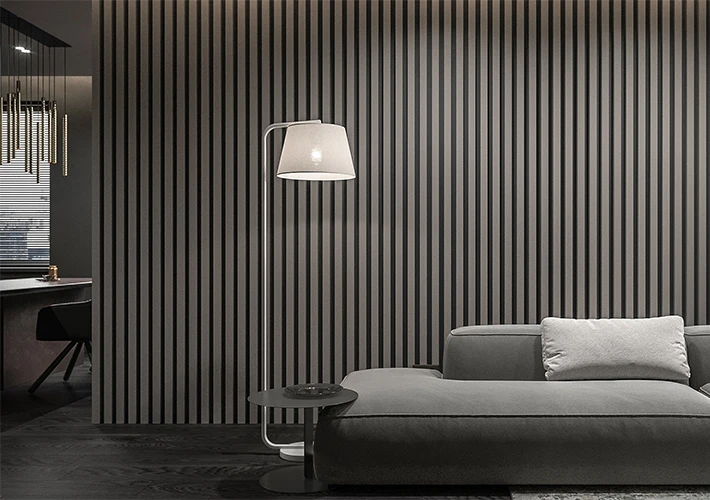
Wooden slat acoustic panels
Fabric-wrapped acoustic boards
3D decorative acoustic tiles
They are used not only for sound absorption but also as feature walls, design patternsそして branding elements.
3.Colors Strengthen Brand Identity in Commercial Spaces
Many overseas projects request:
Corporate brand color matching
Pantone CAD customization
Accent walls using logo tones
As a factory, we support customized color production, helping wholesalers and project companies achieve consistent spatial design.
How Should B2B Buyers Evaluate Acoustic Panel Colors?
For wholesalers, distributors, architects, and project contractors, acoustic panel color selection should be treated as part of the overall material specification rather than as a purely decorative decision.
A practical purchasing process is to first define the application, then identify the required acoustic panel material, and finally select the color and finish. This approach reduces the risk of selecting a visually attractive color that does not match the project's lighting, furniture, flooring, wall finishes, or maintenance requirements.
For commercial projects, buyers should also confirm:
Standard color availability
Custom color options
Minimum order quantity for customized colors
Color consistency between production batches
Sample availability before mass production
Surface finish and texture options
Fire-rating requirements where applicable
Panel dimensions and installation method
Packaging requirements for international shipping
For this reason, a professional acoustic panel factory should be able to provide not only a color chart but also physical samples and project-specific recommendations.
Most Popular Acoustic Panel Colors in Global Projects
Based on our manufacturing data and international customer orders, the following colors are the best sellers worldwide.
1.Charcoal Gray – Global Top Choice
Charcoal gray is the most common choice due to its versatility.
Why it’s popular: ✔ Looks premium and modern ✔ Hides stains and wear ✔ Matches any architectural style
Common uses: Office walls, meeting rooms, cinemas, hotel corridors, open workspaces.
2.Natural Wood Tones – High-End Aesthetic
Wood veneer and slat acoustic panels in:
Oak
Walnut
Teak
Maple
Black Oak
give a natural warmth that many interior designers prefer.
Green shades are trending due to global “natural wellness” design concepts.
Why popular: ✔ Creates a peaceful, natural environment ✔ Matches modern organic interior themes
Applications: cafés, open offices, yoga rooms, wellness centers, residences.
6.Black – Essential for Cinema & Studio Use
Black acoustic panels absorb both sound and light.
Widely used in:
Home theaters
Cinemas
KTV rooms
Music studios
Performance spaces
As a factory, black PET panels and black slat panels are consistently in high demand.
Acoustic Panel Color Selection: Popularity vs. Project Suitability
A color that sells well globally is not necessarily the best choice for every project. B2B buyers should distinguish between market popularity そして project suitability.
Charcoal gray, for example, is highly versatile and can be used across offices, hotels, cinemas, and commercial spaces. Natural wood tones are particularly suitable when the design objective is warmth, hospitality, or a premium architectural appearance. Light gray works well in minimalist and Scandinavian-inspired interiors, while black is strongly associated with theaters, studios, and performance spaces.
For projects with strong brand identity, custom colors can be more appropriate than standard colors. A corporate office, branded retail store, university, or hospitality chain may request colors that correspond to its existing visual identity.
Therefore, when comparing acoustic panel suppliers, buyers should ask not only “How many colors do you offer?” but also “Can you consistently produce the required color at project volume?”
This distinction is especially important for international projects involving multiple containers, repeated orders, or different installation phases.
How to Choose Acoustic Panel Colors for Different Spaces
Choosing the right color depends on factors such as space function, lighting, design style, and user behavior. Below are guidelines used by professional designers worldwide.
1.Based on Space Function
Different functional spaces require different atmospheres.
Space Type
Recommended Colors
Reason
Office
Gray, blue, beige
Calm, professional, improves focus
Theater
Black, dark gray
Light absorption + sound clarity
Classroom
Blue, green, yellow
Stimulates learning & attention
Hotel
Wood tones, beige
Warm & luxurious
ホーム
Wood tones, soft neutrals
Comfort & harmony
Our factory often provides custom color advice based on clients’ architectural drawings.
2.Based on Interior Design Style
Modern Style
Colors: gray, black, white Acoustic panels blend perfectly into minimalistic environments.
Scandinavian Style
Colors: light gray, beige, light oak Promotes a natural and clean aesthetic.
Industrial Style
Colors: charcoal, concrete gray, black Matches raw concrete and metal finishes.
Luxury Style
Colors: walnut, dark wood, champagne gold (for PU acoustic panels) Used in high-end hotels and villas.
3.Based on Visual Focal Points
Some projects use acoustic panels to create:
Accent walls
Geometric block designs
Multicolor patterns
3D sculptural effects
Our production supports multi-color lamination, CNC cutting, and custom pattern fabric covering for visual effect.
4.Based on Lighting Condition
Lighting significantly affects the appearance of acoustic panels.
Dark rooms → choose light colors
Bright rooms → darker colors add depth
Cinemas → strictly black or dark gray
We assist clients by providing free color samples for on-site evaluation.
Acoustic Panel Color Decision Matrix for Commercial Projects
For quick specification, B2B buyers can use the following decision logic:
Project Type
Recommended Main Colors
Recommended Accent Colors
Main Design Objective
Office
Gray, beige, light wood
Blue, green, brand colors
Professional and comfortable
Hotel Lobby
Walnut, oak, beige
Dark green, navy, gold accents
Premium and welcoming
Hotel Guestroom
Oak, walnut, beige
Soft gray, muted green
Warmth and relaxation
Restaurant
Wood, warm gray, beige
Terracotta, dark green
Comfortable dining atmosphere
Cinema
Black, charcoal
Burgundy, dark red
Light control and immersive experience
Recording Studio
Black, dark gray
Dark blue, burgundy
Professional visual environment
Classroom
Blue, green, yellow
Natural wood
Focus and visual interest
Conference Room
Gray, blue, walnut
Brand colors
Communication and corporate identity
Retail Store
Brand colors, black, gray
Custom combinations
Brand recognition
Wellness Space
Green, beige, natural wood
Soft blue, earth tones
Natural and relaxing atmosphere
This matrix can be used as a starting point rather than a fixed specification. Final color selection should still consider the project's lighting, surrounding materials, acoustic requirements, and brand guidelines.
Most Common Applications of Acoustic Panels (Based on Factory Export Data)
As a China acoustic panel factory supplying global wholesalers, we’ve summarized the most popular installation areas.
1.Offices & Corporate Buildings
Acoustic panels reduce noise distractions and improve communication quality in:
Open offices
Conference rooms
CEO offices
Co-working spaces
Call centers
Most ordered colors: Gray, blue, beige, walnut.
2.Hotels & Hospitality Spaces
Hotels demand both beauty and acoustic comfort.
Used in:
Lobby feature walls
Guestroom headboards
Corridors
Restaurants & cafés
Banquet halls
Popular colors: Wood tones, beige, cream, champagne, charcoal.
We supply a large number of hotel acoustic materials to UAE, Saudi Arabia, and Southeast Asia.
We manufacture many fabric acoustic panels そして PET pyramid panels specifically for studios.
5.Schools, Universities & Public Buildings
Education facilities prioritize speech clarity and noise control.
アプリケーション
Classrooms
Lecture halls
Music rooms
Libraries
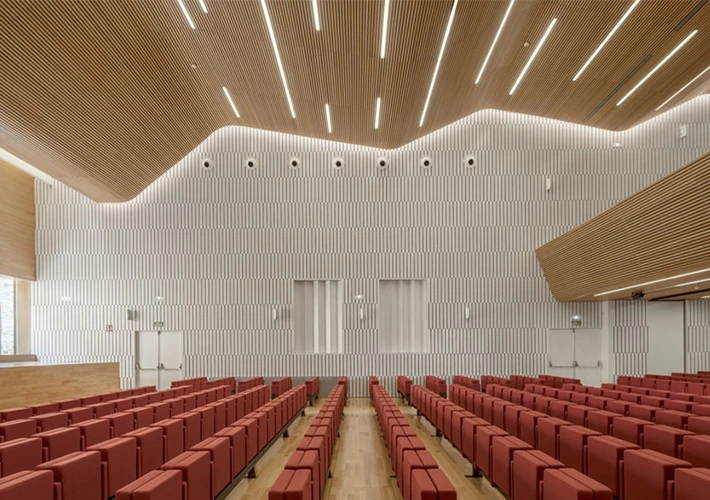
Auditoriums
Top colors: Blue, green, yellow—proven to be conducive to learning.
6.Restaurants, Gyms, Airports & Retail Stores
Acoustic panels enhance customer experience and reduce noise complaints.
Used in:
Dining areas
Gym walls
Airport waiting zones
Shopping malls
Brand stores
Popular colors: Brand colors, wood, gray, beige, warm tones.
Materials That Offer the Best Color Flexibility
As a Chinese acoustic panel manufacturer, we provide different materials that match various color and design needs.
1.PET Polyester Acoustic Panels
Over 40-60 standard colors
Supports custom Pantone orders
Eco-friendly, fire-rated, lightweight
Most cost-effective panel globally
Ideal for offices, schools, and commercial spaces.
2.Fabric-Wrapped Acoustic Panels
200+ fabric colors and textures
Premium appearance
Excellent sound absorption
Popular for cinemas, studios, conference rooms.
3.Wooden Slat Acoustic Panels (WPC or MDF Base)
Available in:
Oak
Walnut
Teak
Black oak
Smoked wood colors
A top-selling product to the US, Canada, UK, and EU.
4.PU Leather Acoustic Panels
Soft touch
Luxury effect
Used in hotels, villas, clubs
Colors: beige, white, brown, gold, dark tones.
5.3D PET or Foam Acoustic Panels
Used for feature walls and creative designs. Colors: bold tones, geometric combinations.
Which Acoustic Panel Material Is Best for Custom Colors?
Different acoustic panel materials offer different levels of color and surface customization.
PET polyester acoustic panels are suitable when buyers need a broad range of solid colors, lightweight construction, and creative geometric designs. They are commonly specified for offices, schools, meeting spaces, and commercial interiors.
Fabric-wrapped acoustic panels provide extensive fabric selections and are suitable for projects requiring a softer or more luxurious appearance. They are frequently considered for conference rooms, cinemas, studios, hospitality interiors, and high-end commercial spaces.
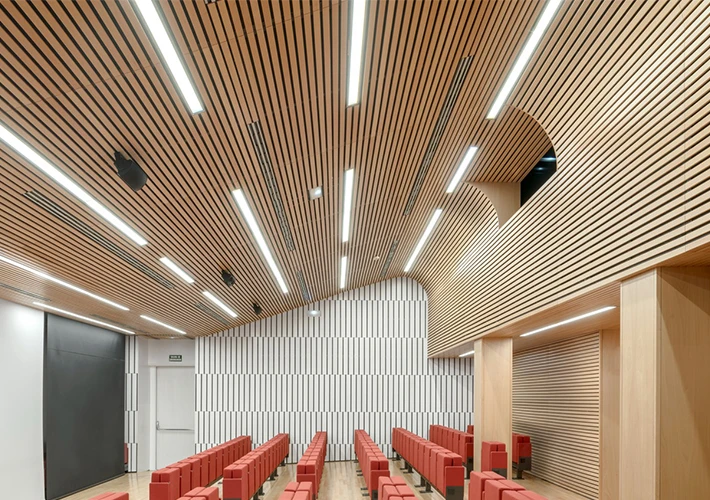
Wooden slat acoustic panels combine acoustic treatment with a natural architectural appearance. Oak, walnut, teak, and dark wood finishes are useful when the project needs a combination of warmth and modern design.
PU leather acoustic panels are more appropriate for premium interiors where tactile appearance and decorative impact are important, including hotels, clubs, villas, and selected hospitality applications.
Therefore, material selection and color selection should be considered together. The same color concept can create very different visual effects depending on whether it is applied to PET, fabric, wood, or PU surfaces.
Future Color Trends in the Acoustic Panel Industry
Based on international design forecasts and our large-volume export trends, the following colors will dominate the next 3–5 years:
1. Nature-Inspired Tones
Forest green, olive, brown, clay.
2. Luxury Dark Tones
Black oak, dark walnut, deep navy.
3. Nordic Soft Colors
Beige, soft gray, pale wood.
4. High-Contrast Feature Colors
Dark teal, rust orange, mustard yellow.
5. Multi-Color Geometric Patterns
Especially in offices and schools.
As a factory, we have already developed new embossing and printing technologies to support these upcoming markets.
Acoustic Panel Color Trends for Commercial and Hospitality Projects
The next stage of acoustic panel design is moving toward coordinated interior material systems rather than isolated decorative panels.
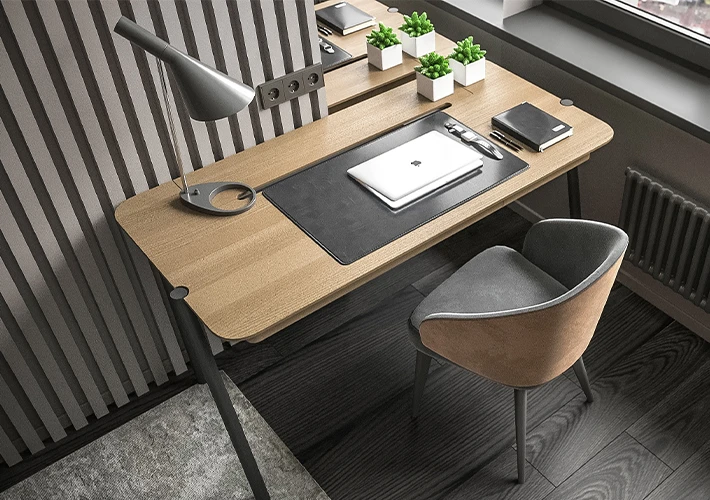
Instead of selecting one color for an entire wall, designers increasingly combine two or more tones to create visual zoning. For example, charcoal gray can be combined with natural oak for corporate interiors, while dark green and walnut can create a more premium hospitality environment.
Three design directions are particularly practical for commercial projects:
1. Natural and Biophilic Palettes
Forest green, olive, beige, oak, walnut, and other earth-inspired colors can be coordinated with natural materials and indoor plants.
2. Dark Premium Palettes
Black, charcoal, dark walnut, deep navy, and other dark tones can create a sophisticated atmosphere in hotels, restaurants, cinemas, studios, and executive spaces.
3. Brand-Based Color Systems
Commercial projects can combine neutral acoustic panels with selected brand colors. This allows acoustic products to contribute to corporate identity without making the entire interior visually overwhelming.
For manufacturers, this trend creates a growing demand for custom colors, multi-color combinations, CNC-cut patterns, and project-specific production.
Acoustic Panel Color FAQs for B2B Buyers
What is the most popular acoustic panel color?
Charcoal gray is one of the most versatile and widely used choices because it works with modern offices, hotels, cinemas, studios, and other commercial interiors. Natural wood tones are also highly popular for hospitality and premium interior projects.
What color acoustic panels are best for offices?
Gray, light gray, beige, blue, and natural wood are common choices for offices. The final selection should depend on the corporate interior style, lighting, furniture, and desired atmosphere.
Are black acoustic panels only suitable for cinemas?
No. Black acoustic panels are also used in recording studios, performance spaces, KTV rooms, home theaters, and other environments where a dark visual background is preferred.
Can acoustic panels be customized to a specific color?
Many acoustic panel manufacturers offer customized colors, particularly for PET, fabric, and selected decorative acoustic products. Buyers should confirm color matching capability, MOQ, sample approval, and production consistency before placing a bulk order.
Should I order acoustic panel samples before a project?
Yes. Physical samples are recommended for commercial projects because the perceived color can vary under different lighting conditions and alongside different wall, floor, and furniture materials.
Which acoustic panel colors are best for hotels?
Natural wood tones, beige, cream, walnut, charcoal, and selected dark colors are commonly suitable for hotels. The best choice depends on whether the product is being used in a lobby, guestroom, corridor, restaurant, meeting room, or other hospitality space.
How can wholesalers choose acoustic panel colors for their market?
Wholesalers should prioritize colors that match the dominant interior design styles of their target market while maintaining a manageable stock range. A combination of neutral best-sellers such as gray, beige, black, and wood tones with selected trend colors can provide a practical product portfolio.
結論
Acoustic panels are no longer just functional materials—they have become artistic elements that influence interior ambiance. Choosing the right color is essential for achieving harmony between acoustic performance and visual beauty. Whether used in offices, hotels, homes, cinemas, schools, or commercial buildings, the color of acoustic panels directly affects user experience.
As a professional acoustic panel manufacturer in China, we offer: ✔ Full-color customization ✔ OEM & ODM service ✔ Factory prices for wholesalers and project contractors ✔ Design consultation & sample support
If you need product recommendations, custom colors, or assistance with your project, feel free to tell me—I can help generate descriptions, catalogs, and marketing materials tailored to your factory brand.



 Japanese
 English
 French
 Russian
 Spanish
 Arabic
 Portuguese