Bathrooms are no longer treated simply as functional spaces. In hotels, apartments, serviced residences, commercial buildings, hospitals, offices, and modern residential projects, bathroom design has become an important part of the overall interior experience. At the same time, contractors, developers, distributors, and building-material importers are looking for wall solutions that combine attractive appearance, water resistance, installation efficiency, durability, and predictable project costs.
This is one of the main reasons SPC shower wall panels are becoming increasingly popular.
SPC, or Stone Plastic Composite, is a rigid composite material widely used for flooring and wall applications. When manufactured specifically for wet-area environments, SPC wall panels can provide a practical alternative to traditional ceramic tiles and other bathroom wall finishes. Their rigid structure, low water absorption, decorative surface options, and relatively fast installation make them particularly attractive for commercial renovation and new-build projects.
For B2B buyers, the appeal is not only about the appearance of a finished shower room. The bigger question is whether a wall panel system can help reduce installation time, simplify procurement, improve consistency across multiple rooms, and provide reliable performance in humid environments.
As a China factory specializing in decorative wall materials, AesthEdge provides SPC wall panel solutions designed for hotel bathrooms, shower rooms, residential developments, commercial interiors, and other projects where moisture resistance and installation efficiency are important.
What Are SPC Shower Wall Panels?
SPC shower wall panels are rigid wall panels made primarily from a stone-plastic composite formulation. Compared with conventional flexible PVC sheets, SPC panels generally have a denser and more rigid structure, giving them better dimensional stability and a solid feel.
The exact formulation varies between manufacturers, but a typical SPC wall panel can include mineral-based fillers, polymer components, stabilizers, decorative layers, and protective surface coatings. The combination creates a panel designed to balance rigidity, moisture resistance, appearance, and practical installation requirements.
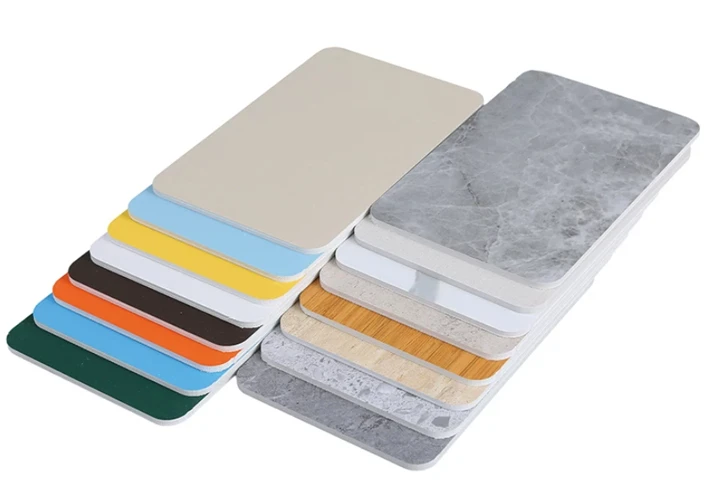
For shower-room applications, the panel surface can be designed to imitate materials such as:
Natural marble
Travertine
Limestone
Concrete
Stone
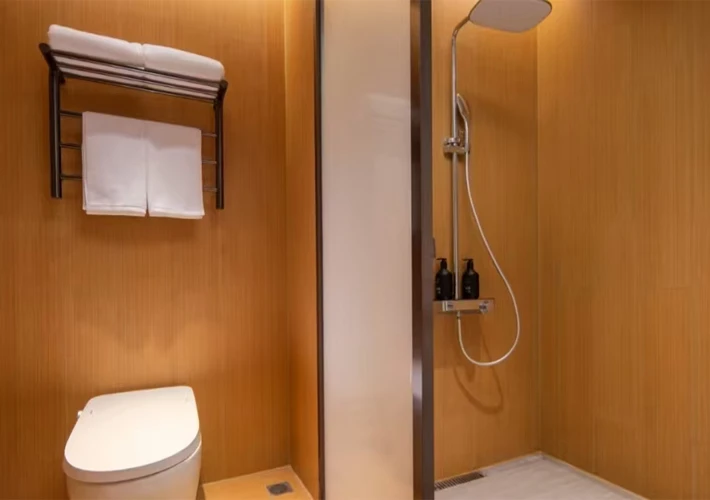
Wood
Ceramic tile
Solid colors
Modern geometric patterns
This design flexibility is particularly valuable for hotels and commercial projects. Instead of purchasing different natural stone materials and managing complicated installation processes, buyers can select coordinated decorative wall-panel collections from one product range.
A major difference between SPC shower wall panels and traditional tile systems is the installation method. Traditional bathrooms normally require multiple processes, including substrate preparation, adhesive application, tile positioning, joint treatment, grouting, and curing. Depending on the project, waterproofing systems may also require several additional steps.
SPC wall panels can simplify this workflow. Large-format panels cover a relatively large wall area with fewer joints, reducing the amount of individual pieces that installers need to position.
For large-scale projects, this difference can become significant.
Imagine a hotel with hundreds of bathrooms. Even if the installation time saved per bathroom is relatively small, the cumulative reduction in labor hours can become substantial. This is one reason developers and contractors increasingly evaluate wall panels not only according to material price, but also according to total installed cost.
Why Are SPC Shower Wall Panels Becoming More Popular?
The increasing popularity of SPC shower wall panels is driven by several factors rather than one single advantage.
First, construction projects are becoming more focused on installation efficiency. Labor costs have increased in many markets, while experienced tile installers can be difficult to secure for large projects. Large-format wall panels can reduce the number of installation steps and potentially shorten project schedules.
Second, modern interior design increasingly favors large-format surfaces with minimal visual interruption. SPC panels can create marble, stone, concrete, and other decorative effects without requiring dozens of individual tiles and grout lines.
Third, moisture resistance is a critical consideration in shower rooms. Materials installed in wet areas need to tolerate repeated exposure to water and high humidity. Properly manufactured SPC wall panels can provide a practical waterproof wall-surface solution when the complete installation system—including joints, corners, substrates, adhesives, and sealants—is correctly specified.
Fourth, maintenance is an important consideration for hotels and commercial buildings. Fewer joints can mean fewer areas where dirt, soap residue, and moisture can accumulate compared with conventional small-format tile surfaces.
Finally, B2B buyers are increasingly interested in standardized building materials. A factory-produced wall panel system allows developers and contractors to order the same design, size, thickness, surface finish, and accessories for multiple rooms or multiple projects.
This combination of design, installation efficiency, moisture resistance, standardization, and procurement convenience is helping SPC shower wall panels gain market attention.
Key Advantages of SPC Shower Wall Panels for Wet Areas
1. Excellent Water Resistance
Water exposure is one of the biggest challenges in shower rooms. A wall material may look attractive when installed, but its long-term performance depends heavily on how well the entire wall system handles moisture.
SPC itself is a water-resistant composite material. Unlike conventional wood-based wall products, it does not rely on a porous natural-fiber structure as its primary composition.
For shower applications, this makes SPC an attractive material for walls that are frequently exposed to water and humidity.
However, B2B buyers should distinguish between water-resistant panels and a complete waterproof wall system. Panel performance alone does not guarantee that water cannot penetrate behind the installation.
Correct installation is essential. Panel joints, internal corners, external corners, pipe penetrations, shower fixtures, and the connection between the wall and floor should be properly sealed.
For professional projects, AesthEdge recommends evaluating the complete system rather than judging a wall panel only by its raw material specification.
2. Large-Format Installation Can Save Labor
One of the strongest advantages of SPC shower wall panels is installation efficiency.
Traditional ceramic tiles are relatively small individual units. Installers must repeatedly measure, cut, align, apply adhesive, position, level, and grout each section.
A large SPC wall panel can cover a much larger area at one time.
For example, a panel approximately 2400 mm high can potentially cover most or all of the vertical wall area in a typical bathroom. The exact coverage depends on the selected panel dimensions and project layout.
This can reduce:
The number of individual pieces
The number of visible joints
Cutting and positioning operations
Grouting work
Installation complexity
Project labor requirements
For hotels, apartments, student accommodation, hospitals, and other repetitive projects, installation efficiency becomes particularly important because the same process may be repeated hundreds or thousands of times.
3. Fewer Grout Lines
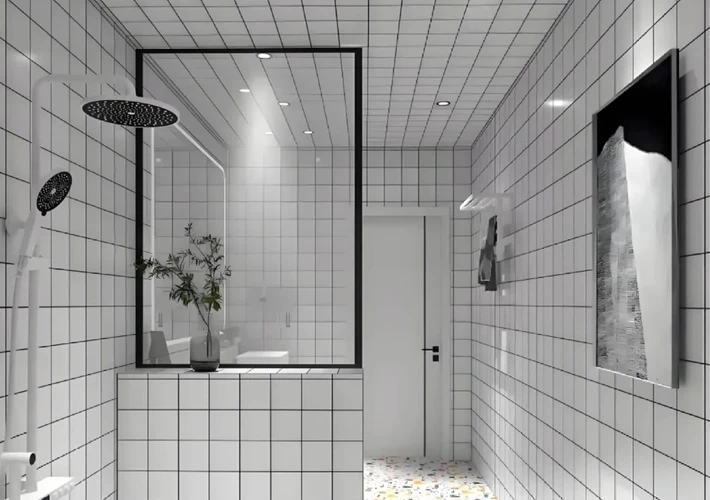
Traditional tiled shower walls contain many grout joints. These joints are necessary for tile installation, but they can also become maintenance points over time.
Large SPC wall panels significantly reduce the number of joints.
This creates a cleaner visual appearance while also reducing the amount of joint maintenance required.
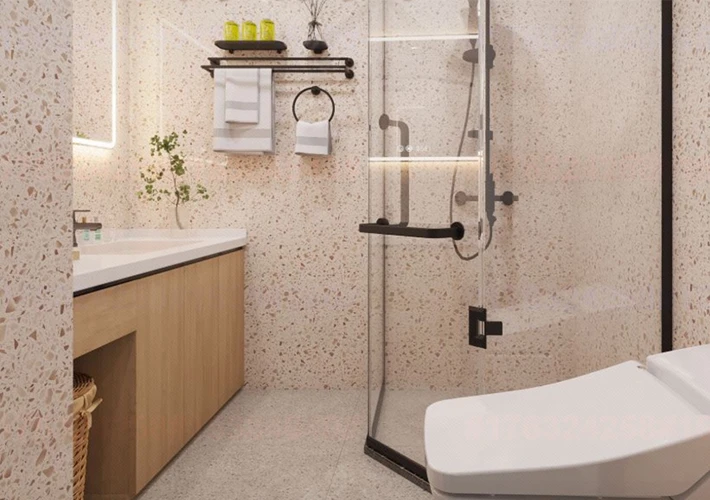
For hotel bathrooms, this can be particularly valuable. A modern marble-effect SPC panel can provide a continuous stone-like appearance across a wall without the visual interruption created by multiple tile joints.
The result is a bathroom that can appear more spacious, contemporary, and visually consistent.
4. Marble and Stone Appearance Without Natural Stone Installation
Interior designers frequently specify marble and stone effects for premium bathrooms. However, natural stone can introduce challenges related to weight, transportation, cutting, installation, maintenance, and material consistency.
SPC decorative wall panels can reproduce a wide variety of stone-inspired appearances through advanced surface printing and protective finishing technologies.
Popular designs include:
White marble
Carrara-style patterns
Dark marble
Grey stone
Travertine
Concrete
Terrazzo
Sandstone
High-contrast stone patterns
For hotel groups and property developers, this allows the same visual concept to be reproduced across multiple rooms and properties.
A factory can also provide coordinated product batches, helping maintain a consistent appearance throughout a project.
5. Lightweight Compared with Many Traditional Wall Materials
Natural stone and some conventional wall systems can be relatively heavy. Transportation and handling become increasingly important when materials need to be delivered to upper floors or remote project locations.
SPC panels are generally easier to handle than thick natural stone slabs.
This can simplify transportation from the factory to the project site and make manual handling during installation easier.
For international B2B buyers, weight also influences container loading, freight planning, warehouse handling, and installation logistics.
A professional supplier should therefore provide buyers with detailed information about:
Panel dimensions
Espesor
Weight per panel
Weight per square meter
Packaging dimensions
Quantity per carton or pallet
Container loading quantity
These details allow importers and contractors to calculate the real logistics cost before placing an order.
6. Easy-to-Clean Decorative Surface
Bathrooms require frequent cleaning. Hotels in particular need surfaces that can be maintained efficiently between guest stays.
SPC shower wall panels can feature smooth decorative surfaces that are relatively easy to wipe and clean.
The reduced number of joints also contributes to a cleaner-looking wall system.
For commercial projects, easy maintenance can be as important as the initial material price. A slightly higher material cost may still be attractive if the finished system requires less labor for cleaning and maintenance throughout its service life.
7. Consistent Product Quality for Large Projects
Natural materials often contain natural variations. Although this can be desirable for luxury interiors, large commercial projects may require greater visual consistency.
Factory-produced SPC wall panels can be manufactured according to controlled specifications.
For B2B buyers, this creates opportunities to standardize:
Panel dimensions
Espesor
Surface texture
Decorative pattern
Color
Gloss level
Protective coating
Edge treatment
Packaging
This is particularly useful when the same bathroom design must be reproduced across a large number of rooms.
SPC Shower Wall Panels vs. Traditional Ceramic Tiles
When choosing a bathroom wall material, buyers should compare the entire installation system rather than looking only at the product price.
Factor
SPC Shower Wall Panels
Baldosas de cerámica
Installation speed
Generally fast
Usually slower
Panel/piece size
Large format available
Usually smaller pieces
Grout joints
Fewer
More
Decorative options
Marble, stone, concrete, etc.
Gran variedad
Water resistance
High when properly installed
High when properly installed
Cutting
Relatively convenient with suitable tools
Requires tile-cutting tools
Peso
Relatively lightweight
Generally heavier
Mantenimiento
Easy surface cleaning
Grout requires additional attention
Large hotel projects
Highly suitable
Suitable but labor intensive
Design consistency
Factory controlled
Depends on tile batches
Project standardization
Convenient
Possible but more labor dependent
This does not mean SPC panels are universally better than ceramic tiles.
Ceramic tiles remain an established solution with extensive design options and strong market acceptance. However, when project priorities include speed, large-format design, reduced joints, standardized installation, and commercial-scale procurement, SPC shower wall panels can offer important advantages.
Where Are SPC Shower Wall Panels Commonly Used?
The application range extends well beyond private residential bathrooms.
Hotels and Resorts
Hotel bathrooms are one of the most promising applications.
Developers need materials that can support attractive interior design while also allowing contractors to complete large numbers of bathrooms efficiently.
SPC shower wall panels can be used for:
Shower walls
Bathroom feature walls
Vanity background walls
Full bathroom wall systems
Guestroom bathrooms
Resort bathrooms
Serviced apartments
The ability to reproduce the same design across hundreds of rooms is especially valuable for hotel projects.
Apartments and Residential Developments
Large residential developments require standardized materials.
A developer may need thousands of square meters of bathroom wall materials for multiple buildings. Factory-produced SPC panels can help simplify procurement and installation planning.
Commercial Buildings
Offices, restaurants, shopping centers, entertainment venues, and other commercial properties can also use decorative SPC wall panels in washrooms and wet areas.
Healthcare and Institutional Buildings
Hospitals, clinics, schools, and other institutions often require durable and easy-to-maintain wall surfaces.
SPC wall panels can be considered for selected wet-area applications when the required fire, hygiene, chemical-resistance, and building-code specifications are satisfied.
Renovation Projects
SPC wall panels are also attractive for renovation projects because installation can potentially be faster than completely removing and rebuilding traditional tiled surfaces.
The exact installation method depends on the condition and suitability of the existing substrate.
What Should B2B Buyers Check Before Ordering SPC Shower Wall Panels?
Not all SPC wall panels are identical.
For importers, wholesalers, contractors, and project buyers, purchasing decisions should go beyond appearance and quotation price.
Composición del material
Ask the manufacturer for clear information about the panel structure and material composition.
A reliable factory should be able to explain what the core is made of and how the decorative and protective layers are constructed.
Espesor
Panel thickness affects rigidity, handling, installation, and overall project specifications.
Buyers should select thickness according to the intended application rather than assuming that thicker always means better.
Dimensiones
Large-format panels can improve installation efficiency, but the dimensions need to match the project layout.
Common considerations include wall height, bathroom width, elevator dimensions, door openings, transportation limitations, and container loading requirements.
Surface Protection
The decorative surface needs to withstand normal bathroom cleaning and daily use.
Ask about surface treatment, wear resistance, scratch resistance, cleaning recommendations, and long-term appearance.
Waterproof Testing
For shower applications, buyers should request appropriate water-resistance or water-absorption test information.
However, testing should not be considered a replacement for correct installation.
Installation System
A complete project quotation should ideally include information about:
Recommended adhesive
Joint treatment
Corner profiles
Sealants
Trims
Cutting methods
Substrate requirements
Installation instructions
A panel without a suitable installation system can create unnecessary problems on site.
Quality Control
Professional B2B buyers should also investigate factory QC procedures.
Important inspection points may include:
Panel dimensions
Thickness tolerance
Surface appearance
Color consistency
Core quality
Flatness
Edge condition
Surface adhesion
Water-resistance performance
Packaging quality
For large projects, pre-shipment inspection and sample approval can help reduce purchasing risks.
Why Buy SPC Shower Wall Panels Directly from a China Factory?
For international buyers, sourcing directly from a manufacturer can provide advantages beyond a lower factory price.
A professional China factory can integrate product development, production, quality control, packaging, and export logistics into one supply chain.
For distributors and importers, this can mean:
Factory pricing: Direct sourcing can reduce unnecessary intermediary costs.
OEM/ODM support: Decorative patterns, dimensions, thicknesses, colors, and packaging can potentially be customized according to market requirements.
Product development: Manufacturers can develop new surface designs and product specifications based on buyer requirements.
Bulk production: Large commercial projects require stable production capacity and consistent quality.
Export experience: International packaging and container loading are important when products are shipped over long distances.
Technical support: Buyers may need product specifications, installation instructions, samples, and project support before placing large orders.
AesthEdge operates as a China-based manufacturer of decorative wall materials and provides SPC wall panel solutions for international B2B customers.
For distributors, contractors, architects, developers, and importers, the goal is not simply to supply a wall panel. It is to provide a product system that can fit the customer's project requirements from sample development through mass production and delivery.
How to Choose the Right SPC Shower Wall Panel Supplier
Choosing the right supplier can have a larger impact on project success than choosing a decorative pattern.
A professional supplier should be able to provide clear answers about product specifications, production capability, quality control, customization, packaging, and delivery.
Before placing an order, B2B buyers should consider the following checklist:
1. Can the supplier provide physical samples?
Samples allow buyers to evaluate surface appearance, rigidity, thickness, color, texture, and overall quality before bulk production.
2. Does the factory support OEM or ODM?
If you are a distributor or brand owner, customized products and packaging can help differentiate your business in the local market.
3. Can the supplier maintain consistent quality in bulk production?
A sample may look excellent, but the real test is whether hundreds or thousands of square meters can maintain consistent specifications.
4. Does the factory provide technical documentation?
Professional technical data can make product approval and project specification easier.
5. Can the supplier support container orders?
For international buyers, production capacity and container loading efficiency directly affect purchasing economics.
6. Does the supplier understand wet-area applications?
Shower-room products require more than attractive decorative designs. The supplier should understand moisture exposure, installation details, sealing, and substrate requirements.
7. Can the supplier provide stable after-sales support?
Long-term B2B relationships require communication before, during, and after delivery.
The Future of SPC Shower Wall Panels
The growth of SPC shower wall panels reflects a broader change in the building-material industry.
Construction professionals increasingly want materials that combine aesthetics with practical installation. Developers want predictable project schedules. Contractors want fewer complicated installation processes. Importers want standardized products that can be sold across different projects. Designers want more realistic stone and marble finishes without being limited by the availability and characteristics of natural materials.
These requirements are creating opportunities for rigid decorative wall-panel systems.
Future SPC shower wall panels are likely to focus increasingly on:
Larger panel formats
More realistic stone textures
Improved surface finishes
Better scratch and wear resistance
Coordinated bathroom product collections
More efficient installation systems
Custom decorative patterns
Improved environmental performance
OEM/ODM product development
Integrated wall and floor solutions
For manufacturers, the challenge will be to combine decorative quality with reliable engineering performance.
For B2B buyers, this means supplier selection will become increasingly important. The best supplier is not necessarily the company offering the lowest quotation. Instead, buyers should evaluate the combination of material quality, factory capability, product consistency, customization, technical support, logistics, and total project cost.
Conclusion: Are SPC Shower Wall Panels a Good Choice for Shower Rooms?
SPC shower wall panels are becoming increasingly popular because they address several important challenges in modern bathroom construction.
They offer a combination of water resistance, large-format design, installation efficiency, reduced joints, lightweight handling, easy maintenance, and extensive decorative options. These characteristics make them particularly attractive for hotels, apartments, commercial buildings, renovation projects, and other applications where large quantities of wall materials are required.
For B2B buyers, the biggest advantage may be the ability to standardize bathroom finishes while potentially reducing installation complexity and project labor.
However, buyers should not evaluate SPC shower wall panels based solely on appearance or price. Core composition, thickness, surface protection, dimensional stability, waterproof performance, installation method, accessories, quality control, packaging, and factory production capacity all deserve attention.
Choosing a professional manufacturer can make the procurement process much easier.
As a China factory, AesthEdge focuses on decorative wall-material solutions for international B2B customers. Our SPC wall panels can be developed for different commercial and residential applications, including hotel bathrooms, shower rooms, apartment projects, and other moisture-exposed interior spaces.
If you are an importer, distributor, contractor, architect, developer, or building-material buyer looking for SPC shower wall panels, AesthEdge can support you with product samples, specifications, customization, bulk production, and export supply.
Contact AesthEdge to discuss your project requirements and request SPC shower wall panel samples and factory pricing.



 Spanish
  English
  French
  Russian
  Arabic
  Portuguese
  Japanese