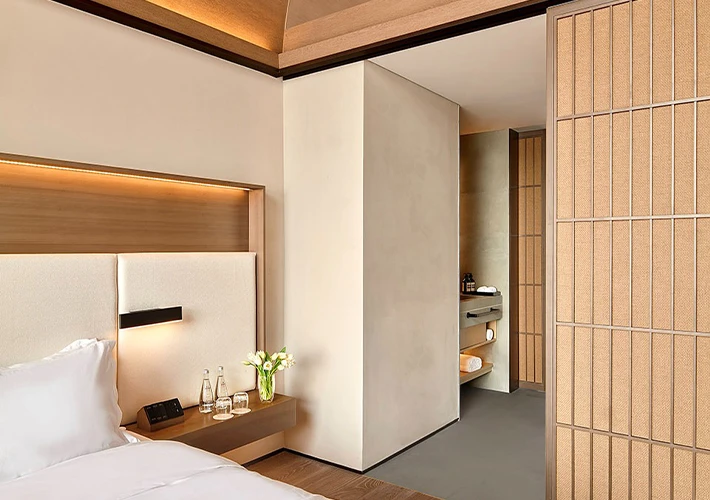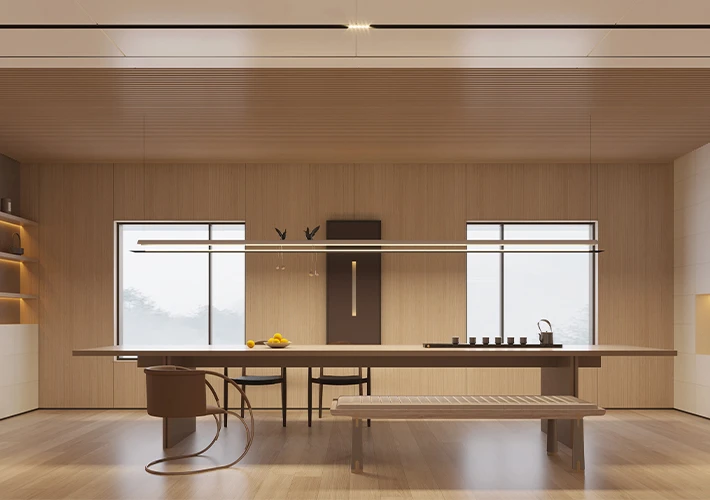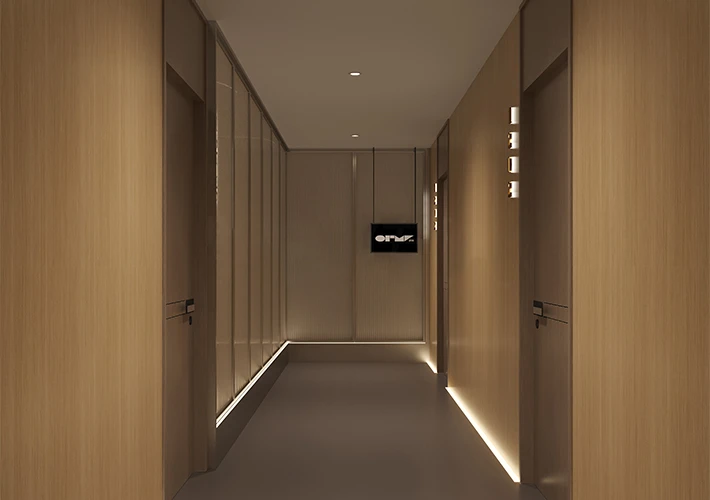
In recent years, bamboo charcoal wood veneer has rapidly gained popularity in residential, commercial, and public renovation projects. From luxury homes and apartments to hotels, offices, retail spaces, and public buildings, this innovative decorative material is increasingly replacing traditional wall finishes such as solid wood panels, MDF boards, PVC sheets, and stone veneers.
So why are more and more renovation projects choosing bamboo charcoal wood veneer?
The answer lies in a combination of environmental awareness, health concerns, aesthetic demands, functional performance, cost efficiency, and global green building trends. As the renovation industry moves toward sustainability and higher living standards, bamboo charcoal wood veneer has emerged as a material that perfectly aligns with modern requirements.
This article provides a comprehensive analysis of why bamboo charcoal wood veneer is becoming a preferred choice in renovation projects worldwide.
Bamboo charcoal wood veneer is a new-generation decorative panel made primarily from natural bamboo fiber or bamboo-based substrates. Through high-temperature carbonization, compression, and advanced surface treatment, bamboo is transformed into a stable, durable, and functional decorative board.
Unlike traditional wood veneer, bamboo charcoal wood veneer combines:
Common structures include:
This structure allows the material to deliver both decorative appeal and performance advantages, making it ideal for modern renovation projects.

Across the world, governments, developers, and consumers are placing greater emphasis on:
Green building standards such as LEED, WELL, and BREEAM are influencing material selection, especially in commercial and public projects. Bamboo charcoal wood veneer fits perfectly into this trend due to its low formaldehyde emissions and eco-friendly raw materials.
Traditional renovation materials often release:
These pollutants can cause long-term health problems. As awareness increases, developers and homeowners are actively seeking healthier alternatives, driving demand for bamboo charcoal wood veneer.
Modern interior design favors:
Bamboo charcoal wood veneer offers a natural look with modern performance, making it a favorite among designers and architects.
Bamboo is one of the fastest-growing plants in the world, reaching maturity in 3–5 years, far quicker than traditional hardwoods. This makes bamboo a highly renewable resource with minimal environmental impact.
By using bamboo instead of slow-growing timber, bamboo charcoal wood veneer helps:
Thanks to advanced production technology, high-quality bamboo charcoal wood veneer achieves:
This makes it suitable for:
The carbonization process converts bamboo fibers into activated charcoal-like structures, reducing chemical content and enhancing environmental performance.

Bamboo charcoal has a porous internal structure that allows it to:
When used as wall or ceiling panels, bamboo charcoal wood veneer contributes to improved indoor air quality, especially in newly renovated spaces.
Bamboo charcoal wood veneer naturally absorbs excess moisture when humidity is high and releases it when the air is dry. This helps:
The material’s structure and surface treatments help inhibit:
This makes bamboo charcoal wood veneer ideal for environments with higher hygiene requirements.
Modern surface technology allows bamboo charcoal wood veneer to replicate:
It provides the warmth of wood without the instability of solid timber.
Available finishes include:
This versatility allows designers to use bamboo charcoal wood veneer in various interior styles, from modern minimalism to luxury commercial spaces.
Bamboo symbolizes:
In many Asian and international design philosophies, bamboo-based materials enhance a sense of calm, balance, and refinement.
Unlike solid wood, bamboo charcoal wood veneer:
This stability is critical for large-scale renovation projects.
The internal structure of bamboo charcoal boards provides:
With proper treatment and compliance standards, bamboo charcoal wood veneer can meet fire-retardant requirements for commercial and public buildings.

| Aspect | Bamboo Charcoal Veneer | Solid Wood |
|---|---|---|
| Stability | 高い | Easily deforms |
| 環境への影響 | Sustainable | Deforestation risk |
| メンテナンス | 低い | 高い |
| コスト | 中程度 | 高い |
MDF and particle boards often rely heavily on adhesives, leading to:
Bamboo charcoal wood veneer offers superior health and durability performance.
PVC panels are cost-effective but:
Bamboo charcoal wood veneer delivers a more premium and eco-friendly solution.
Bamboo charcoal wood veneer panels:
Common installation options include:
Pre-finished surfaces eliminate the need for:
This significantly shortens renovation timelines.

Compared to high-grade solid wood, bamboo charcoal wood veneer offers:
Its durability reduces:
Eco-friendly materials enhance:
Future developments include:
Bamboo charcoal wood veneer is increasingly used in:
As global markets focus on sustainability, bamboo charcoal wood veneer is becoming popular in:
The growing adoption of bamboo charcoal wood veneer in renovation projects is not a coincidence. It is the result of changing lifestyles, stricter environmental standards, higher design expectations, and long-term cost considerations.
By combining:
Bamboo charcoal wood veneer has positioned itself as one of the most promising decorative materials in modern renovation.
As the renovation industry continues to evolve, bamboo charcoal wood veneer is set to play an even more important role in shaping healthier, more sustainable, and more beautiful interior spaces.
whatsappでメッセージを送る +86 189 5395 5575すぐに返信いたします!