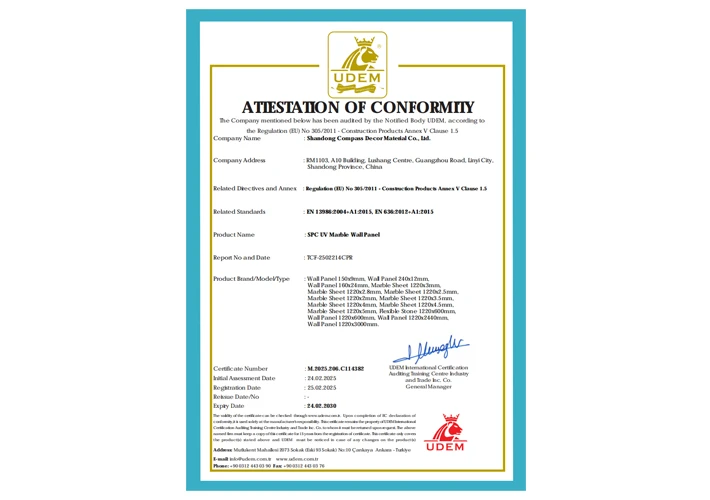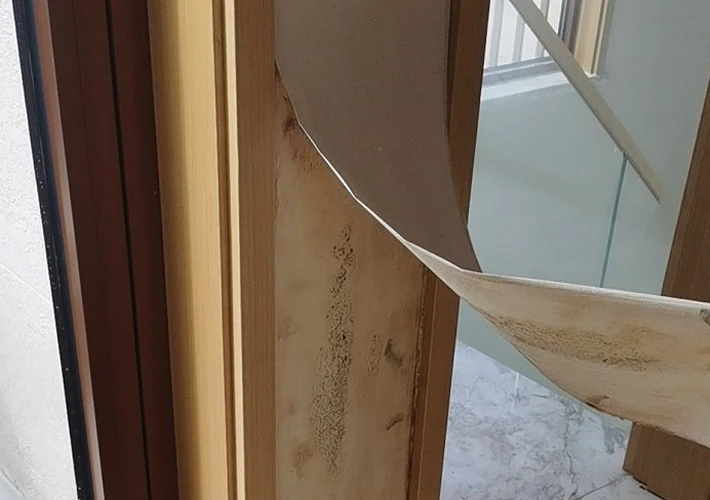
What Real Problems Will a Project Face If CE Documentation Is Incomplete?

Published on: 22 Дек, 2025
Оглавление

In the EU market, CE marking is not an optional document.
For construction materials, decorative materials, and building systems, it is a legal prerequisite for market access and a key compliance foundation for engineering projects.

However, in real projects, many buyers, contractors, and even some suppliers seriously underestimate the risks of incomplete CE documentation.

At the early stage, everything may appear normal:

  • Competitive pricing
  • Approved samples
  • Confirmed delivery schedules

But the real problems usually emerge later, during customs clearance, tender review, project acceptance, or liability investigation.

This article analyzes, from a real project perspective, what actually happens when CE documentation is incomplete—not in theory, but in real commercial and engineering scenarios.

What Does “Incomplete CE Documentation” Really Mean?

Many people assume that “having CE” simply means:

The supplier provides a CE Declaration of Conformity.

In reality, under EU regulations, CE is not a single document, but a complete technical and legal documentation system.

A complete CE documentation package typically includes:

  • EU Declaration of Conformity (DoC)
  • Test reports based on applicable EN standards
  • Technical product description
  • Declaration of Performance (DoP) – critical for construction products
  • Factory Production Control (FPC) documentation
  • Installation and user instructions (EU language versions)
  • Proper labeling and marking documentation

In real projects, “incomplete CE documentation” usually means:

  • ❌ Only a DoC, without supporting test reports
  • ❌ Test standards not matching the actual product application
  • ❌ Use of outdated EN standards
  • ❌ Missing or vague DoP performance values
  • ❌ No traceability to specific product models or batches

These issues are often ignored at the early stage—but they become critical blockers later.

Real Problem #1: Customs Clearance Delays and Cargo Detention

Customs authorities check more than “whether CE exists”

For construction and decorative materials, EU customs authorities may request:

  • Full CE technical documentation
  • Verification of applicable EN standards
  • Confirmation of test laboratory accreditation

What happens when documentation is incomplete?

Goods are detained at the port

Additional documents or testing are required

Clearance time extends from days to weeks—or months

Extra costs occur:

  • Port storage fees
  • Demurrage charges
  • Retesting and document revision costs

In engineering projects, this is not just a delay—it often disrupts the entire construction schedule.

Real Problem #2: Failure in Tender Qualification or Technical Review

CE documentation is a hard threshold in EU tenders

For projects such as:

  • Hotels
  • Commercial complexes
  • Public buildings
  • Chain renovation projects

Tender documents often explicitly require:

  • Complete CE documentation
  • Clear EN standard references
  • Verifiable Declaration of Performance (DoP)

If CE documentation is incomplete, the product may fail technical evaluation before price is even considered.

Common rejection reasons include:

  • CE documents not matching the product model
  • Performance claims without quantified values
  • Test reports issued by non-recognized laboratories
  • Missing English or local-language documentation

Result:
Even high-quality, low-priced products are eliminated immediately.

Real Problem #3: Project Acceptance Failure After Installation

This is one of the highest-cost risks related to incomplete CE documentation.

CE documents are often reviewed again during acceptance

CE documentation may be rechecked during:

  • Third-party supervision inspections
  • Project audits
  • Insurance assessments
  • Final owner acceptance

If discrepancies are found—such as missing performance data or incorrect standards—products already installed may be deemed non-compliant.

Real consequences include:

  • Partial or full dismantling
  • Material replacement
  • Project delays
  • Cost overruns
  • Disputes between contractors and suppliers

In hotel and commercial projects, rectification costs can far exceed the original material cost.

Real Problem #4: Liability Becomes Unclear When Issues Occur

CE documentation defines responsibility boundaries

In the EU legal framework:

  • CE marking is not a quality guarantee
  • But CE documentation is a key basis for liability determination

When issues arise—such as:

  • Fire performance failure
  • Excessive emissions
  • Structural underperformance
  • Severe durability deviation

Authorities, insurers, and legal teams will first examine whether CE documentation is complete, valid, and consistent with the product supplied.

If documentation is incomplete:

  • The supplier cannot prove compliant delivery
  • The buyer may be accused of insufficient due diligence
  • Contractors may bear joint liability
  • Insurance claims may be rejected or reduced

Incomplete CE documentation increases legal exposure instead of reducing responsibility.

Real Problem #5: Market Surveillance and Post-Market Enforcement

CE compliance does not end after customs clearance.

EU market surveillance is ongoing

Authorities may:

  • Inspect products already on the market or in use
  • Request complete CE technical files at any time
  • Order retesting, withdrawal, or recall

If documentation is incomplete:

  • Products may be removed from the market
  • Sales bans may be imposed
  • Fines may be issued
  • Companies may be flagged by regulators

For businesses targeting long-term EU markets, this can be business-critical.

Real Problem #6: Loss of Control Over Supplier Risk

In many projects, CE documentation completeness determines who carries the risk.

  • Complete documentation → smoother project execution
  • Incomplete documentation → risk shifts entirely to the buyer

When issues arise, suppliers may say:

“We’ve always done it this way.”

But the project owner faces:

  • Delays
  • Client claims
  • Contractual penalties

Incomplete CE documentation means keeping all project risk on your side.

Why Low-Priced Products Often Have CE Documentation Issues

Based on real project experience, CE documentation risk is closely linked to pricing.

Common practices include:

  • Template-based CE declarations
  • Multiple products sharing one test report
  • Minimizing test scope to reduce cost
  • Using low-credibility laboratories
  • Superficial or symbolic FPC documentation

These methods reduce upfront cost—but in engineering projects, they almost always convert into downstream risk.

How to Check Whether CE Documentation Is Truly Complete

A practical checklist for project buyers:

Is the CE declaration linked to a specific product model?

Are EN standards appropriate for the actual application?

Is a DoP provided with quantified performance values?

Are test reports issued by recognized laboratories?

Are document dates valid and current?

Is batch or production traceability available?

Are installation and use instructions included?

If two or three items cannot be clearly answered, the project is already high-risk.

Conclusion: The Real Risk Is Not the Document — It’s the Project Outcome

In EU engineering projects:

  • CE is not a formality
  • Documentation is not decoration
  • Compliance is a risk control tool, not an added cost

Incomplete CE documentation affects:

  • Whether a project can be delivered smoothly
  • Whether responsibilities are clearly defined
  • Whether risks are controllable
  • Whether a company can sustainably operate in the EU market

For any buyer or contractor serious about EU projects,
CE documentation completeness is no longer a compliance issue—it is a business decision.

Before You Start an EU Project

If you are sourcing building materials for EU construction or renovation projects, verifying CE documentation completeness before shipment can significantly reduce downstream risk.

We support EU-oriented projects with:

  • CE documentation matched to specific product models
  • EN-standard-based test reports
  • DoP files suitable for tenders and project acceptance
  • Export-ready compliance documentation for EU markets

Свяжитесь с нами to review CE documentation before ordering—avoid hidden risks at later project stages.

Позвоните нам

Отправьте нам сообщение в Whatsapp +86 189 5395 5575Мы ответим вам немедленно!

    ru_RURussian