In the world of modern hotel design, furniture plays a key role in defining comfort, functionality, and overall aesthetics. Among all furniture pieces, hotel cabinets stand out as an essential component that combines both practicality and visual appeal. Whether in a guest room, suite, lobby, or restaurant area, the right cabinet design enhances the guest experience while also aligning with the brand image of the hotel.
In this article, we will explore the main types of hotel cabinets, their materials, functions, design trends, and how to choose the right ones for your hospitality project.
Quick Answer: What Are the Main Types of Hotel Cabinets?
The main types of hotel cabinets include wardrobe cabinets, TV cabinets, minibar cabinets, bathroom vanity cabinets, bedside cabinets, luggage storage cabinets, reception cabinets, and kitchen or pantry cabinets. Each type serves a specific function, from guest storage and entertainment to housekeeping efficiency and front-desk operations. For hotel developers, procurement managers, interior designers, and FF&E contractors, the best cabinet selection depends on the hotel's positioning, available space, expected usage intensity, moisture exposure, maintenance requirements, and project budget. For multi-room hotel projects, customized cabinet systems can help maintain consistent dimensions, finishes, and functionality across the property.
Importance of Cabinets in Hotel Design
Hotel cabinets are more than just storage solutions. They contribute to the overall atmosphere and user experience in a room. Good cabinet design improves convenience, optimizes space, and adds aesthetic value to interiors.
Some key roles of cabinets in hotel spaces include:
Storage Efficiency: Cabinets help guests organize their belongings neatly, avoiding clutter.
Aesthetic Harmony: Coordinating cabinet design with the room’s theme enhances the visual appeal.
Durability and Safety: High-quality materials ensure the furniture withstands daily use and frequent cleaning.
Functionality: Cabinets in hotels are often designed for multiple uses, such as minibar storage, luggage placement, or in-room safe compartments.
A hotel’s choice of cabinets reflects its brand positioning—luxury hotels often prefer bespoke wooden finishes, while business hotels may favor minimalist designs with durable materials.
Main Types of Hotel Cabinets
Different areas in a hotel require different types of cabinets based on their use and location. Below are the main categories commonly found in hotels.
2.1 Wardrobe Cabinets
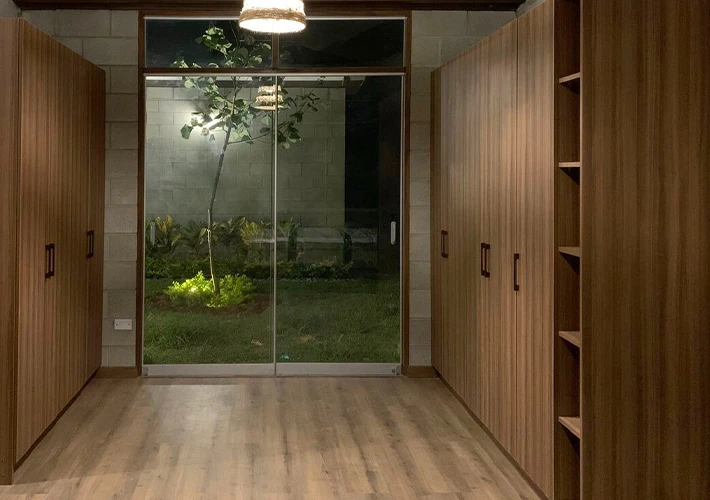
The wardrobe cabinet is one of the most essential pieces of furniture in any hotel room. It provides guests with space to hang clothes, store shoes, and keep luggage organized.
Common Features:
Hanging rail for coats and dresses
Internal lighting
Safe box compartment
Shoe rack and drawers
Full-length mirror on the door
Material Options:
Solid wood (for luxury hotels)
MDF with veneer finish
Laminate or melamine surfaces for durability
Design Trend:
Built-in wardrobes are increasingly popular because they save space and create a seamless modern look. Sliding doors are preferred over hinged doors for smaller rooms.
2.2 TV Cabinets
TV cabinets, also known as entertainment units, integrate television placement with decorative and storage functions.
Functions:
Mount or support the television
Hide cables and connections for a clean look
Include drawers or open shelves for remote controls, set-top boxes, and personal items
Design Styles:
Floating wall-mounted TV cabinets for modern minimalism
Wooden cabinets with panel designs for classic interiors
Hybrid designs with built-in LED lighting to enhance ambience
A good TV cabinet design must ensure easy maintenance y safe wiring, especially in hotels that operate continuously.
2.3 Minibar Cabinets
In mid- to high-end hotels, minibar cabinets are a common feature. They house beverages, snacks, and sometimes small refrigerators.
Design Requirements:
Proper ventilation for the minibar fridge
Waterproof material and heat resistance
Easy access for refilling by housekeeping staff
Compact and stylish appearance
Materials:
Laminate, engineered wood, or metal frames are often used to ensure longevity under constant temperature variation.
2.4 Bathroom Cabinets (Vanity Units)
Bathroom vanity cabinets in hotel rooms enhance both aesthetics and hygiene. They support the sink, conceal plumbing, and provide storage for towels and toiletries.
Common Types:
Wall-mounted vanities (space-saving, modern look)
Floor-standing vanities (more storage)
Double-sink vanities (for luxury suites)
Material Considerations:
Since humidity is high in bathrooms, cabinets must be waterproof and anti-corrosive. Common materials include:
PVC foam board
Stainless steel frame with stone countertop
Waterproof plywood with veneer coating
Modern hotels increasingly use SPC or WPC panels for vanity cabinets due to their moisture resistance and elegant finish.
2.5 Bedside Cabinets (Nightstands)
Bedside cabinets are small but indispensable. They provide a convenient surface near the bed for lamps, phones, and other personal items.
Common Features:
1–2 drawers for storage
Integrated power outlets or USB ports
Surface space for alarm clocks or décor
Design Trend:
Luxury hotels are adopting custom integrated designs, where bedside cabinets are built into the headboard paneling for a unified visual effect.
2.6 Luggage Cabinets
Luggage cabinets or racks are designed for guests to conveniently store and open their suitcases without cluttering the floor.
Características principales:
Sturdy, low-height design
Anti-scratch surface
Optional hidden drawers underneath
Many hotels integrate the luggage rack area with wardrobes or minibar units to maximize room efficiency.
2.7 Reception and Lobby Cabinets
Cabinets in hotel lobbies serve decorative and functional purposes, such as displaying brochures, storing supplies, or supporting reception desks.
Types:
Reception counter cabinets: built-in drawers and file storage
Display cabinets: glass doors to showcase ornaments or brand items
Storage cabinets: concealed design to maintain a neat lobby appearance
These pieces must complement the interior design style of the lobby and reflect the hotel’s brand personality.
2.8 Kitchen and Pantry Cabinets
In hotels with extended-stay suites or serviced apartments, kitchen cabinets are crucial.
Types:
Overhead cabinets for dishes and glassware
Base cabinets for cooking utensils and small appliances
Tall pantry cabinets for storage
Material Requirements:
Heat-resistant and easy-to-clean surfaces
Waterproof panels (like HPL, PVC, or SPC materials)
Soft-close hinges for durability
Hotel kitchens often prioritize modular cabinet systems for ease of installation and maintenance.
Hotel Cabinet Types at a Glance: A Procurement Reference
For hotel furniture buyers, cabinet selection should be based on the intended application rather than appearance alone. The following comparison summarizes the main cabinet categories and the key specifications worth reviewing before placing a bulk order.
Cabinet Type
Primary Function
Key Procurement Considerations
Wardrobe cabinet
Clothing and personal storage
Internal layout, hanging space, door clearance, hardware durability
Reachability, drawer performance, integrated power options
Luggage cabinet
Suitcase placement and storage
Load-bearing capacity, scratch resistance, stable construction
Reception cabinet
Front-desk operations and document storage
Ergonomics, cable routing, storage configuration
Kitchen or pantry cabinet
Supplies, utensils, and equipment storage
Cleanability, hardware quality, heat and moisture exposure
For hotel groups and contractors purchasing cabinets for multiple rooms or properties, standardized specifications can simplify cost comparison, production planning, installation, and future replacement. However, the final specification should always reflect the actual room layout, local building requirements, and the operating conditions of each application.
Cabinet Materials Commonly Used in Hotels
The durability, cost, and aesthetics of hotel cabinets largely depend on material selection. Here are the most commonly used materials:
Material Type
Advantages
Aplicaciones
Solid Wood
Natural beauty, long lifespan, luxurious appearance
Luxury hotel wardrobes, bedside cabinets
MDF + Veneer
Cost-effective, smooth finish, customizable
TV cabinets, wardrobes, vanity units
Laminate or Melamine Board
Scratch-resistant, affordable, easy to clean
Budget hotel furniture
Placa de espuma de PVC
Waterproof, termite-proof, lightweight
Bathroom cabinets, minibar cabinets
SPC/WPC Board
Moisture-resistant, eco-friendly, modern texture
Bathroom or balcony furniture
Metal Frame + Wood Finish
Industrial look, very strong
Lobby and commercial use
High-end hotels often combine multiple materials—for instance, wood veneer panels with metal edges or marble countertops—to achieve a premium, durable, and stylish appearance.
How to Select Hotel Cabinet Materials for Different Environments
The right material for a hotel cabinet depends on where the cabinet will be installed, how frequently it will be used, and the maintenance standards of the property. No single material is ideal for every hotel application.
For guest-room wardrobes and bedside cabinets, MDF with veneer, laminate-faced engineered boards, and solid wood may be considered according to the project's appearance requirements, budget, and durability expectations. Buyers should compare surface resistance, edge finishing, hardware quality, and the repairability of the selected finish.
Bathroom vanity cabinets require particular attention to moisture exposure. PVC foam board, appropriately specified moisture-resistant panels, and suitable metal-supported constructions may be considered, depending on the cabinet design and installation conditions. Buyers should also check the compatibility of the countertop, sink, joints, and edge treatments. A moisture-resistant panel alone does not make the entire cabinet waterproof.
For minibar units, material selection must account for the refrigerator's ventilation requirements and heat output. For reception and lobby cabinets, surface appearance, structural stability, cable management, and ease of cleaning may be more important.
SPC and WPC-based panels can offer useful alternatives for selected moisture-exposed or decorative applications, but their suitability depends on the exact product formulation, structural design, load requirements, and intended use. Buyers should request technical specifications rather than assume all panels made from the same material have identical performance.
Before approving a material for a hotel project, procurement teams should confirm thickness, surface finish, dimensional tolerances, applicable emission documentation, hardware specifications, and cleaning instructions. Where fire performance, indoor-air quality, or other regulatory requirements apply, the relevant test reports and certifications should be checked against the project's destination market and specifications.
Design and Customization Trends in Hotel Cabinets
As hotels evolve to meet modern travelers’ expectations, cabinet design trends continue to shift toward smart, sustainable, and space-efficient solutions.
4.1 Integrated and Modular Design
Hotels are moving away from standalone furniture toward built-in cabinets that merge multiple functions, such as wardrobes with minibar sections or headboard-integrated bedside units.
4.2 Smart Furniture
Some new-generation hotels introduce smart cabinets with:
Motion sensor lighting
Digital locks or RFID safes
Wireless charging panels
4.3 Eco-Friendly Materials
Sustainability is a global trend. Many hotel brands now specify eco-certified panels such as E0/E1 MDF, bamboo veneer, and WPC materials to reduce formaldehyde emissions.
4.4 Aesthetic Customization
Cabinets are also a branding element. Custom finishes—like walnut veneer, matte lacquer, or stone texture—allow hotels to express distinct character through design.
Custom Hotel Cabinets: What Should Buyers Specify Before Ordering?
For hotel renovation programs, new-build developments, and multi-property projects, customized cabinets should be specified before mass production begins. A clear specification reduces ambiguity between the design team, furniture supplier, contractor, and installation team.
A practical hotel cabinet specification should include the following details:
Dimensions and layout: Overall width, height, depth, internal compartments, shelf spacing, drawer configuration, and door-opening direction.
Materials and finishes: Core material, panel thickness, surface finish, edge treatment, color references, and approved samples.
Hardware and accessories: Hinges, drawer slides, handles, soft-close mechanisms, locks, cable openings, and optional lighting.
Functional requirements: Ventilation for minibar refrigerators, access to plumbing, electrical provisions, and compatibility with other furniture or wall panels.
Delivery and installation: Quantity by room type, labeling, packing method, shipping schedule, installation drawings, and spare-hardware requirements.
For large hotel projects, a useful approach is to approve a representative sample or prototype before releasing the full production order. The approved sample becomes a reference for appearance, dimensions, materials, and workmanship.
Buyers should also confirm whether the manufacturer can maintain consistent finishes and specifications across different production batches. This is especially important for projects involving hundreds of guest rooms, phased construction, or multiple hotel locations.
How to Choose the Right Cabinet for Your Hotel Project
Selecting hotel cabinets requires balancing aesthetics, function, and budget. Below are professional considerations:
Project Positioning: Luxury, business, or economy hotels each require different furniture grades and styles.
Durability & Maintenance: Materials must withstand frequent use and easy cleaning, especially in humid environments.
Design Consistency: Ensure all cabinets (wardrobe, TV stand, vanity) share a unified design language.
Customization Capability: Working with a professional hotel furniture manufacturer allows precise customization for room dimensions and functions.
Installation & Logistics: Choose modular designs that simplify transportation and installation—crucial for international hotel projects.
Hotel Cabinet Cost Factors and Bulk Purchasing Considerations
The cost of hotel cabinets is influenced by more than the dimensions of each unit. Material selection, construction details, surface finishes, hardware, customization requirements, order quantity, packaging, and delivery terms can all affect the final project cost.
Standardized cabinet designs may help control costs when a project requires large quantities of similar units. Custom configurations, premium veneers, specialized hardware, integrated lighting, and complex curved or irregular structures may increase manufacturing costs and production time.
When comparing quotations from different suppliers, hotel buyers should ensure that the quoted products use comparable materials, thicknesses, hardware specifications, finishes, and quality standards. A lower unit price may not represent better overall value if it excludes essential accessories, protective packaging, installation components, or agreed quality checks.
For international projects, buyers should also clarify the quotation basis, minimum order quantity, sample charges, production lead time, packaging method, shipping arrangements, and responsibility for transportation and import-related costs. These terms should be confirmed in writing before the purchase order is finalized.
For hotel developers and FF&E contractors, evaluating the total project cost rather than the cabinet price alone provides a more reliable basis for supplier selection. Consistent specifications, clear communication, predictable production schedules, and dependable after-sales support can be particularly important when a project has a fixed opening date.
Partnering with a Reliable Hotel Cabinet Manufacturer in China
Why Work Directly with a China Hotel Cabinet Supplier?
Working directly with a Chinese hotel cabinet supplier can give importers, hospitality developers, and FF&E contractors a practical route to customized furniture procurement. The potential advantages include access to manufacturing resources, flexible material and finish selections, coordinated product specifications, and factory-based communication throughout the ordering process.
For hotel projects, supplier evaluation should go beyond the initial quotation. Buyers should review the manufacturer's ability to interpret drawings, confirm technical details, prepare samples, coordinate production, implement agreed quality inspections, and package products for international transportation.
A reliable supplier should also communicate clearly about what is included in the quotation, which specifications can be customized, what documentation is available, and how changes are managed after sample approval. Where cabinets need to coordinate with wall panels, flooring, doors, or other interior finishes, confirming these interfaces early can reduce discrepancies during installation.
For overseas buyers, it is advisable to request a detailed quotation, material specifications, finish samples, production schedule, packaging details, and relevant quality documents before committing to a bulk order. A transparent procurement process helps both parties establish realistic expectations and manage project risks more effectively.
China has become one of the world’s leading hotel furniture manufacturing bases, thanks to its mature supply chain, advanced craftsmanship, and cost competitiveness.
Experienced design team supporting custom solutions
Competitive factory-direct pricing for bulk orders
Global export experience with stable logistics
We supply hotel FF&E furniture to clients worldwide—including resorts, boutique hotels, and serviced apartments.
Frequently Asked Questions About Hotel Cabinets
What are the most common types of hotel cabinets?
The most common types include wardrobes, TV cabinets, minibar cabinets, bathroom vanity cabinets, bedside cabinets, luggage cabinets, reception cabinets, and kitchen or pantry cabinets. Their configurations depend on the room type and hotel operating requirements.
Which materials are suitable for hotel bathroom cabinets?
PVC foam board, suitable moisture-resistant engineered panels, and metal-supported constructions may be considered. The best choice depends on moisture exposure, cabinet design, load requirements, surface finish, and maintenance expectations. Buyers should evaluate the complete cabinet assembly rather than the panel material alone.
Can hotel cabinets be customized for different room layouts?
Yes. Depending on the manufacturer's capabilities, buyers may specify cabinet dimensions, internal storage layouts, colors, finishes, hardware, lighting, and functional accessories. Approved drawings and samples should be used as references before bulk production.
What should buyers check before placing a bulk hotel cabinet order?
Buyers should confirm technical drawings, materials, dimensions, finish samples, hardware, quality acceptance criteria, order quantities, lead times, packaging, delivery terms, and any required compliance documents. Approving a representative sample before mass production is a useful risk-control measure.
Is buying hotel cabinets directly from a Chinese factory suitable for international projects?
It can be suitable for importers, hotel developers, wholesalers, and FF&E contractors seeking customized products and coordinated bulk procurement. Buyers should evaluate manufacturing capability, communication, quality-control procedures, export documentation, packaging, and delivery arrangements before selecting a supplier.
Can hotel cabinets be included in a complete hotel FF&E package?
Yes. Hotel cabinets can be coordinated with other furniture and interior products as part of an FF&E procurement package. The scope may include wardrobes, bedside units, TV cabinets, bathroom vanities, reception furniture, doors, wall panels, flooring, and other specified products, subject to the supplier's actual product range and project requirements.
Conclusión
Hotel cabinets are not just furniture pieces; they are integral to the functionality, comfort, and aesthetic identity of a hospitality space. Understanding the main types—wardrobes, TV cabinets, vanity units, minibars, and others—helps hotel investors and designers create a cohesive and practical environment.
When paired with high-quality materials, modern designs, and expert craftsmanship, well-designed cabinets elevate the entire hotel experience.
If you are planning to source hotel cabinets or complete hotel FF&E packages, contact Aesthedge today. We offer customized cabinet solutions, factory-direct pricesy global export support to help you build your next successful project.



 Spanish
 English
 French
 Russian
 Arabic
 Portuguese
 Japanese