SPC shower wall panels are generally more suitable for projects that prioritize waterproof performance, fast installation, low maintenance, and predictable installation costs. Traditional ceramic or porcelain tiles remain a strong option for projects that require highly customized patterns, traditional styling, or extensive decorative layouts.
The key difference is not simply the material itself, but the overall wall system. SPC shower wall panels use a rigid, water-resistant composite core and large-format panels that reduce joints and installation steps. Tiles use individual pieces installed with adhesive or mortar and require grout joints, which add both installation work and long-term maintenance.
For hotels, apartments, rental properties, commercial bathrooms, and renovation projects with tight construction schedules, SPC shower wall panels can offer practical advantages in installation efficiency and maintenance. For highly customized bathrooms where patterns, mosaics, and artistic layouts are priorities, ceramic or porcelain tiles provide greater design flexibility.
In short: choose SPC when project efficiency and low maintenance are priorities; choose tiles when maximum design customization is the primary requirement.
When renovating or building a bathroom, one of the most important decisions is choosing the right shower wall material. The shower area is constantly exposed to moisture, temperature changes, and daily cleaning, which means wall materials must be waterproof, durable, and easy to maintain.
Among the most popular options today are SPC shower wall panels y traditional ceramic or porcelain tiles. While tiles have dominated bathrooms for decades, SPC panels are rapidly gaining popularity due to their modern installation system and low maintenance requirements.
So, SPC shower wall panels vs tiles: which is better? This in-depth comparison explores performance, installation, cost, durability, design, and long-term value to help you make an informed choice.
Understanding SPC Shower Wall Panels and Traditional Tiles
Before comparing performance, it’s essential to understand what each material is made of and how it functions in a shower environment.
What Are SPC Shower Wall Panels?
SPC (Stone Plastic Composite) shower wall panels are manufactured from a blend of natural stone powder and high-quality polymer resins. This creates a rigid, waterproof core that is extremely stable in wet environments.
Typical SPC shower wall panel structure includes:
Rigid SPC core layer
Decorative film layer (marble, stone, cement, or solid color designs)
Protective wear layer with scratch and stain resistance
These panels are produced in large-format boards, significantly reducing seams and joints in shower walls.
What Are Traditional Shower Tiles?
Shower tiles are usually made from ceramic or porcelain, fired at high temperatures to achieve hardness and water resistance. Tiles are installed individually using mortar and finished with grout lines between each piece.
Tiles have been a standard bathroom solution for decades and are valued for:
Hard surface strength
Timeless appearance
Custom layout possibilities
However, tiles rely heavily on grout and sealant to maintain waterproof integrity.
SPC Shower Wall Panels vs Tiles: At-a-Glance Comparison
Comparison Factor
SPC Shower Wall Panels
Ceramic / Porcelain Tiles
Resistencia al agua
High when the complete system is properly sealed
High, but grout joints require attention
Installation Speed
Fast
Generally slower
Grout Required
No traditional grout joints
Sí
Mantenimiento
Bajo
Moderado
Joint Cleaning
Minimal
Regular cleaning required
Design Style
Marble, stone, concrete, solid colors
Very wide range of patterns and formats
Large-Format Installation
Common
Available but installation can be more complex
Labor Requirement
Generally lower
Generally higher
Renovation Suitability
Excellent for fast renovation
Suitable but usually more labor-intensive
Hotel Applications
Highly suitable
Widely used
Apartment Projects
Highly suitable
Widely used
Custom Mosaic Designs
Limitado
Excelente
Long-Term Maintenance
Relatively simple
Grout may require maintenance
The most important distinction is that SPC panels can reduce the number of joints and installation steps, while tile systems depend more heavily on grout, substrate preparation, and installation workmanship.
Installation Efficiency and Construction Complexity
One of the biggest differences between SPC shower wall panels and tiles lies in how they are installed.
SPC Shower Wall Panel Installation
SPC panels are designed for fast, clean, and efficient installation. Most systems use a tongue-and-groove or click-lock structure, combined with adhesive.
Key installation advantages:
No grout required
Large panels reduce installation time
Can be installed over existing flat surfaces
Minimal tools needed
A standard shower enclosure can often be completed within a few hours, making SPC panels ideal for:
Renovation projects
Hotel or apartment upgrades
Fast-track construction schedules
Tile Installation
Tile installation is more labor-intensive and technically demanding:
Wall substrate preparation
Waterproof membrane application
Tile layout planning
Mortar application
Grouting and curing
Installation errors can lead to uneven surfaces or long-term water leakage issues. Tile projects typically require professional labor and more installation time.
Verdict: SPC shower wall panels offer a clear advantage in installation speed, labor savings, and overall efficiency.
Waterproof Performance and Moisture Resistance
Shower walls must withstand constant exposure to water, steam, and humidity.
SPC Shower Wall Panels
SPC panels are 100% waterproof by material nature. Their solid composite core does not absorb water, swell, or deform. Since panels are installed with minimal seams and no grout lines, the risk of water penetration is significantly reduced.
Additional benefits:
Mold and mildew resistance
Stable performance in high-humidity environments
No water seepage behind walls when properly sealed
Tiles
Tiles themselves are water-resistant, especially porcelain tiles. However, the grout lines between tiles are porous and require regular sealing.
Common issues with tile systems include:
Water penetration through deteriorated grout
Mold growth in grout joints
Long-term moisture damage behind walls
Verdict: SPC shower wall panels provide superior waterproof reliability due to their seamless structure and non-porous core.
Is SPC Shower Wall Panel Waterproof on Its Own?
The SPC panel material itself is highly water-resistant, but the waterproof performance of a shower wall depends on the complete installation system, not the panel alone.
For a reliable shower installation, attention should also be given to:
Wall substrate condition
Panel joints
Corner connections
Adhesive selection
Pipe penetrations
Shower fixtures
Bottom and top edges
Silicone or other appropriate sealants
This distinction is particularly important for commercial projects. A waterproof panel cannot compensate for poorly sealed joints or improperly treated penetrations.
Therefore, when comparing SPC shower wall panels with tiles, buyers should evaluate the complete wall system, including the panel, joint design, installation method, sealant, substrate, and workmanship.
Design, Aesthetics, and Visual Impact
Both SPC panels and tiles offer strong visual appeal, but in very different ways.
SPC Shower Wall Panels Design Options
Modern SPC shower wall panels are available in a wide range of styles:
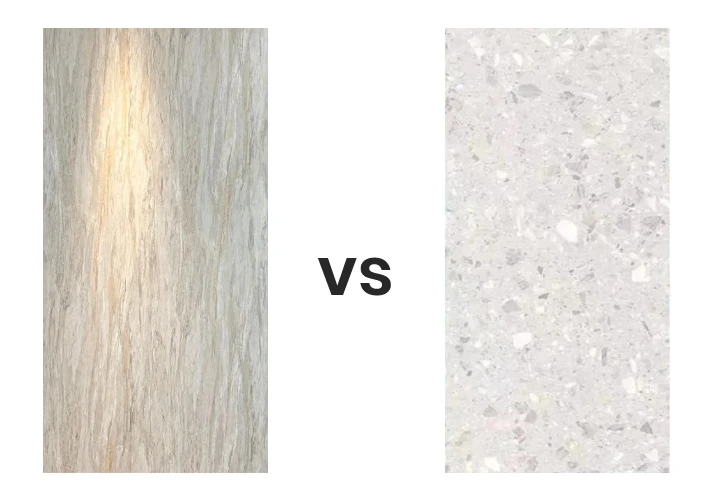
Marble-look surfaces
Natural stone textures
Concrete or cement aesthetics
Solid color minimalist designs
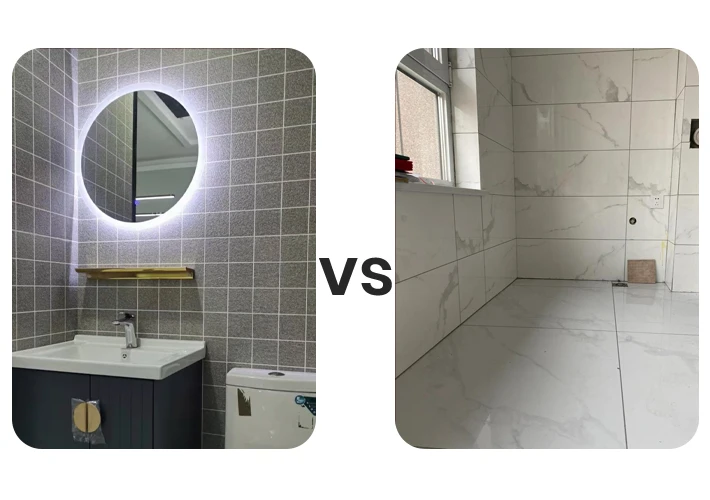
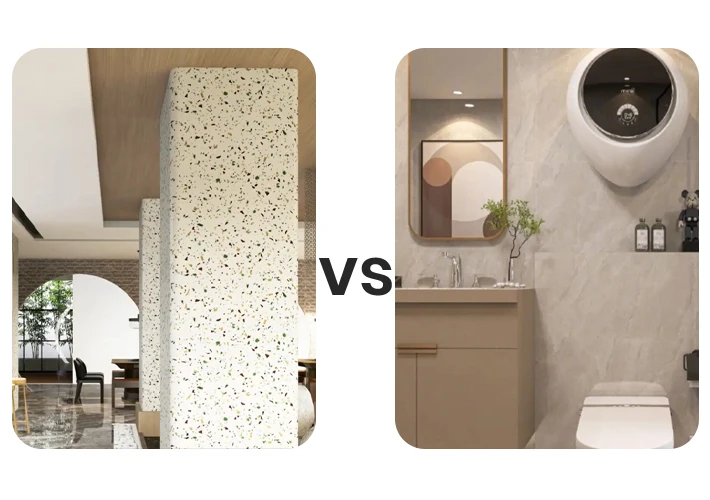
Because panels are large-format, they create a seamless, high-end appearance, especially suitable for modern and hotel-style bathrooms.
Design benefits include:
Fewer visual interruptions
Consistent pattern continuity
Contemporary and clean aesthetics
Tile Design Options
Tiles offer unmatched design flexibility:
Endless colors and finishes
Mosaic patterns
Custom layouts and artistic designs
Glossy, matte, or textured surfaces
Tiles are ideal for homeowners seeking a classic or artistic bathroom style.
Verdict: Tiles win in creative freedom, while SPC panels excel in modern, seamless design.
Durability, Maintenance, and Long-Term Performance
Durability Comparison
SPC shower wall panels:
Resistant to cracking and impact
Stable under temperature changes
Scratch-resistant surface layers
Tiles:
Extremely hard surface
Resistant to scratches and heat
Can crack if impacted or if substrate shifts
Both materials are durable, but SPC panels are more forgiving in real-world usage where wall movement or impact may occur.
Maintenance Requirements
SPC shower wall panels require:
Simple wiping with mild detergent
No grout cleaning
No sealing or re-treatment
Tiles require:
Regular grout cleaning
Periodic grout sealing
Possible grout repair over time
Verdict: For low-maintenance and long-term convenience, SPC shower wall panels are the better option.
What Should B2B Buyers Consider When Purchasing SPC Shower Wall Panels?
For contractors, importers, distributors, hotel developers, and project suppliers, comparing SPC panels with tiles should go beyond the initial material price.
A professional purchasing evaluation should include at least six factors:
1. Panel Size
Large-format SPC panels can reduce the number of joints compared with small-format tiles. Buyers should confirm standard panel dimensions and whether custom sizes are available.
2. Surface Finish
Different projects may require marble-look, stone-look, concrete-look, or solid-color finishes. Surface wear resistance should be considered together with appearance.
3. Joint System
The joint structure directly affects installation efficiency and the final appearance. Buyers should confirm whether the product uses tongue-and-groove, click-lock, or another connection method.
4. Installation Method
The supplier should provide clear installation instructions, including substrate preparation, adhesive requirements, cutting, corner treatment, and sealing.
5. Packaging and Transportation
For imported building materials, packaging is part of the purchasing decision. Large-format panels need suitable protection against edge damage, surface scratches, and deformation during transportation.
6. Sample and Quality Control
Before placing a bulk order, B2B buyers should evaluate physical samples, surface consistency, dimensions, thickness, locking or joint performance, and packaging quality.
For commercial projects, the lowest unit price does not necessarily mean the lowest project cost. Installation time, labor, material waste, packaging, maintenance, and replacement requirements should also be considered.
Cost, Application Scenarios, and Final Verdict
Cost Comparison
SPC shower wall panels:
Competitive material pricing
Lower labor costs
Faster project completion
Tiles:
Wide price range (from budget to premium)
Higher labor and installation costs
Longer project timelines
In many projects, SPC panels result in lower total installed cost.
Best Application Scenarios
Choose SPC Shower Wall Panels if:
You want fast installation
You prefer minimal maintenance
You are renovating hotels, apartments, or rental properties
You want a modern, seamless look
Choose Tiles if:
You value custom design and patterns
You want a traditional bathroom style
You are willing to maintain grout lines
You aim for a luxury or artistic finish
When Should You Choose SPC Shower Wall Panels Instead of Tiles?
SPC shower wall panels are particularly suitable when a project has one or more of the following requirements:
Choose SPC panels when:
The project has a short construction schedule.
The bathroom needs a modern seamless appearance.
Low maintenance is important.
The project involves multiple bathrooms.
Labor availability is limited.
Renovation needs to minimize construction disruption.
The project is a hotel, apartment, rental property, or commercial development.
Consistent appearance across multiple rooms is required.
The buyer wants large-format wall panels with fewer joints.
Choose tiles when:
The project requires mosaics or highly customized patterns.
Traditional ceramic or porcelain aesthetics are preferred.
The designer needs extensive combinations of tile sizes and shapes.
Artistic layouts are an important part of the bathroom design.
The project already has an established tile installation system and skilled tile installers.
The choice should therefore be based on project priorities rather than simply asking which material is universally better.
SPC Shower Wall Panels vs Tiles: Look Beyond the Material Price
When comparing SPC shower wall panels with tiles, buyers should distinguish between material cost y total installed cost.
The total project cost can include:
Material + accessories + labor + substrate preparation + installation time + waste + maintenance + potential repairs
A tile system may have a relatively attractive material price, but installation can involve more steps, including substrate preparation, adhesive or mortar application, cutting, grouting, and curing.
SPC panels may reduce some of these installation steps because of their large format and reduced joint requirements.
For this reason, a project with a higher panel material price can still achieve competitive overall economics if it significantly reduces labor hours, construction time, material waste, or maintenance requirements.
For hotel and multi-unit projects, this difference becomes more important because the same installation process is repeated across many bathrooms.
Frequently Asked Questions About SPC Shower Wall Panels vs Tiles
Are SPC shower wall panels better than tiles for bathrooms?
SPC shower wall panels can be a practical alternative to tiles for bathrooms, particularly when waterproof performance, installation speed, low maintenance, and a seamless appearance are important. Tiles remain useful when extensive design customization is required.
Can SPC shower wall panels be used in shower areas?
Yes. SPC shower wall panels are designed for wet-area applications and can be used on shower walls when the panels, joints, corners, penetrations, and surrounding installation details are properly sealed.
Do SPC shower wall panels need grout?
Traditional SPC shower wall panels do not require grout joints in the same way that conventional tiles do. Depending on the panel system, joints may use a tongue-and-groove, click-lock, sealant, or another connection method.
Are SPC shower wall panels easier to install than tiles?
Generally, yes. Large-format SPC panels can reduce the number of individual pieces and joints, while tile installation normally requires substrate preparation, individual tile placement, grouting, and curing.
Are SPC shower wall panels cheaper than tiles?
The answer depends on the product, project size, labor rates, and installation method. SPC panels can reduce total installed cost in some projects because of faster installation and lower labor requirements, even when material prices vary.
Do SPC shower wall panels require maintenance?
SPC shower wall panels generally require simple routine cleaning. Unlike tiled walls, they do not have extensive grout joints that require regular cleaning and periodic sealing.
Are tiles more durable than SPC shower wall panels?
Both systems can provide long-term performance when correctly selected and installed. Tiles have a very hard surface, while SPC panels can offer impact resistance and dimensional stability. Actual performance depends on product construction, installation quality, and project conditions.
Can SPC shower wall panels be used in hotels?
Yes. Their large format, low-maintenance surface, and installation efficiency make SPC shower wall panels suitable for hotel bathrooms, apartment developments, rental properties, and other projects where many bathrooms need to be completed consistently.
What should importers check before buying SPC shower wall panels?
Importers should evaluate panel dimensions, thickness, core structure, surface finish, joint system, waterproofing details, packaging, quality consistency, available samples, installation instructions, production capacity, and customization options.
Final Conclusion: SPC Shower Wall Panels vs Tiles — Which Is Better?
There is no single “best” solution for every project, but trends clearly show why SPC shower wall panels are rapidly replacing tiles in many modern bathrooms.
SPC shower wall panels are better for speed, waterproof performance, maintenance, and cost control.
Tiles remain strong in design customization and traditional appeal.
For modern construction, hospitality projects, and efficiency-focused renovations, SPC shower wall panels are often the smarter choice. For bespoke residential designs, tiles still hold a valuable place.
A Practical Buying Conclusion
The decision between SPC shower wall panels and tiles should ultimately be based on the requirements of the project.
For hotels, apartments, commercial bathrooms, rental properties, and fast renovation projects, SPC shower wall panels provide a combination of large-format installation, low maintenance, modern aesthetics, and efficient construction.
For custom residential bathrooms, artistic interiors, and projects requiring complex patterns or mosaics, traditional tiles provide greater flexibility in visual design.
For B2B buyers, the most important question is therefore not simply “Which material is better?” but rather:
“Which wall system provides the right balance of performance, installation efficiency, appearance, maintenance, and total project cost for this application?”
This project-based approach provides a more reliable basis for material selection than comparing the unit price of SPC panels and tiles alone.




 Spanish
  English
  French
  Russian
  Arabic
  Portuguese
  Japanese