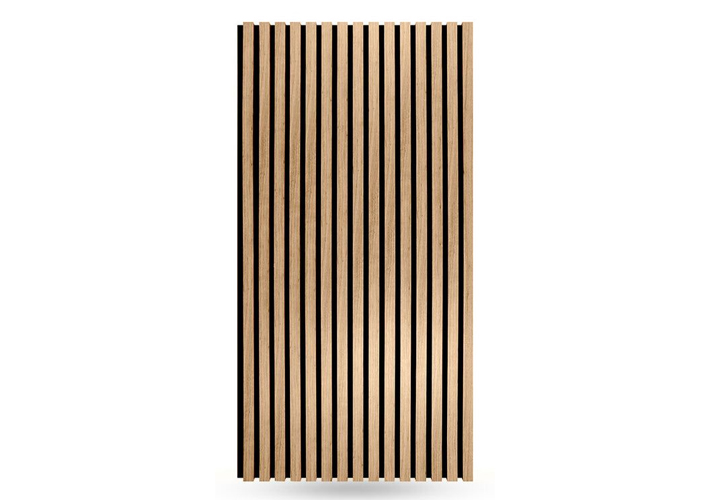
Paneles acústicos are essential for controlling noise, reducing echoes, and improving sound clarity in various environments, from residential spaces to professional studios, offices, and industrial facilities. Selecting the correct panel size is a crucial decision that impacts both effectiveness and aesthetics. The best size for an acoustic panel depends on several factors, including the room size, intended use, frequency range absorption, and design considerations.
This article provides an in-depth analysis of the best sizes for acoustic panels based on scientific principles, industry standards, and real-world applications.
For most commercial, residential, and hospitality applications, 1200 × 600 mm and 1200 × 1200 mm acoustic panels provide a practical balance between acoustic coverage, installation efficiency, and interior design flexibility. Smaller 600 × 600 mm panels are suitable for targeted acoustic treatment, while larger 2400 × 1200 mm panels are more appropriate for large rooms, auditoriums, gyms, industrial facilities, and other spaces with extensive reflective surfaces.
However, panel size alone does not determine acoustic performance. The best acoustic panel configuration depends on room size, ceiling height, reverberation level, panel thickness, material density, mounting method, and the amount of wall or ceiling surface that needs treatment.
For this reason, choosing an acoustic panel should be based on the overall acoustic treatment requirement rather than simply selecting the largest available panel.

The size of an acoustic panel influences its ability to absorb different sound frequencies and cover an adequate surface area. The primary aspects to consider include:
1.1 Standard Acoustic Panel Sizes
Acoustic panels are available in a variety of standard sizes, commonly measured in millimeters (mm) or feet:
| Panel Size (mm) | Panel Size (ft) | Common Applications |
|---|---|---|
| 600 × 600 | 2 × 2 | Small offices, conference rooms, home studios |
| 1200 × 600 | 4 × 2 | Corporate offices, classrooms, restaurants |
| 1200 × 1200 | 4 × 4 | Theaters, home theaters, music studios |
| 2400 × 1200 | 8 × 4 | Large auditoriums, industrial spaces, gyms |
While these are standard sizes, custom panel dimensions are often used to meet specific project requirements.
1.2 Effect of Panel Size on Sound Absorption
For the best acoustic performance, a combination of different panel sizes is often used.
As a general project guideline:
For many projects, a mixed-size layout can be more practical than using only one panel size. For example, 600 × 600 mm panels can be used around specific reflection points, while 1200 × 600 mm or 1200 × 1200 mm panels cover larger wall areas.
This approach allows architects, contractors, and acoustic material buyers to balance acoustic performance, installation efficiency, material usage, and visual design.
A common misconception is that a larger acoustic panel will always provide better sound absorption. In practice, acoustic performance depends on several interconnected factors.
Panel area determines how much reflective surface can be treated. A larger panel can cover more wall or ceiling area with fewer individual units, which can simplify installation.
Panel thickness affects the panel's ability to absorb sound, particularly at lower frequencies. A 50 mm or 100 mm acoustic panel can generally provide deeper absorption than a very thin panel when the material and construction are otherwise comparable.
Air gaps behind wall-mounted acoustic panels can also improve low-frequency absorption. Therefore, two panels with the same external dimensions may perform differently depending on thickness, backing material, and installation method.
Coverage ratio is another important factor. Installing a few large panels may not provide sufficient acoustic treatment if most of the room's hard reflective surfaces remain untreated.
Therefore, the best acoustic panel size should always be evaluated together with thickness, coverage, placement, and the acoustic characteristics of the room.
For buyers who need a quick starting point, the following decision logic can be used:
Small room + targeted echo control → 600 × 600 mm or 1200 × 600 mm
Medium room + general speech and noise control → 1200 × 600 mm or 1200 × 1200 mm
Large room + extensive reflective surfaces → 1200 × 1200 mm or 2400 × 1200 mm
Low-frequency problems → prioritize thicker panels and suitable mounting methods rather than simply increasing panel width and height
This means that larger is not automatically better. The correct panel size is the one that provides sufficient acoustic coverage while matching the room's layout and installation conditions.
For commercial projects, buyers should also consider transportation, handling, installation labor, packaging efficiency, and replacement requirements when selecting panel dimensions.
2.1 Room Size and Volume
The overall dimensions of the room influence the selection of panel sizes.
Small Rooms (< 15 m²)
Medium-Sized Rooms (15-50 m²)
Large Rooms (> 50 m²)
2.2 Purpose of Acoustic Treatment
Different applications require varying levels of sound absorption, affecting panel size selection.
| Aplicación | Recommended Panel Size |
|---|---|
| Speech clarity in offices | 600 × 600 mm or 1200 × 600 mm on walls and ceilings |
| Home theaters | 1200 × 1200 mm or 2400 × 1200 mm for full acoustic coverage |
| Recording studios | Combination of 600 × 600 mm (high-frequency control) and 1200 × 1200 mm (low-frequency control) |
| Auditoriums | 2400 × 1200 mm for effective large-space absorption |
| Industrial spaces | Large (2400 × 1200 mm) panels suspended from ceilings |
2.3 Frequency Absorption Considerations
Larger panels are more effective in absorbing low-frequency sounds, while smaller panels primarily control high and mid frequencies.
| Frequency Range | Best Panel Size |
|---|---|
| High-frequency (speech, sharp noises) | Small to medium (600 × 600 mm or 1200 × 600 mm) |
| Mid-frequency (music, television) | Medium to large (1200 × 600 mm or 1200 × 1200 mm) |
| Low-frequency (bass, machinery noise) | Large panels (1200 × 1200 mm or 2400 × 1200 mm) with added thickness |
A larger acoustic panel can absorb more total sound energy when it provides greater treated surface area, but its size should not be confused with its frequency performance.
High-frequency sounds are generally easier to control with relatively thin acoustic treatments. Low-frequency sound is more difficult to absorb and often requires greater thickness, porous material depth, an air gap, bass traps, or other specialized acoustic treatment methods.
Therefore, if a project has a serious low-frequency problem, simply changing from a 1200 × 600 mm panel to a 2400 × 1200 mm panel may not solve the problem.
A better approach is to evaluate three factors together:
Panel area + panel thickness + installation configuration
This provides a more reliable basis for acoustic panel selection than panel dimensions alone.

Panel size and panel coverage should be considered together. A large room may require more acoustic treatment even when large panels are used.
For offices, conference rooms, restaurants, classrooms, and other speech-focused environments, acoustic panels are commonly positioned at major reflection points and on large hard surfaces such as walls and ceilings.
For larger spaces, designers may combine wall panels with ceiling acoustic clouds, suspended panels, baffles, or bass traps to address reflections from different directions.
The goal is not necessarily to cover every surface. Instead, the acoustic treatment should reduce excessive reflections and reverberation while maintaining a comfortable and natural sound environment.
For B2B projects, it is therefore useful to calculate the required total acoustic treatment area before deciding the final number and size of panels.
3.1 Wall-Mounted Panels
3.2 Ceiling-Mounted Panels (Acoustic Clouds)
3.3 Free-Standing Acoustic Panels
In many cases, standard panel sizes are insufficient, and custom dimensions are needed.
Custom panels may also vary in thickness, with common options including:
Standard dimensions are efficient for mass production and common applications, but commercial projects often have different wall dimensions, ceiling layouts, design concepts, and installation requirements.
Custom acoustic panels can help contractors and interior designers:
For wholesalers, distributors, contractors, and project buyers, it is also important to confirm MOQ, available dimensions, thickness options, surface finishes, packaging, lead time, and OEM/ODM capability before placing a bulk order.

Before ordering acoustic panels, project buyers can evaluate the following points:
1. Room size: Determine the floor area, ceiling height, and overall room volume.
2. Acoustic problem: Identify whether the main issue is echo, speech intelligibility, reverberation, music reflection, or low-frequency noise.
3. Panel dimensions: Select 600 × 600 mm, 1200 × 600 mm, 1200 × 1200 mm, 2400 × 1200 mm, or custom dimensions according to the project.
4. Panel thickness: Consider 25 mm, 50 mm, 100 mm, or other available thicknesses depending on the required absorption performance.
5. Coverage area: Estimate how much wall and ceiling surface needs acoustic treatment.
6. Installation method: Consider wall mounting, ceiling suspension, free-standing installation, or acoustic clouds.
7. Project requirements: For commercial and wholesale orders, confirm dimensions, surface finish, packaging, MOQ, production lead time, and customization options.
This checklist helps buyers avoid selecting acoustic panels based on size alone and provides a more practical approach to acoustic material specification.
The best acoustic panel size depends on:
For most applications, the 1200 × 600 mm and 1200 × 1200 mm panels provide an excellent balance between sound absorption efficiency y ease of installation. For larger spaces, 2400 × 1200 mm panels may be necessary.
Want to know more sizes and specifications. Feel free to Contacto!
1200 × 600 mm is one of the most versatile acoustic panel dimensions for commercial and residential applications. It provides a good balance between surface coverage, handling, installation, and design flexibility. 1200 × 1200 mm panels are also suitable when larger coverage areas are preferred.
Not necessarily. Larger panels cover more surface area and can reduce the number of individual panels required, but acoustic performance also depends on thickness, material construction, installation method, and total coverage.
For small rooms, 600 × 600 mm and 1200 × 600 mm panels are practical choices. They can be positioned at major reflection points without visually overwhelming the room.
Large rooms may benefit from 1200 × 1200 mm or 2400 × 1200 mm panels because these dimensions allow more acoustic surface to be treated with fewer individual units. Ceiling-mounted acoustic clouds or suspended panels may also be useful.
Both matter, but they affect different aspects of acoustic treatment. Panel size determines surface coverage, while thickness and construction strongly influence absorption performance, especially at lower frequencies.
Yes. Custom dimensions are commonly considered for architectural, commercial, hospitality, office, studio, and industrial projects. Customization may also include thickness, surface finish, color, shape, and other project-specific requirements depending on the manufacturer.
The required number depends on room dimensions, acoustic goals, panel size, panel thickness, and the amount of reflective surface. Instead of calculating the quantity from room area alone, it is better to determine the required acoustic treatment area and then select the most suitable panel dimensions.