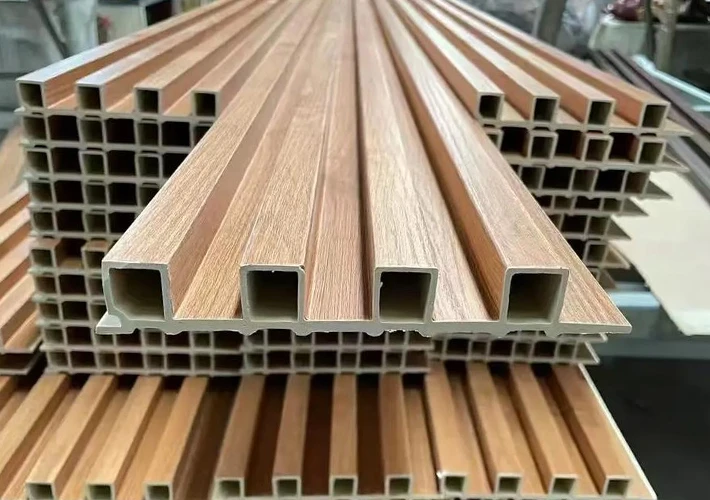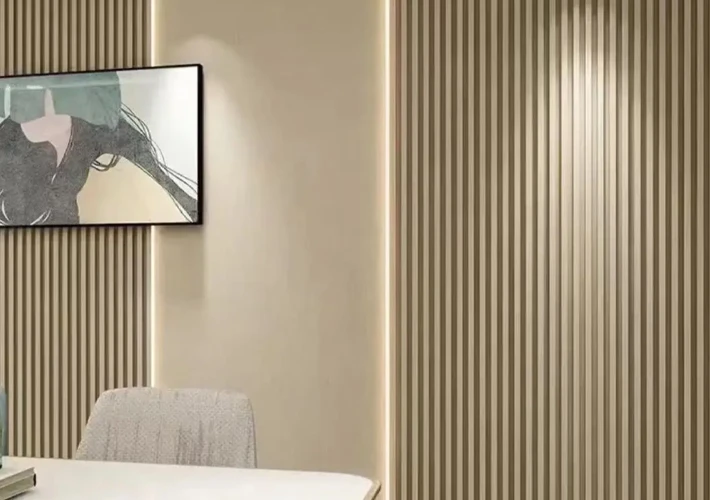
Whether it be retail stores, offices, hotels, and outdoor plazas, it’s no surprise why WPC wall panels are almost everywhere. WPC wall panels provide the warmth of wood while also promising the durability of the composite materials they’re made up of. But as a distributor or project contractor, there’s a problem.
Many times, customers fail to reap this promise of durability. In turn, this affects your reputation. You find it hard to deliver consistent results to your clients, and soon enough, you understand that choosing a panel goes beyond just picking the most attractive option or the option that saves the most money. Your supply system also matters. In this article, we’ll tell you everything you need to know about choosing WPC wall panels for commercial projects, and how the right supplier makes it very easy.
Commercial activities put more pressure on building materials. This is because traffic is heavier, and interactions with the walls are more frequent. Cleaning is also more aggressive. We haven’t even considered that there’s more exposure to heat and moisture in these business environments.
Sadly, many distributors and contractors don’t know that most WPC wall panels in the market are made for residential purposes. These panels don’t have specific considerations for commercial properties in mind. So understandably, a WPC wall panels that looks attractive and may have served one customer for the past ten years in their home without any complaints may only last about 3 years in a shopping mall, for example.
By knowing this difference in needs, it then becomes clearer why you need to look beyond appearance in making a choice.

Just like with colors, texture, finish, and everything your eyes can see, prices are easy to compare. It’s hard to look beyond how the WPC wall panels you choose affect your budgets and profits. However, this is dangerous.
While WPC wall panels may look similar on the surface, and you think the cheapest option is a no-brainer, know that they also have different compositions and manufacturing processes. These two factors affect their durability. Hence, panels that are cheapest now may cost you your reputation in the long run when your customers or clients start making repairs and replacements earlier than you promised. There is even the risk of suits for professional negligence if the materials don’t fit regulatory standards. No one wants to bear that, especially not you.
What’s the baseline? The smartest contractors ask questions about what panels will serve customers beyond 20 years, not about the panels that will save them a few bucks on the project.
At this point, you now understand that commercial-grade WPC wall panels are defined by their performance. So, what are the factors that help you predict this performance?
WPC wall panels are made up of wood fibres, thermoplastic polymers, and additives. From tests, to help customers avoid unwanted dents and cracks, the best composition is one with;
It’s the plastic content that makes WPC wall panels resistant to insects, rot, and cracking. And additives help with resistance to fire, moisture, UV rays, and other harmful environmental conditions. The more the wood-fibre content, the more tensile and stiff a panel is. However, having more wood fibre content than mentioned above can make the material less resistant to stretch, and gives little room for the plastics and their benefits. So, stick to best-practice recommendations.
A report from the US Fire Administration reveals that the major cause of nonresidential fire accidents was the misuse of materials in buildings. Using the wrong material in a commercial area exposes your customer or client to a higher risk of fire incidents. So, it’s not enough that you use strong WPC wall panels in your building project. Contractors also have to use panels that are safe.
Hence, choose panels with fire-resistant additives like phosphorous-based compounds, Halogenated compounds, Aluminium trithydroxide, magnesium hydroxide, and intumescent systems. Some manufacturers use specific formulations of these additives to help you and your clients easily meet fire safety and building code standards.

There are certain areas where low-quality panels struggle, such as lobbies, restrooms, and hospital environments. Why? Because of their prolonged exposure to humidity or moisture. These cause swelling and warping in the panels over time, and eventually, mould growth and rot set in. The best panels are engineered with water resistance in mind. Some additives to look out for here include compatibilizers and anti-mold agents.
You also have to consider that, while some panels are installed indoors, you may have some installed outdoors. Even those installed indoors may be exposed to some level of sunlight, and this introduces one more risk factor for your customer – UV rays. UV rays cause surface cracking, discoloration, polymer breakdown, and eventual brittleness in materials. Hence, you want to look for additives like UV stabilizers and UV absorbers like Bencophones and Benzotriazoles when making your choice.
On the material side, some of the other considerations to make include
Remember, after all is said, having the best-designed WPC wall panels but the wrong manufacturer will cause you trouble. And these troubles come in four major forms. Inconsistency in quality across batches, a lack of customization, shaky large-volume support, and poor logistics coordination. So what should you look for in a supplier?
Earlier, we talked about the recommended raw material composition. However, even where the ratios are met, poor extrusion methods will affect material density. As a contractor, you need manufacturers that prioritize best practices. A couple of these best practices include the use of twin-screw extruders and co-extrusion processes in production. Look out for them.
Commercial projects rarely get completed in a single batch of supplies. Hence, without verifiably strict control over manufacturing processes, even if the first couple of batches were excellent, it’s only a matter of time before you start getting products that differ in color, density, and expected performance. The best manufacturers tightly control material sourcing and carry out consistent batch-level inspections. They are transparent with their production processes, too.

With large volumes of panels involved, the risk of not satisfactorily meeting the time and quality specifications of your client becomes greater. Orders may be broken up into more batches than optimal. Quality may decline to meet quantity specifications. Or lead time will increase if you want to remain careful. The best manufacturers assure you of a stable supply, and they do this by providing contractors with production and delivery coordination plans upfront. Manufacturers that provide technical documentation and installation support are even better.
Each commercial project has its peculiarities when it comes to aesthetic designs, strength, and dimensions. For instance, shopping malls will require more reinforcement than offices. Even within individual projects, panels are rarely used in a single room. Contractors have lobbies, restrooms, corridors, and facades to consider. While some places require larger wall panels, others may require more protection against moisture or fire. Because of this, you’ll need a manufacturer that can offer you customized panels for every use-case. Having these types of manufacturers means you also don’t need to work with different suppliers for a single project, or look for a new one on a subsequent project.
The real cost of WPC wall panels comes to light over the longer periods, when they affect your business’ reputation. To ensure customers don’t have to deal with costly maintenance, repairs, and replacements, you have to choose the best WPC wall panels in the market. And the best panels are from manufacturers that use the right composition of raw materials, adopt best-practices for extrusion, and offer use-case customization. They also offer large-volume support and give strict quality assurances.
You improve your service life and reduce costs for customers by choosing the right supplier, as well as scratch, fire, water, and UV-resistant WPC wall panels that fit into customer projects. If you’re still confused about making a choice, our experts are here to help.
Envie-nos uma mensagem no whatsapp +86 189 5395 5575e responder-lhe-emos de imediato!