How to Shorten Hotel Guestroom Renovation Time by 30%?

Published on: 24 Dez, 2025
Índice

In today’s highly competitive global hospitality industry, time has become more expensive than renovation cost itself.

For hotel investors, every day opened earlier means faster cash flow.
For hotel chains, delivery speed directly affects expansion plans.
For contractors and procurement teams, schedule control determines overall project risk.

However, in a large number of hotel renovation projects, one fact is often overlooked:

👉 What truly delays hotel guestroom renovation is not labor—but material selection.

This article analyzes hotel renovation from a project execution and material strategy perspective, explaining:

  • Why traditional renovation methods lead to uncontrollable timelines
  • Which materials quietly waste time during construction
  • How proper material selection can realistically reduce renovation cycles by 20–30%
  • A repeatable approach suitable for serviced apartments, business hotels, resorts, and overseas projects

Where Does Hotel Guestroom Renovation Really Lose Time?

Many project managers believe that:

“As long as we add more workers or overtime, we can shorten the schedule.”

In reality, the opposite is often true.

In hotel guestroom projects, over 70% of delays are caused by material-related issues rather than construction speed.

1.1 Too Many Material Processes Create On-Site Bottlenecks

Traditional hotel guestroom renovation usually involves:

  • Cement base leveling
  • Putty application
  • Sanding
  • Primer coating
  • Finish painting
  • Secondary installation of stone or wood veneer
  • Edge trimming and on-site repair

These processes are:

  • Highly dependent on site conditions
  • Strongly sequential (one step cannot start until the previous one dries)
  • Extremely sensitive to humidity and temperature

As a result:

  • The “effective working time” per room is significantly extended
  • Trades overlap frequently, creating site chaos
  • Rework becomes inevitable

1.2 Material Instability Leads to Rework and Delays

Common rework causes in hotel projects include:

  • Color variation between stone batches
  • Inconsistent wood veneer finishes
  • Wall cracking or surface bubbling
  • Poor moisture resistance causing later failures

One rework often means a 3–7 day delay, not just a simple repair.

1.3 Uncontrolled Material Delivery Schedules

During early material selection, many projects ignore:

  • Production lead times
  • Batch consistency
  • Packaging and logistics methods
  • Certifications and customs clearance for overseas projects

This often results in:

  • Labor ready but materials missing
  • Site shutdowns waiting for delivery
  • Passive extension of the project schedule

Why Material Selection Determines 70% of Renovation Efficiency

From an engineering management perspective, materials define the construction logic.

Different materials lead to completely different workflows.

2.1 Traditional “Wet Materials” Are Naturally Slow

Examples include:

  • Paint systems
  • Natural stone
  • On-site spraying
  • Traditional wood framing with decorative finishes

These materials share common drawbacks:

  • Heavy dependence on skilled labor
  • High sensitivity to environmental conditions
  • Irreversible installation with high rework cost
  • Low standardization

They may suit:

  • Small-scale projects
  • Non-standard designs
  • Time-insensitive renovations

But they are no longer suitable for modern fast-delivery hotel projects.

2.2 Factory-Prefabricated Materials Are Reshaping Hotel Renovation

More hotel projects are shifting toward:

  • Modular systems
  • Factory-prefabricated components
  • Fast on-site installation

The key is not whether the material looks “high-end,” but whether:

The material is designed for construction efficiency.

Four Material Selection Strategies That Truly Reduce Construction Time

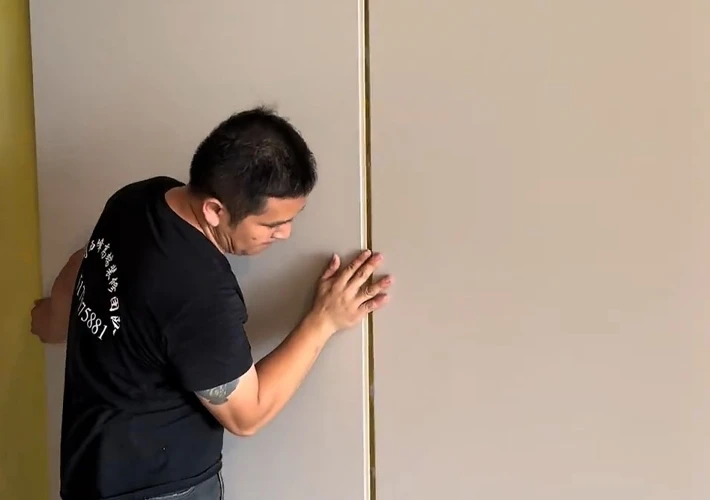
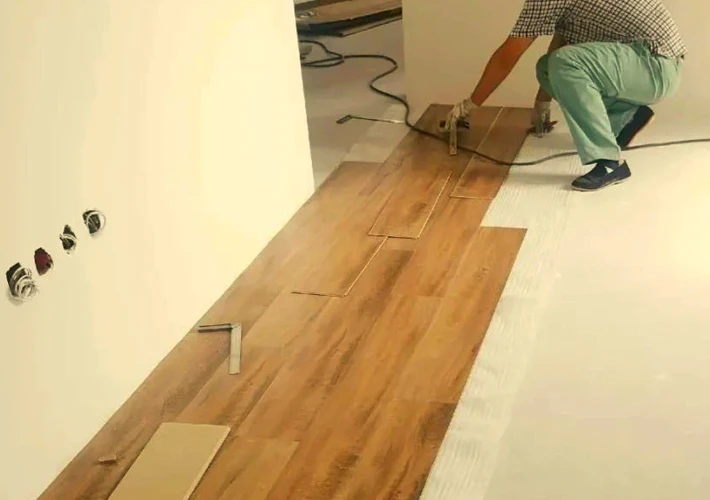
Strategy 1: Reduce Wet Work, Prioritize Dry-Installation Materials

Wet work equals uncontrollable time.

The first step to shortening renovation schedules is to:
👉 Minimize wet processes on-site.

Recommended material directions include:

  • Finished wall systems
  • Modular wall panels
  • No-putty, no-paint materials
  • Decorative panels that directly cover existing walls

Such as:

  • Painéis de parede WPC
  • Painéis de parede SPC
  • Bamboo charcoal wood veneer systems
  • Folhas de mármore em PVC

Their shared advantages:

  • Direct wall installation
  • Finished surface upon installation
  • Independent of weather conditions

In many renovation projects, simply switching wall systems can reduce overall construction time by 15–20%.

Strategy 2: Integrated Materials Reduce Process Complexity

Traditional renovation logic:

Base layer → Decoration → Moisture protection → Fire resistance → Acoustic treatment

Efficient material logic:

One material, multiple functions

Examples include:

  • Decorative panels with built-in moisture resistance
  • Wall systems with integrated acoustic structures
  • Pre-laminated finishes requiring no secondary treatment

Higher integration means:

  • Fewer construction steps
  • Fewer trades on-site
  • Lower coordination cost

This advantage is especially obvious in highly repetitive hotel guestrooms.

Strategy 3: Standardized Sizes Support Batch Installation

Hotel guestrooms are:
👉 Highly standardized and repetitive spaces

Yet many projects still choose non-standard materials, resulting in:

  • Excessive cutting on-site
  • Slower installation
  • Increased material waste

Efficient selection focuses on:

  • Mature standard size systems
  • Compatibility with batch installation
  • Fast edge and corner solutions

Standardized materials enable:

  • Parallel installation across multiple rooms
  • Minimal learning curve for workers
  • Exponential improvement in installation speed

Strategy 4: Material Stability Ensures “One-Time Installation”

The fastest renovation is the one that does not require rework.

Key evaluation points include:

  • Batch consistency
  • Color stability
  • Dimensional tolerance
  • Long-term moisture and climate resistance

This is especially critical for:

  • Overseas projects
  • Hotel chains
  • Multi-phase developments

Unstable materials may look cost-effective initially but often become hidden schedule killers.

Materials Becoming the Preferred Choice for Fast-Delivery Hotels

Based on extensive project experience, the following materials perform exceptionally well in reducing hotel renovation timelines.

4.1 WPC / SPC Wall Panel Systems

Key advantages:

  • Factory prefabrication
  • Structural stability
  • Direct installation
  • High installation speed

Widely used in:

  • Guestroom walls
  • Feature walls
  • Corridors

Especially suitable for:

  • Business hotels
  • Chain brands
  • Standardized overseas projects

4.2 Bamboo Charcoal Wood Veneer Systems

Compared to traditional wood veneer:

  • No complex base construction
  • Better moisture resistance
  • Faster installation

Increasingly adopted in mid- to high-end hotels that require both aesthetic quality and efficiency.

4.3 PVC Marble Sheets

Commonly used in:

  • Guestroom feature walls
  • Bathroom dry areas
  • Public spaces

They replace natural stone while significantly reducing:

  • Dry-hanging systems
  • Cutting and polishing
  • Installation risks

Three Common “Time Traps” During Material Selection

5.1 Focusing Only on Material Price, Ignoring Installation Cost

A material may be:

  • Cheap per square meter
  • Labor-intensive to install

Ultimately increasing total cost and extending the schedule.

5.2 Ignoring Packaging and Logistics Design

Poor packaging leads to:

  • Damage during transport
  • On-site sorting delays
  • Reproduction and replacement time loss

5.3 Selecting Materials Without a System Approach

Walls, floors, and ceilings chosen independently result in:

  • High on-site coordination complexity
  • Frequent adjustments and delays

Efficient projects treat materials as a complete system, not isolated products.

Conclusion: Shortening Renovation Time Is a Material Strategy Upgrade

The competition in hotel guestroom renovation is no longer about:

“Who works harder on-site”

But about:

“Who solves problems during the material selection stage.”

When materials are:

  • More standardized
  • More integrated
  • Designed for fast installation

Construction naturally accelerates, and schedules become controllable.

For hotels aiming to:

  • Open faster
  • Reduce project risk
  • Improve return on investment

Material selection is no longer just a procurement decision—it is a strategic one.

Contactar-nos

Envie-nos uma mensagem no whatsapp +86 189 5395 5575e responder-lhe-emos de imediato!

    pt_PTPortuguese