Acoustic Panels for Ceiling vs Wall – Which Is Better for Soundproofing?

Published on: 09 Сен, 2025
Оглавление

When it comes to soundproofing a room, acoustic panels are one of the most effective solutions. However, many people wonder where to place them for the best results: on the ceiling or the walls? In this comprehensive guide, we’ll compare акустические панели for ceilings and walls, helping you make an informed decision on which placement is better for soundproofing.

👉 Which is better for soundproofing—acoustic panels for ceilings or walls?

This article provides a detailed comparison between ceiling-mounted and wall-mounted acoustic panels, examining their working principles, installation scenarios, performance differences, cost factors, and practical applications. By the end, you’ll have a clear understanding of how to select the right solution for your project.

Understanding Acoustic Panels

Before diving into ceilings vs walls, it’s important to understand what acoustic panels are and how they function.

1.1 What Are Acoustic Panels?

Acoustic panels are specialized materials designed to absorb sound waves and reduce noise within a room. Made from sound-absorbing materials like foam, fiberglass, or fabric-wrapped panels, they work by minimizing sound reflections and reverberations, improving the overall acoustics of a space.

Key Benefits of Acoustic Panels:

  • Noise Reduction: Acoustic panels help dampen sound, making them ideal for home theaters, offices, and recording studios.
  • Sound Clarity: They improve speech intelligibility by reducing echo and reverb.
  • Эстетическая привлекательность: Modern acoustic panels are available in various colors and designs to match your interior décor.

1.2 Key Acoustic Principles

  • Sound Absorption – Panels trap and dissipate sound energy, reducing echo and reverberation.
  • Diffusion – Some panels scatter sound waves, distributing them evenly for balanced acoustics.
  • Insulation – While acoustic panels are not primarily designed for blocking external noise, they contribute to overall soundproofing when combined with other materials.

Ceiling Acoustic Panels – Features and Benefits

2.1 What Are Ceiling Acoustic Panels?

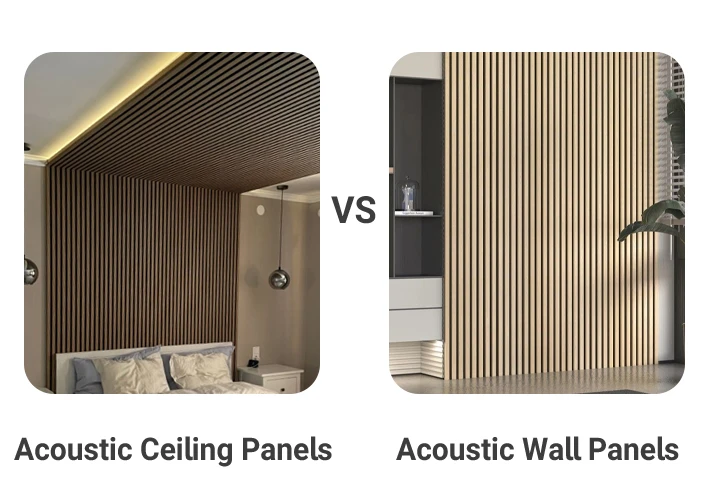
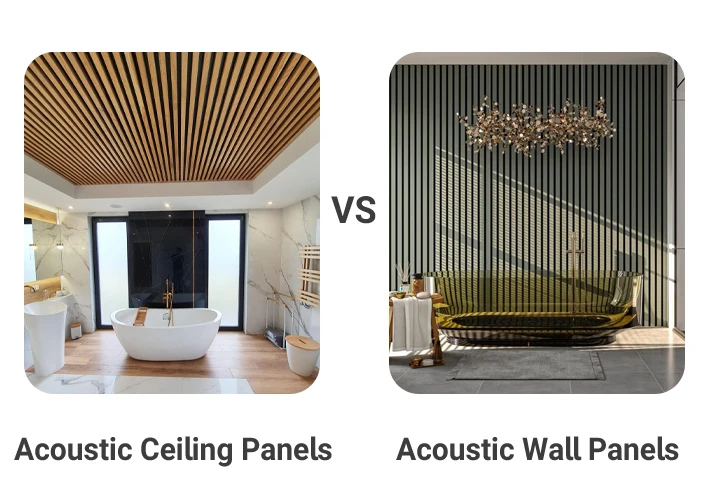
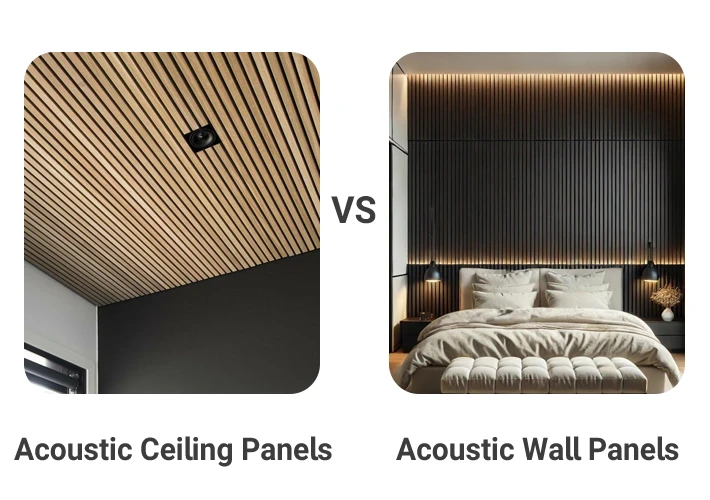
Ceiling acoustic panels are installed overhead, either suspended like acoustic clouds/baffles or integrated into a drop ceiling system. They are especially effective in large, open spaces with hard reflective surfaces.

2.2 Advantages of Ceiling Acoustic Panels

While ceiling panels have their benefits, placing acoustic panels on the walls can also be highly effective. Here’s why wall panels are important for soundproofing:

  1. Blocking External Noise:
    Walls are the primary barrier between a room and the external environment. Acoustic panels on walls can help block noise from outside, such as street traffic or noisy neighbors, preventing it from entering your space.
  2. Minimizing Reflections:
    Walls play a significant role in sound reflection. By covering the walls with acoustic panels, you can reduce the bounce of sound waves and prevent them from disrupting the room’s acoustics.
  3. Improving Speech Intelligibility:
    For rooms like conference rooms, classrooms, or home offices, wall panels improve speech clarity by reducing reverberation and echo, ensuring that conversations are clear and understandable.

Best Placement for Wall Panels:

On walls with reflective surfaces that contribute to excessive reverberation.

On walls that face external noise sources (e.g., windows or external doors) to block sound.

In rooms where speech clarity is crucial, such as conference rooms or home offices.

2.3 Limitations of Ceiling Acoustic Panels

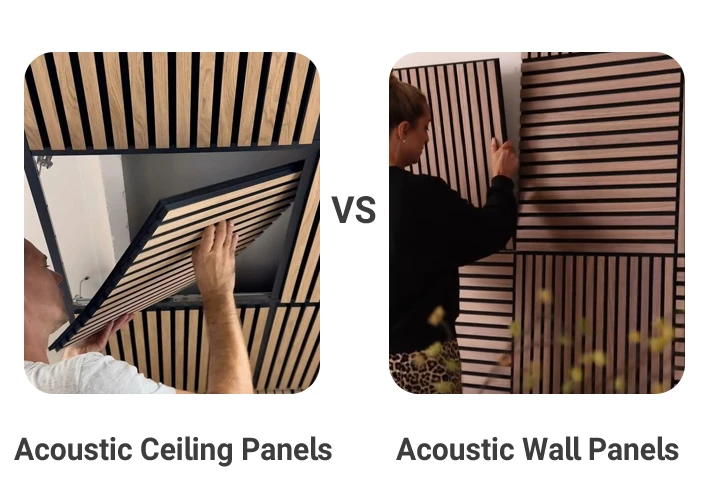
Installation Complexity – Requires suspension systems or ceiling grid integration.

Higher Cost in Some Cases – Especially for custom designs like acoustic rafts or 3D baffles.

Not Ideal for Small Rooms – Overhead treatment alone may be insufficient if walls remain untreated.

Wall Acoustic Panels – Features and Benefits

3.1 What Are Wall Acoustic Panels?

Wall-mounted acoustic panels are placed on vertical surfaces, typically at ear level where sound reflection is strongest. They can be fabric-wrapped panels, wooden slat panels, or polyester fiber boards.

3.2 Advantages of Wall Acoustic Panels

Targeted Sound Absorption
Walls are the primary reflection points. Treating them reduces flutter echoes and improves clarity.

Простая установка
Wall panels can be glued, nailed, or mounted with clips, making them more accessible.

Экономически эффективный
Lower installation costs compared to ceiling systems.

Customizable for Interiors
Panels can be designed with patterns, colors, and textures to enhance wall aesthetics.

3.3 Limitations of Wall Acoustic Panels

Limited Coverage in High Rooms – Alone, they may not treat vertical reflections from tall ceilings.

Space Occupation – Panels reduce usable wall surface for decorations, windows, or furniture.

Less Effective in Large Open Spaces – Ceiling reflections remain untreated if walls are the only focus.

Ceiling vs Wall Acoustic Panels – A Comparative Analysis

ХарактеристикаCeiling Acoustic PanelsWall Acoustic Panels
Sound Absorption CoverageBest for large, open spaces with high ceilingsBest for small/medium rooms with wall reflections
УстановкаRequires suspension/grid systemSimple mounting/glue
СтоимостьHigher (materials + labor)Lower, more budget-friendly
Aesthetic OptionsAcoustic clouds, baffles, raftsFabric, wood slats, decorative patterns
Best Use CaseOffices, gyms, airports, auditoriumsStudios, conference rooms, homes
Effectiveness in SoundproofingStrong impact on reverberation but less on blocking noiseImproves clarity but limited insulation against external noise

Ceiling Panels vs. Wall Panels: Which Is Better for Soundproofing?

Both ceiling and wall acoustic panels have their unique benefits, and choosing the right option depends on your specific needs.

  1. Effectiveness in Noise Reduction:
    • Потолочные панели: Best for reducing noise from above (e.g., from other floors) and controlling echo in large spaces.
    • Wall Panels: More effective at blocking external noise and preventing sound from escaping the room. They also excel in reducing reflections and improving speech intelligibility.
  2. Room Size and Design Considerations:
    • Потолочные панели: Ideal for large rooms with high ceilings or rooms located in multi-story buildings. They are particularly beneficial in spaces where sound bounces from above.
    • Wall Panels: Better suited for smaller rooms or spaces with more reflective surfaces. They are also useful for spaces like studios, offices, or areas that require clear communication.
  3. Aesthetic and Practical Considerations:
    • Потолочные панели: Often placed in less visible areas, ceiling panels may be less intrusive in terms of design. However, they may require professional installation, especially in high or vaulted ceilings.
    • Wall Panels: Wall panels are typically more visible and can be incorporated into the room's design with decorative fabric or custom finishes.

Which Is Better for Soundproofing?

5.1 Soundproofing vs Sound Absorption

It’s crucial to distinguish between soundproofing (blocking noise transmission) and sound absorption (reducing echo and improving clarity). Acoustic panels focus on absorption, so neither ceiling nor wall panels alone guarantee complete soundproofing. However, when strategically installed, they significantly enhance the acoustic comfort of a space.

5.2 Room Size Considerations

Small Rooms (Studios, Offices): Wall panels are usually more effective as primary treatment.

Large Rooms (Auditoriums, Restaurants): Ceiling panels or a combination of ceiling + wall treatment works best.

5.3 Noise Source Location

Overhead Noise (e.g., Footsteps from upper floors): Ceiling treatment combined with insulation is more effective.

Side Reflections (e.g., Conversations in offices): Wall panels reduce disturbances.

5.4 Budget Considerations

Low Budget: Wall panels offer better ROI.

High Budget / Premium Projects: Combination of ceiling + wall panels provides the best acoustic outcome.

Industry Applications and Case Studies

6.1 Offices and Corporate Spaces

  • Потолочные панели: Control open-office reverberation.
  • Wall Panels: Reduce meeting room echoes.
  • Best Choice: Combination, depending on layout.

6.2 Educational Institutions

  • Потолочные панели: Large classrooms and auditoriums require suspended acoustic clouds.
  • Wall Panels: Effective for smaller lecture rooms.

6.3 Restaurants and Cafés

  • Wall Panels: Add style while reducing chatter echoes.
  • Потолочные панели: For open kitchens and high ceilings.

6.4 Recording Studios & Home Theaters

  • Wall Panels: Essential for sound clarity at ear level.
  • Потолочные панели: Optional, but improve immersive experience.

6.5 Airports, Gyms, and Public Spaces

  • Потолочные панели: Most effective due to large open areas.

Cost and ROI Analysis

7.1 Average Pricing (Reference)

  • Wall Acoustic Panels: $15–$40 per m² (depending on fabric, wood, or polyester).
  • Ceiling Acoustic Panels: $30–$70 per m² (baffles, rafts, grids).

7.2 Long-Term Benefits

  • Improved comfort → Higher productivity in offices.
  • Better sound clarity → Enhanced customer satisfaction in restaurants.
  • Professional acoustics → Higher property value for hotels, studios, and commercial spaces.

Expert Recommendations

Based on the analysis, here are some guidelines:

  • For Small to Medium Rooms: Start with wall acoustic panels at ear-level reflection points.
  • For Large Open Spaces: Prioritize ceiling acoustic panels with possible wall supplementation.
  • For Professional Sound Projects: Use a hybrid approach—50% ceiling treatment + 50% wall treatment for balanced sound absorption.

Заключение

Both ceiling acoustic panels и wall acoustic panels play critical roles in soundproofing and acoustic treatment, but the right choice depends on room size, design, noise source, and budget.

  • Стеновые панели are cost-effective, easy to install, and ideal for small to medium rooms.
  • Ceiling panels are powerful in large spaces, high ceilings, and open environments.
  • Сайт best solution often combines both, creating a layered acoustic environment that maximizes comfort and performance.

As a China-based factory specializing in acoustic panels and decorative building materials, we provide customized solutions for both wall and ceiling applications, ensuring the right balance of aesthetics, cost, and performance.

👉 If you are a wholesaler, contractor, or interior designer looking for reliable acoustic panel suppliers, feel free to contact us for factory-direct pricing and tailored product solutions.

FAQ:

Can I use just ceiling panels for soundproofing?

  • While ceiling panels are effective for noise from above, wall panels are needed to block external noise and improve overall acoustics.

Do wall panels need to cover the entire wall?

  • Not necessarily. Focus on high-impact areas like reflective surfaces and points where noise enters or exits the room.

Are acoustic panels easy to install?

  • Yes, many acoustic panels come with adhesive backing for easy installation. However, professional installation may be necessary for large spaces or ceiling panels.

Позвоните нам

Отправьте нам сообщение в Whatsapp +86 189 5395 5575Мы ответим вам немедленно!

    ru_RURussian