For importers, building material wholesalers, interior contractors, hotel procurement teams, and architectural product distributors, choosing the right decorative wall panel involves more than comparing surface designs and unit prices. Buyers must also evaluate dimensional consistency, surface quality, installation requirements, packaging efficiency, production capacity, and long-term supply reliability.
1200 x 600 marble SPC wall panels offer a practical combination of decorative appeal and manageable panel dimensions. Designed to reproduce the appearance of natural marble, these panels can support contemporary interior projects while providing an alternative to conventional stone slabs and ceramic wall tiles. Their stone plastic composite construction, depending on the specific formulation and product specification, can offer moisture resistance, dimensional stability, and convenient surface maintenance.
For B2B buyers, the 1200 x 600 mm format is especially worth considering when sourcing materials for hotel bathrooms, apartment developments, commercial washrooms, reception areas, retail interiors, and renovation projects. The format can simplify handling and provide greater flexibility for layouts that require smaller modular sections rather than large-format wall sheets.
AesthEdge, a China-based decorative materials supplier, serves professional buyers looking for coordinated wall finishes and dependable product sourcing. By evaluating marble patterns, surface finishes, technical specifications, and bulk purchasing requirements together, importers can make better purchasing decisions and reduce avoidable costs throughout the supply chain.
This guide explains how to select 1200 x 600 marble SPC wall panels, compare design options, assess product specifications, plan bulk orders, and work with a Chinese factory supplier.
What Are 1200 x 600 Marble SPC Wall Panels?
SPC stands for Stone Plastic Composite. In decorative wall panel applications, SPC commonly refers to a composite material made primarily from mineral filler, such as calcium carbonate, and a polymer binder, often PVC. The exact formulation, density, surface layers, and structural design vary by manufacturer and product series.
Marble SPC wall panels combine this composite construction with a decorative surface designed to imitate natural marble. Depending on the manufacturing process, the finish may feature printed marble veining, a protective coating, a glossy or matte appearance, and additional surface textures.
The dimensions 1200 x 600 mm refer to a nominal panel size of 1.2 metres by 0.6 metres. If the actual finished dimensions are exactly 1200 x 600 mm, one panel covers:
1.2 m × 0.6 m = 0.72 m²
This makes it straightforward for contractors and procurement teams to estimate the required number of panels for a project.
For example, a wall area of 72 m² would theoretically require 100 panels before allowing for cutting, damaged pieces, pattern matching, and installation waste.
In practice, buyers should calculate quantities using the manufacturer's confirmed effective coverage, particularly if panels use overlapping joints, tongue-and-groove connections, or special edge profiles.
Key Characteristics of Marble SPC Wall Panels
Marble-inspired appearance
The decorative surface recreates the visual characteristics of marble, including flowing veins, cloud-like patterns, mineral contrasts, and natural stone colours. This allows project designers to achieve a stone-inspired aesthetic without specifying natural marble for every wall surface.
Moisture resistance
SPC panels are generally selected for their resistance to moisture in suitable interior applications. However, the waterproof properties of the panel itself do not automatically make the entire installed wall waterproof. Joints, corners, penetrations, adhesives, and substrate preparation must be considered, especially in showers and other wet areas.
Manageable panel dimensions
The 1200 x 600 mm format provides a modular option for projects that require more layout flexibility than some larger wall sheets. Panel weight and handling characteristics still depend on thickness, density, and construction.
Flexible interior applications
Marble SPC panels can be specified for feature walls, reception backgrounds, hotel interiors, commercial washrooms, retail spaces, and other decorative wall applications where the selected product is suitable for the environment.
Multiple surface finishes
Manufacturers may offer high-gloss, semi-gloss, matte, and textured finishes. The availability of particular finishes depends on the product range and should be confirmed before placing a bulk order.
Why Does the 1200 x 600 mm Format Matter to B2B Buyers?
A smaller modular panel may be easier to manoeuvre through narrow corridors, lifts, and confined renovation areas. It can also offer flexibility when a wall includes multiple openings, columns, niches, or decorative sections.
For distributors, the format may suit customers who need a versatile wall covering for smaller commercial projects or segmented interior designs.
Nevertheless, 1200 x 600 mm is not automatically the most economical format for every project. Larger panels can reduce the number of visible joints, while smaller panels may increase the number of installation connections. The best choice depends on the wall dimensions, design intent, installation system, labour costs, and local market preferences.
Before purchasing, confirm whether the quoted dimensions represent the overall panel size or the effective installed coverage.
Popular Design Options for Marble SPC Wall Panels
Design selection is a major factor in the commercial success of decorative wall panels. Importers and distributors need products that match local interior trends while remaining commercially viable across multiple projects.
AesthEdge buyers can evaluate marble-inspired designs according to colour, vein pattern, surface finish, and intended application. The following design categories provide a useful framework for product selection.
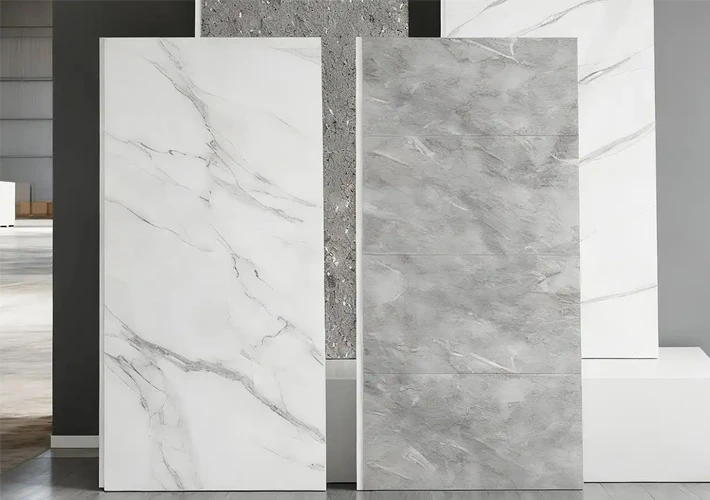
White Marble SPC Wall Panels
White marble designs remain a versatile option for modern commercial interiors. Their light backgrounds can help spaces appear brighter and visually more open, particularly when combined with neutral flooring, warm lighting, and restrained metal accents.
Common design directions include:
Carrara-inspired white with soft grey veins.
White marble with pronounced grey diagonal veining.
Warm white with beige or gold accents.
Cloud-like white patterns with subtle mineral movement.
White marble with a relatively uniform, understated appearance.
White marble SPC panels can be considered for hotel reception backgrounds, apartment common areas, retail display walls, bathroom feature walls, and office interiors.
For distributors, white marble designs can form a useful core collection because they coordinate with a broad range of furniture, lighting, and flooring styles.
When evaluating samples, check whether the printed pattern looks convincing at the actual viewing distance. Excessively repetitive veins may become noticeable across a large installation. If several panels will be installed side by side, request information about pattern variation and repeat frequency.
Grey Marble SPC Wall Panels
Grey marble finishes offer a more restrained and contemporary aesthetic. They are commonly paired with black metal details, concrete-look flooring, brushed stainless steel, and neutral furniture.
Popular design directions include light grey marble, medium grey with white veins, charcoal marble, and cool grey stone-inspired finishes.
Light grey panels can be useful in office reception areas, apartment developments, commercial washrooms, and hospitality interiors where a modern appearance is required without a strong colour statement.
Darker grey designs may work well for feature walls, restaurant interiors, entertainment spaces, and premium retail displays.
For B2B procurement, the important consideration is consistency between batches. Grey tones can appear noticeably different under warm and cool lighting, so buyers should approve physical samples under representative project lighting before confirming large quantities.
Beige and Cream Marble SPC Wall Panels
Beige and cream marble designs provide a warmer alternative to white and grey finishes. They can complement wood-look flooring, warm metallic accessories, natural colour palettes, and hospitality interiors designed to feel comfortable rather than stark.
Typical applications include hotel guestroom backgrounds, reception areas, serviced apartments, restaurant interiors, and residential developments supplied through professional building material distributors.
Beige designs can also be useful for markets where warm neutral colours remain commercially popular.
When comparing products, pay attention to the balance between the background colour and the veining. A beige panel with subtle veins creates a different impression from one with strong brown or gold markings.
For projects requiring coordinated materials, consider matching the wall panels with wood-grain decorative panels, acoustic wall finishes, doors, or cabinetry. Coordinated material sourcing can simplify sample approval and reduce inconsistencies between different suppliers.
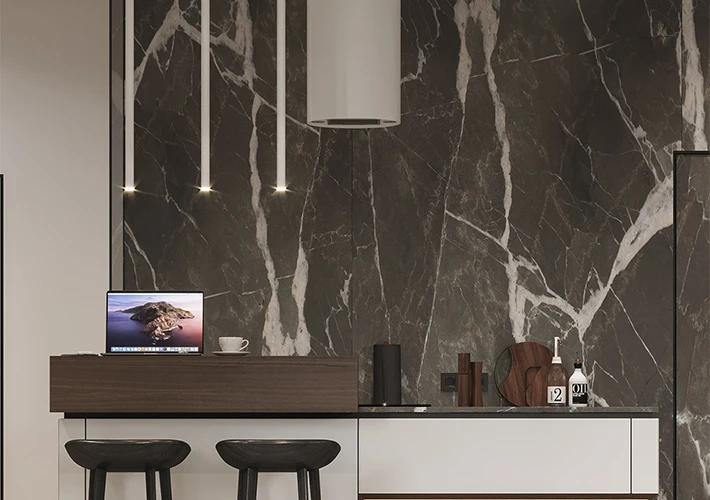
Black Marble SPC Wall Panels
Black marble designs create strong visual contrast and are often used as accent finishes rather than throughout an entire interior.
Common patterns include black backgrounds with white veins, black marble with gold accents, and dark stone designs with more subtle mineral movement.
These panels may be suitable for reception feature walls, restaurant interiors, boutique retail spaces, hotel bars, and selected decorative sections in commercial buildings.
Glossy black finishes can create a dramatic appearance, while matte black marble designs often deliver a more understated contemporary effect.
However, dark and high-gloss surfaces may make dust, fingerprints, and certain scratches more visible. Buyers should evaluate the cleaning requirements and surface durability of the specific product rather than relying solely on its appearance.
Gold-Vein and Luxury Marble Designs
Gold-vein marble designs combine a light, dark, or neutral background with metallic-looking decorative lines. They are frequently considered for projects seeking a premium visual effect without using natural stone on every wall.
Potential applications include hotel reception areas, executive offices, restaurant feature walls, showrooms, and high-end commercial interiors.
For importers, these designs may provide opportunities to build a differentiated decorative wall panel collection. Their commercial suitability depends on local design preferences, the target selling price, and the quality of the printed finish.
Before approving a gold-vein design, inspect the sample for colour accuracy, line definition, surface uniformity, and consistency across multiple panels.
Glossy vs. Matte Marble SPC Panels
The surface finish changes the appearance of a marble design and can influence maintenance requirements.
Comparison
Glossy finish
Matte finish
Visual effect
Reflective and polished
Subtle and contemporary
Light reflection
Higher
Lower
Design impression
Often associated with polished stone
Often associated with understated stone
Visible fingerprints
May be more noticeable
Often less noticeable, depending on texture
Cleaning
Depends on coating and approved cleaning method
Depends on coating and surface texture
Typical design direction
Luxury, bright, high-contrast interiors
Modern, minimalist, natural-looking interiors
Neither finish is universally superior. Glossy panels may suit a dramatic reception feature wall, while matte panels may work better in a design scheme focused on soft lighting and subdued textures.
For bulk orders, request samples of the same marble design in different finishes if both options are available. Comparing the finish under real lighting is more reliable than selecting from digital images alone.
Coordinating Marble Designs with Other Decorative Materials
Professional projects rarely use one wall finish in isolation. Marble SPC wall panels may be combined with wood-grain wall panels, acoustic panels, decorative metal trims, WPC elements, or complementary flooring.
AesthEdge's broader decorative materials offering can help buyers explore coordinated material selections for interior projects.
For example:
White marble panels can be paired with warm wood-grain finishes.
Grey marble panels can complement concrete-look flooring and black metal details.
Beige marble panels can coordinate with warm timber tones and neutral fabrics.
Black marble panels can provide contrast against lighter wall surfaces.
Gold-vein designs can be combined with restrained metallic accents.
The key is to approve the actual colours and textures together rather than selecting each material independently from online images.
For hotel and commercial projects, a coordinated sample board can help designers, contractors, and procurement teams reach decisions more efficiently.
Technical Specifications and Performance Requirements
A marble appearance alone is not sufficient to determine whether an SPC wall panel is suitable for a particular project. Buyers should compare the technical construction, dimensions, surface treatment, installation system, and performance documentation.
The following table outlines the main items that should be confirmed with a supplier.
Specification
What B2B buyers should confirm
Why it matters
Nominal size
1200 x 600 mm or the agreed custom size
Determines layout and quantity
Total thickness
Exact thickness in millimetres
Influences rigidity, weight, and installation details
Core composition
Mineral filler, polymer binder, and other declared materials
Helps establish product consistency
Surface construction
Decorative film, coating, or other surface layers
Affects appearance and maintenance
Surface finish
Glossy, matte, or textured
Determines the intended visual effect
Edge profile
Straight edge, joint profile, or other connection
Affects installation and joint appearance
Installation method
Approved adhesive or mechanical/connection system
Determines substrate and labour requirements
Dimensional tolerances
Length, width, thickness, and squareness tolerances
Helps reduce installation problems
Surface performance
Relevant abrasion, scratch, stain, or chemical resistance results
Supports product selection
Fire performance
Applicable classification and test documentation
Important for regulated commercial projects
Packaging
Carton, protective film, corner protection, pallet, or crate details
Reduces damage during transit
Documentation
Technical data sheet and applicable test reports
Supports compliance and procurement review
Exact values must be confirmed for the specific product. SPC wall panels are available in different constructions, and buyers should not assume that a specification from one manufacturer applies to another.
Thickness and Structural Requirements
Thickness is an important purchasing parameter because it can influence panel rigidity, handling, weight, joint design, and compatibility with the intended installation system.
Some SPC wall panels are produced in relatively thin formats for decorative cladding. Other designs use different thicknesses or structural constructions.
A thicker panel is not automatically better for every application. The correct choice depends on the product design, substrate condition, panel dimensions, installation method, and performance requirements.
For a hotel renovation project, for example, the purchasing team should consider both the desired surface appearance and the practical conditions of installation. A panel intended for adhesive installation over a prepared wall may have different requirements from a product using an interlocking system.
Before ordering, request the exact thickness and tolerance range rather than accepting a general description such as “standard thickness.”
Moisture Resistance and Wet-Area Suitability
SPC panels are often considered for areas where moisture resistance is important. However, buyers should distinguish between the properties of the panel material and the waterproofing performance of the complete wall assembly.
For bathroom and shower applications, the specification should address:
The intended wet-area use of the selected panel.
The approved substrate and preparation method.
The recommended adhesive or installation system.
Treatment of panel joints and perimeter edges.
Sealing around pipes, fixtures, and other penetrations.
Compatibility with the existing waterproofing system.
Cleaning products permitted by the manufacturer.
A moisture-resistant panel cannot compensate for poorly sealed joints or an unsuitable substrate.
For commercial washrooms and hotel bathrooms, confirm the complete installation details before approving the product. Where local building regulations require specific waterproofing or fire-performance measures, the installation must comply with those requirements.
Surface Durability and Cleaning
Commercial interiors may experience frequent cleaning, repeated contact, trolley impacts, and regular use by large numbers of people.
Buyers should therefore assess the performance of the actual decorative surface, not simply the rigidity of the core.
Ask the supplier for available test results relating to scratch resistance, stain resistance, chemical resistance, colour stability, and other relevant performance characteristics.
Cleaning procedures should also be documented. Strong solvents, abrasive pads, or unapproved cleaning chemicals may damage some decorative coatings.
For hotel projects, selecting a panel with a suitable cleaning procedure can help standardize maintenance across guest bathrooms, corridors, and public areas.
Fire Performance and Regulatory Documentation
Fire requirements vary by country, building type, and installation location. Hotels, public buildings, and other commercial projects may have specific requirements for wall linings and decorative materials.
Do not assume that all SPC wall panels meet the same fire classification. Ask for test reports that identify the tested product, applicable standard, classification, and any conditions of use.
A test report for a different product construction, thickness, or surface treatment may not demonstrate compliance for the product being purchased.
Importers should also check applicable chemical, indoor-air-quality, and product documentation requirements in their destination market.
Where certification is required, verify the issuing body, test method, scope, and validity of the documents before placing a large order.
Dimensional Accuracy and Batch Consistency
For 1200 x 600 marble SPC wall panels, dimensional consistency affects the appearance of joints and the efficiency of installation.
Procurement teams should ask about tolerances for width, length, thickness, squareness, and flatness. The supplier should also explain how production batches are inspected.
For decorative finishes, quality control should include colour consistency, printing alignment, surface defects, coating uniformity, and protection during packing.
A practical inspection process includes checking pre-production samples, approving the reference design, reviewing production samples where appropriate, and inspecting finished goods before shipment.
For larger projects, retaining an approved reference sample can help both parties evaluate future deliveries against the agreed standard.
Where Can 1200 x 600 Marble SPC Wall Panels Be Used?
The suitability of marble SPC wall panels depends on the product specification and installation method. Once these factors are confirmed, the 1200 x 600 mm format can support a range of commercial interior applications.
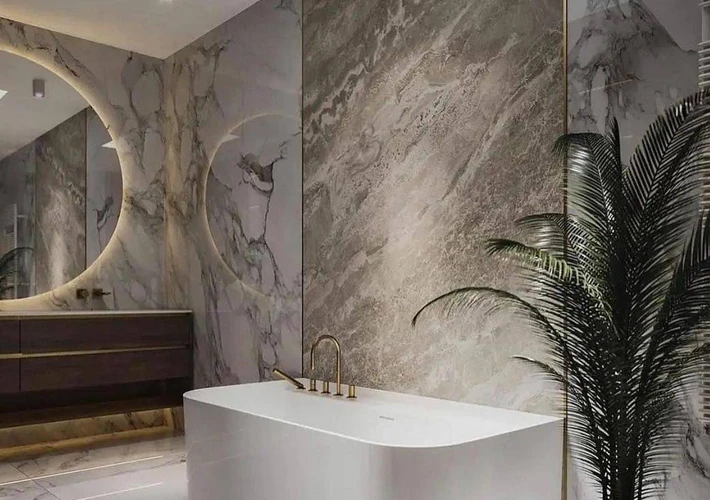
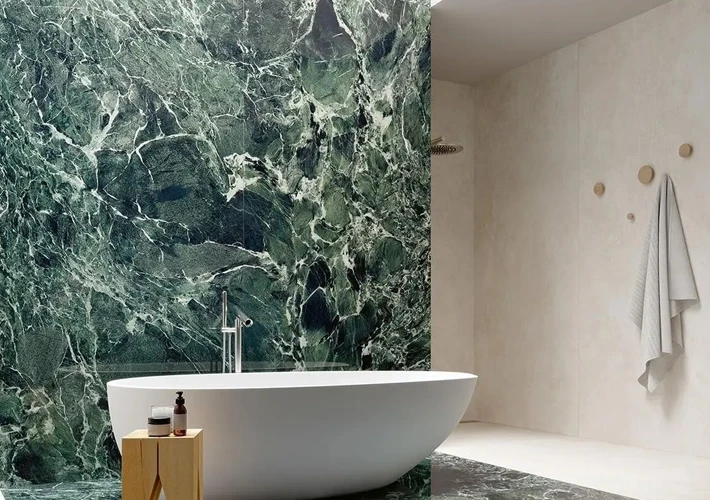
Hotel Bathrooms and Guestroom Interiors
Hotels require decorative finishes that coordinate with the overall interior design while remaining practical to maintain.
Marble SPC wall panels can be considered for selected bathroom walls, vanity backgrounds, decorative sections, and other areas approved for the specific product.
White, beige, and light grey marble designs are useful starting points for hospitality projects because they can coordinate with different sanitary ware, lighting, and furniture styles.
For shower areas, buyers must verify wet-area suitability and the complete waterproofing details. Product selection should not be based on the appearance of the panel alone.
For hotel operators and contractors, modular panel dimensions may also be helpful when planning renovation work in rooms with limited access or restricted installation windows.
Hotel Lobbies and Reception Areas
Reception backgrounds and lobby feature walls are often among the most visible surfaces in a hospitality project.
Large-scale marble patterns can create a premium appearance behind reception desks, in waiting areas, and along selected circulation routes.
White marble with grey veins may suit bright contemporary interiors, while black or gold-vein designs can create a stronger visual statement.
For these applications, buyers should pay attention to pattern continuity, lighting reflection, joint placement, and the coordination of panels with reception furniture and decorative lighting.
Where the project includes curved walls, complex corners, or integrated lighting details, the design team should confirm whether the selected panel and installation system can accommodate the required geometry.
Apartments and Residential Developments
Developers and contractors may use marble SPC panels for feature walls, entrance areas, selected bathroom surfaces, and other decorative applications.
The 1200 x 600 mm format can provide flexibility for smaller wall sections and modular designs. It may also suit projects where the construction team needs to manage material quantities across multiple apartments with different layouts.
For multi-unit developments, standardizing a limited number of designs can simplify purchasing, inventory management, and replacement stock.
A practical procurement strategy is to select a core range of neutral marble finishes and add a smaller number of premium patterns for selected units or common areas.
Offices and Commercial Interiors
Commercial offices may use marble SPC panels in reception backgrounds, meeting-room feature walls, executive areas, and selected shared spaces.
In these settings, the panels should coordinate with flooring, lighting, furniture, and other wall treatments.
The purchasing team should also consider cleaning frequency, exposure to impacts, and the maintenance requirements of the selected surface finish.
Where the wall is subject to heavy contact or other demanding conditions, compare the product's documented performance against the actual use case before specifying it.
Retail Stores, Restaurants, and Showrooms
Retail environments often require distinctive visual finishes that support brand identity and product presentation.
Marble SPC panels can be used to create display backgrounds, cashier counter walls, decorative partitions, and selected restaurant feature walls.
For multi-location retail chains, the ability to reproduce a consistent design across several orders may be particularly important.
Buyers should therefore establish a clear reference specification for colour, pattern, finish, and dimensions. Keeping approved samples and product identification records can help reduce variation between locations.
Renovation and Refurbishment Projects
Renovation contractors may select modular SPC wall panels when replacing dated decorative finishes or upgrading selected interior surfaces.
Before installation, the existing substrate must be inspected. Loose coatings, moisture damage, uneven surfaces, and other defects should be addressed according to the installation instructions.
The suitability of installing panels over an existing finish depends on the substrate, adhesive, panel system, and manufacturer guidance. It should not be assumed that every existing wall can accept a new panel directly.
For projects with strict schedules, buyers should also verify the availability of trims, adhesives, accessories, and replacement panels before work begins.
How to Calculate Quantities and Plan Bulk Orders
Bulk purchasing requires a reliable quantity calculation. Ordering too little can delay installation, while ordering too much ties up capital and creates unnecessary storage requirements.
For 1200 x 600 mm panels, the basic calculation is straightforward, provided the nominal dimensions equal the effective installed dimensions.
Step 1: Calculate the Wall Area
Measure each wall separately, including its width and height.
For a rectangular wall:
Wall area = width × height
For multiple walls, calculate each area and add them together. Subtract openings only when appropriate to the project's measurement method and installation plan.
For example, consider a commercial project with four walls, each measuring 6 metres wide and 3 metres high.
Total gross wall area:
4 × 6 m × 3 m = 72 m²
If the project contains openings, the net wall area can be calculated separately, but the final panel requirement should also reflect cutting patterns and the actual layout.
Step 2: Calculate the Theoretical Panel Quantity
Each 1200 x 600 mm panel covers:
1.2 m × 0.6 m = 0.72 m²
For a net wall area of 72 m²:
72 ÷ 0.72 = 100 panels
Therefore, 100 panels would cover the area theoretically if every panel delivered the full nominal coverage and no material were lost.
This is not yet the final order quantity.
Step 3: Add an Appropriate Waste Allowance
Additional panels may be needed for edge cuts, openings, damaged pieces, pattern alignment, and future maintenance.
The required allowance depends on the wall layout, panel pattern, installer experience, and product system.
As an illustrative planning example, a straightforward layout might use a 5% allowance, while a complex layout may require more. These figures are planning assumptions rather than universal manufacturer recommendations.
Using a 5% allowance:
100 × 1.05 = 105 panels
The project would therefore plan for approximately 105 panels, subject to a detailed cutting plan and the manufacturer's packing quantity.
For marble patterns with strong directional veins, additional material may be needed to align the visual pattern across adjacent sections.
Step 4: Confirm Effective Coverage and Packing Quantity
Before issuing a purchase order, confirm the panel's effective coverage and number of panels per carton.
For example, if the effective coverage is 0.72 m² per panel and each carton contains five panels, the theoretical coverage is:
0.72 m² × 5 = 3.6 m² per carton
If the product uses an overlapping connection or another installation system, the actual coverage may differ.
The supplier's confirmed packaging specification should be used for the final calculation.
Step 5: Check the Shipping Plan
Bulk orders should be planned around carton dimensions, total gross weight, pallet or crate requirements, and the available loading configuration.
Do not calculate container capacity solely by dividing the container's nominal volume by the panel's volume. Protective packaging, carton stacking, palletization, panel length, weight limits, and loading procedures can all affect the final quantity.
Ask the factory or freight forwarder for a packing list and loading estimate based on the exact panel size and packaging method.
Illustrative Quantity Planning Table
The following table assumes an effective coverage of 0.72 m² per panel and a 5% allowance. It is intended for preliminary planning only.
Net wall area
Theoretical panels
Panels with 5% allowance
36 m²
50
53
72 m²
100
105
144 m²
200
210
360 m²
500
525
720 m²
1,000
1,050
Round up to whole panels, then adjust the result for carton quantities, pattern matching, the installation system, and any project-specific requirements.
For large developments, a room-by-room or wall-by-wall quantity schedule is more reliable than applying a single allowance to the entire project without reviewing the layout.
How to Choose a Reliable China Marble SPC Wall Panel Supplier
For international buyers, selecting the right supplier is as important as choosing the right marble design.
A low initial quotation may not represent the lowest total purchasing cost if the product has inconsistent dimensions, poor surface quality, inadequate packaging, or an unreliable delivery schedule.
A structured supplier evaluation can help importers reduce these risks.
Evaluate Manufacturing and Supply Capabilities
Ask the supplier to explain its production arrangements, product range, quality-control process, and ability to handle repeat orders.
A professional supplier should be able to provide clear product specifications, explain the available designs, confirm lead times, and identify which requirements can be customized.
For large or recurring orders, assess whether the supplier can maintain the agreed colour, finish, dimensions, and packaging over successive batches.
If a supplier offers multiple decorative materials, coordinated sourcing may also reduce the administrative work associated with purchasing different interior finishes.
AesthEdge supports professional buyers sourcing decorative wall materials from China. Importers can discuss marble SPC wall panel requirements alongside other interior finish categories when planning a coordinated procurement package.
Confirm OEM and Customization Options
Distributors and private-label brands may require products that match their own market positioning.
Depending on the available production process and order requirements, customization may include:
Marble pattern and colour selection.
Glossy or matte surface options.
Agreed panel dimensions and thickness.
Brand labels and packaging design.
Carton markings and product identification.
Selected product or packaging details for private-label distribution.
Not every customization is available for every product, and some requests may require a minimum order quantity or additional production time.
Before confirming a customized order, request written approval of the reference design, specification, packaging artwork, and any agreed performance requirements.
Request Samples Before Bulk Production
Samples are essential when the visual quality of the marble finish is central to the project.
A useful sample review should assess:
Background colour and vein definition.
Surface gloss and texture.
Visible defects or printing inconsistencies.
Edge quality and dimensional accuracy.
Compatibility with the intended installation system.
Appearance under the project's actual lighting conditions.
For a multi-room or multi-building project, sample approval should involve the relevant designer, contractor, or project decision-maker.
Keep a labelled reference sample and record the approved product code. This helps reduce misunderstandings when the bulk order is produced or reordered later.
Review Quality Control Procedures
Ask the supplier how incoming raw materials, production batches, finished panels, and packed goods are inspected.
Relevant checks may include dimensions, thickness, surface appearance, colour consistency, flatness, packaging condition, and any product-specific performance tests.
For higher-value orders, consider arranging a pre-shipment inspection based on an agreed inspection plan.
The inspection criteria should be documented before production rather than introduced after the goods have been manufactured.
If the project requires particular test reports or certifications, specify them in the purchase agreement and confirm that they apply to the exact product being supplied.
Compare MOQ, Lead Time, and Repeat-Order Conditions
Minimum order quantity varies by product, design, customization level, and production arrangement.
Stock designs may have different purchasing conditions from customized marble patterns or private-label products.
When comparing quotations, ask suppliers to specify:
MOQ per design, colour, or specification.
Sample availability and sample costs.
Production lead time after final approval.
Packaging and palletization arrangements.
Payment terms.
Shipment terms and delivery responsibilities.
Procedures for handling shortages, damage, or non-conforming goods.
Availability of replacement stock for future projects.
A quotation that looks attractive at a low volume may not be the best option for a distributor planning regular purchases.
Conversely, committing to excessive quantities to obtain a lower unit price may create unnecessary inventory and working-capital pressure.
The right purchasing volume balances unit cost, expected sales, storage capacity, and the risk of design changes.
Bulk Pricing, Import Costs, and Total Cost of Ownership
The unit price of marble SPC wall panels is only one component of the total procurement cost.
For importers and wholesalers, a complete cost comparison should include the product, packaging, inland transport, export handling, international freight, insurance where applicable, customs duties, taxes, and destination-side charges.
The actual cost structure depends on the supplier's quotation terms and the destination country.
What Determines the Bulk Price?
Several factors can influence the quoted price of 1200 x 600 marble SPC wall panels.
Material formulation and panel construction
The core formulation, density, thickness, and surface construction can affect production costs. Products with similar appearances may use different material specifications.
Decorative design
Standard marble patterns may be more economical than customized designs requiring additional development, printing preparation, or special production arrangements.
Обработка поверхности
Different coating systems and surface finishes may have different production costs and performance characteristics.
Order quantity
Larger orders may improve production efficiency and reduce some per-unit costs. However, the actual price benefit depends on the design, production schedule, and commercial terms.
Packaging requirements
Export cartons, reinforced corner protection, pallets, crates, custom labels, and other protective measures can affect the final quotation.
Shipping configuration
Panel dimensions, gross weight, packing method, and shipment volume influence freight planning. A supplier should provide packing information that allows buyers to compare shipping estimates realistically.
How to Compare Supplier Quotations
When requesting quotations, make sure every supplier is quoting the same product specification.
Quotation item
Information to standardize
Product
Marble SPC wall panel
Размер
1200 x 600 mm, with confirmed effective coverage
Толщина
Exact agreed specification
Surface design
Approved pattern or product code
Finish
Glossy, matte, or specified texture
Quantity
Total panels and square metres
Packaging
Carton details and protection requirements
Customization
Labels, branding, or other agreed options
Lead time
Time after approval and order confirmation
Shipping terms
Named delivery location and applicable Incoterms
Documents
Technical data and required test reports
Payment
Deposit, balance, and agreed payment conditions
This approach helps prevent misleading price comparisons between products that look similar but differ in construction, packaging, or technical requirements.
Calculate the Landed Cost
A simplified landed-cost calculation is:
Landed cost = product cost + packaging and export charges + freight and insurance + import duties and taxes + destination handling and delivery costs
The exact calculation should follow the agreed shipping terms and local customs rules to avoid counting the same cost twice.
For example, if one supplier quotes a lower factory price but uses weaker packaging, the expected savings may be offset by transit damage. Similarly, a supplier offering a slightly higher unit price may provide better documentation, more consistent quality, or more suitable packaging.
For wholesalers, the final evaluation should consider both immediate purchasing costs and the likely cost of managing claims, replacement shipments, and inventory shortages.
Balance Inventory and Purchasing Efficiency
Bulk buying can help distributors maintain stock availability and negotiate production schedules, but overstocking creates its own risks.
Marble designs may change in popularity, and different production batches can sometimes show visible variations. Buyers should establish a forecast based on historical sales, project demand, and expected turnover.
For project-based procurement, coordinate the order with the construction schedule and obtain confirmation of the required delivery date.
For distribution businesses, consider separating the product range into core designs with predictable demand and special designs ordered against confirmed projects.
This strategy can help maintain availability without committing excessive capital to slow-moving patterns.
Frequently Asked Questions About 1200 x 600 Marble SPC Wall Panels
Are 1200 x 600 marble SPC wall panels waterproof?
SPC panels are generally designed to provide good resistance to moisture, but the exact performance depends on the product construction. The complete installation also depends on joints, edges, substrate preparation, and sealing.
For showers and other wet areas, confirm that the selected product is approved for the intended use and follow the manufacturer's installation and waterproofing requirements.
How much area does one 1200 x 600 mm panel cover?
If the effective installed dimensions are exactly 1200 x 600 mm, one panel covers 0.72 m².
The actual coverage should be confirmed with the supplier, especially when the panel uses an overlapping joint, tongue-and-groove connection, or another installation system.
What marble designs are available?
Common design categories include white marble, grey marble, beige marble, black marble, and gold-vein marble. Depending on the product range, buyers may also find different gloss levels, surface textures, and customized decorative patterns.
Request the latest catalogue and physical samples to confirm the available designs.
Can marble SPC wall panels be used in hotels and commercial buildings?
They can be considered for suitable interior applications, including reception areas, selected bathroom walls, guestroom features, offices, and retail interiors.
The specific panel must meet the project's requirements for installation, cleaning, fire performance, and other applicable standards. Commercial use should be evaluated according to the intended location rather than assumed for every SPC panel.
Are these panels suitable for shower walls?
Some SPC wall panel systems are designed for wet-area applications, but not every product is automatically suitable for every shower installation.
Confirm the manufacturer's approved application, substrate requirements, joint system, waterproofing details, and compatibility with the intended installation environment before specifying the product.
Can I order customized marble SPC wall panels from China?
Customization may be available depending on the manufacturer, design, production process, and order quantity. Options may include surface pattern, colour, thickness, size, packaging, and private-label details.
Ask for confirmation of the minimum order quantity, sample approval process, development time, and any additional costs before placing an order.
What is the minimum order quantity for bulk purchases?
There is no universal MOQ for all 1200 x 600 marble SPC wall panels. It varies by supplier, design, stock availability, and customization requirements.
Request a quotation based on the exact product specification and intended order quantity. For customized designs, confirm whether the MOQ applies to each individual pattern or to the combined order.
How do I estimate the required order quantity?
Calculate the net wall area, divide it by the confirmed effective coverage per panel, and add an allowance for cutting, damage, and pattern matching.
The allowance should reflect the actual layout. Complex designs or strong directional marble veins may require more material than a simple rectangular installation.
Always confirm carton quantities and packing specifications before finalizing the purchase order.
What documents should importers request?
Depending on the destination market and project, relevant documents may include a technical data sheet, product specification, applicable fire-test reports, chemical or emissions documentation, packing list, commercial invoice, and other export or compliance documents.
Requirements vary by jurisdiction and product application. Buyers should identify the applicable requirements before ordering and verify that any test reports correspond to the exact product.
Why should buyers source from AesthEdge?
AesthEdge is a China-based decorative materials supplier serving professional buyers seeking wall finishes and related interior materials.
For a marble SPC wall panel enquiry, buyers should provide the intended application, required size, thickness, preferred design, estimated quantity, destination country, and any project-specific technical requirements.
This information helps establish whether the requested specification is suitable, which designs can be offered, and what quotation and delivery arrangements are available.
Conclusion: Source Marble SPC Wall Panels with a Clear Specification
1200 x 600 marble SPC wall panels offer B2B buyers a flexible format for a variety of decorative interior projects. Their marble-inspired surfaces can support contemporary hotel, commercial, retail, and renovation designs, while the modular dimensions provide an alternative to some larger wall panel formats.
However, successful bulk purchasing requires more than choosing an attractive pattern. Buyers should confirm the actual dimensions, thickness, surface construction, installation system, wet-area suitability, relevant compliance documents, packaging, and batch consistency.
The most effective procurement process starts with a clear specification, followed by sample approval, a comparable quotation, a realistic quantity calculation, and an agreed inspection and delivery plan.
For importers, wholesalers, contractors, and project procurement teams looking for decorative wall materials from China, AesthEdge can be a starting point for discussing marble SPC wall panel requirements and coordinated interior material sourcing.
Contact AesthEdge to discuss your 1200 x 600 marble SPC wall panel requirements. Share your preferred marble design, thickness, quantity, destination market, and project application to request product information and a quotation.



 Russian
 English
 French
 Spanish
 Arabic
 Portuguese
 Japanese