PVC marble sheet wall panels are increasingly used for residential and commercial interior projects because they combine the decorative appearance of marble with the lightweight, moisture-resistant, and relatively easy-to-install properties of PVC-based materials. Compared with natural stone or ceramic tiles, PVC marble sheets can usually be cut with standard woodworking or renovation tools, making them suitable for wall renovation, bathroom interiors, hotel projects, retail spaces, offices, and other applications.
However, getting a clean and accurate cut is important. A poor cutting method can cause chipped edges, cracked surfaces, inaccurate dimensions, or damage to the decorative marble pattern. For contractors, installers, distributors, and project buyers, knowing how to cut PVC marble sheet wall panels correctly can significantly improve installation efficiency and reduce material waste.
The easiest way to cut a PVC marble sheet depends on the panel thickness and the type of cut required. For thin PVC marble sheets, a sharp utility knife can often be used for scoring and snapping. For thicker or more complex panels, a circular saw, jigsaw, or table saw equipped with an appropriate fine-tooth blade can provide faster and more precise results.
This guide explains how to cut PVC marble sheet wall panels, which tools work best, how to prepare the panel, how to make straight and curved cuts, and what installation techniques can help achieve a professional finish.
What Are PVC Marble Sheet Wall Panels?
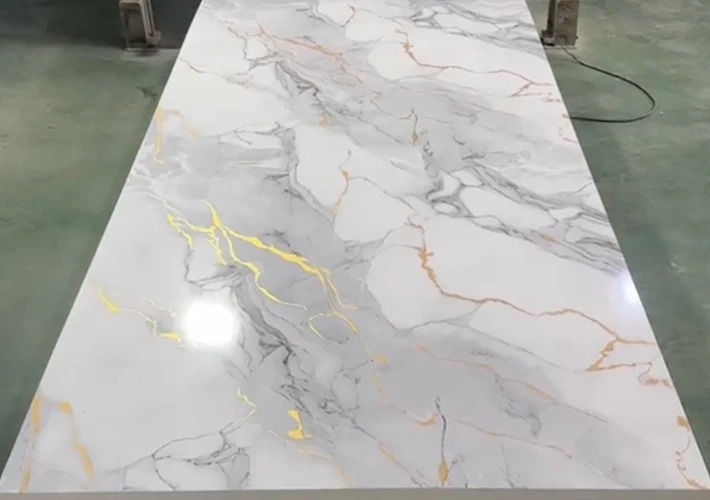
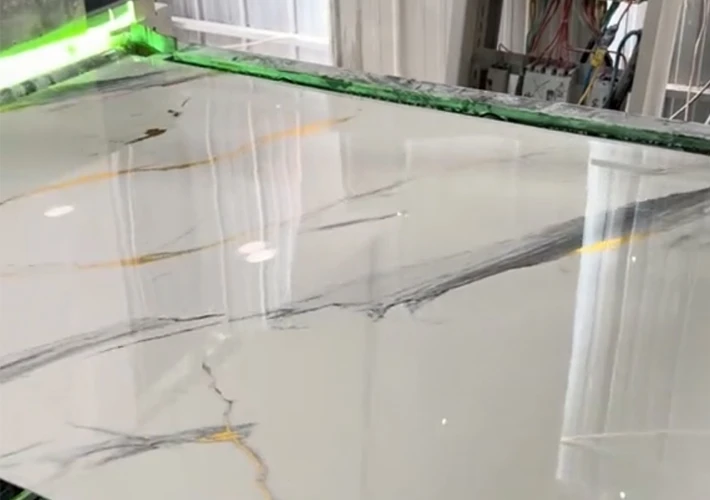
PVC marble sheet wall panels are decorative wall covering materials designed to replicate the appearance of natural marble, stone, or other premium surfaces. They are generally manufactured using a PVC-based substrate with a decorative printed layer and a protective surface treatment.
Unlike traditional marble slabs, PVC marble panels are lightweight and easier to transport, handle, cut, and install. This makes them particularly attractive for renovation projects where installation speed and material handling are important.
Depending on the manufacturer and product construction, PVC marble sheets may be available in different thicknesses, dimensions, surface finishes, colors, and marble patterns.
Typical applications include:
Bathroom walls
Shower areas
Интерьеры отелей
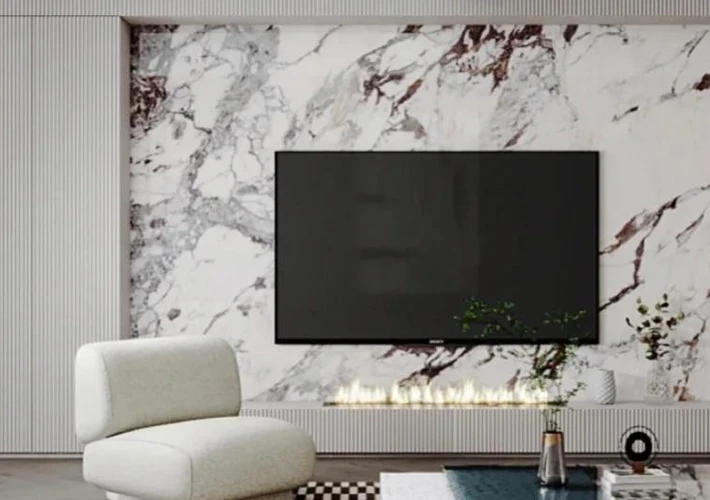
Living room feature walls
Bedroom walls
Commercial interiors
Retail stores
Office decoration
Restaurant interiors
Reception areas
Kitchen wall decoration
Renovation projects
One of the major advantages of PVC marble sheet wall panels is that they can be processed using common cutting equipment. This allows installers to create openings for electrical sockets, switches, plumbing pipes, corners, doors, windows, and other architectural details without requiring heavy stone-cutting machinery.
For B2B projects, this also means that contractors can potentially reduce installation time and labor requirements compared with heavier traditional wall materials.
What Tools Do You Need to Cut PVC Marble Sheet Wall Panels?
The correct tool depends on the thickness of the panel, the shape of the cut, and the desired finishing quality.
1. Utility Knife
A sharp utility knife is one of the simplest tools for cutting thinner PVC marble sheets.
The basic process is to measure the required size, mark the cutting line, score the surface several times, and then carefully snap the sheet along the scored line.
This method is particularly useful for:
Straight cuts
Thin panels
Small renovation projects
On-site adjustments
Quick trimming
Always use a sharp blade. A dull blade requires more force and can increase the risk of an uneven edge or damage to the decorative surface.
2. Circular Saw
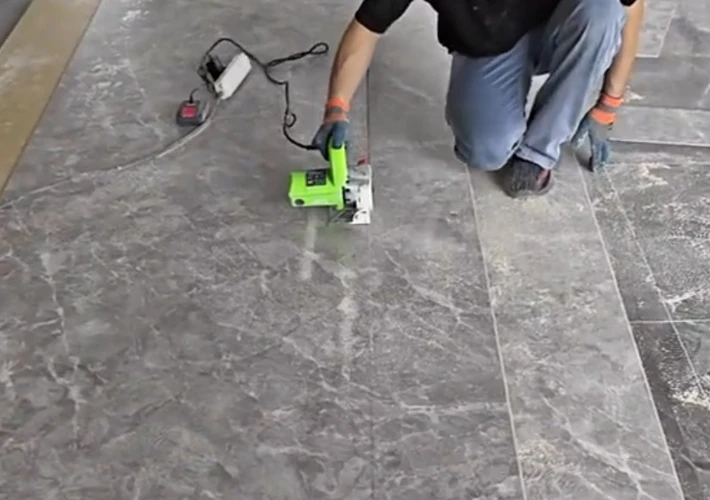
A circular saw is a practical choice when working with thicker PVC marble sheets or when a large number of panels need to be cut.
A fine-tooth blade can help produce a cleaner edge and reduce chipping. The panel should be firmly supported before cutting.
Circular saws are especially suitable for:
Long straight cuts
Large wall panels
Repetitive project work
Commercial installations
Factory or workshop processing
Installers should avoid forcing the saw through the material. Allow the blade to move through the panel at a controlled and consistent speed.
3. Jigsaw
A jigsaw is useful when the project requires curved or irregular cuts.
For example, installers may need to cut around:
Pipes
Sinks
Electrical boxes
Wall outlets
Curved architectural features
Plumbing fixtures
A fine-tooth blade designed for plastic or composite materials is generally preferable.
Because a jigsaw provides greater flexibility than a circular saw, it is often useful for detailed on-site installation work.
4. Table Saw
A table saw can be useful for professional workshops or large projects where many panels require accurate straight cuts.
A suitable fine-tooth blade can help produce consistent dimensions across multiple panels.
For commercial projects, a table saw can improve production efficiency because installers can prepare multiple panels according to a standardized cutting plan.
5. Measuring and Finishing Tools
Cutting tools are only part of the process. Accurate measuring and finishing equipment is equally important.
Useful tools include:
Измерительная лента
Straightedge
Carpenter's square
Pencil or marking pen
Clamps
Наждачная бумага
Fine file
Safety glasses
Dust mask
Work gloves
For professional installations, accurate measurement before cutting is one of the most effective ways to reduce material waste.
How to Cut PVC Marble Sheet Wall Panels Step by Step
The cutting process is relatively straightforward, but careful preparation can make a significant difference to the final result.
Step 1: Measure the Wall Area
Measure the wall carefully before cutting the panel.
Record the width and height of the installation area. If the wall contains doors, windows, sockets, pipes, or other obstacles, measure their positions from fixed reference points.
Do not rely on a single measurement. Walls are not always perfectly square, especially in renovation projects.
Step 2: Create a Cutting Plan
Before making any cuts, determine how each panel will be positioned.
For marble-effect panels, the pattern direction is especially important. Two panels may have identical dimensions but look completely different if the decorative pattern is installed in the wrong direction.
For larger projects, creating a panel layout can help reduce waste and maintain visual consistency.
A good cutting plan should consider:
Panel dimensions
Wall dimensions
Pattern direction
Joint positions
Corners
Doors and windows
Plumbing openings
Electrical outlets
Expansion or installation gaps
Step 3: Mark the Cutting Line
Place the PVC marble sheet on a stable, flat surface.
Use a straightedge and measuring tape to mark the cutting line accurately.
For visible areas, it is often useful to double-check the measurement before cutting. The old construction principle of “measure twice, cut once” is particularly relevant to decorative wall panels.
Step 4: Protect the Decorative Surface
If the panel has a glossy or printed surface, protect it during cutting.
Depending on the cutting method, masking tape can be applied along the cutting area to help reduce surface scratching and improve visibility of the cutting line.
The exact approach should be tested on a spare piece first because different surface coatings and finishes may respond differently to cutting.
Step 5: Make the Cut
For a thin panel, score the cutting line with a sharp utility knife several times. Keep the knife against the straightedge to maintain a consistent line.
Once the score is sufficiently deep, carefully bend the sheet along the cut line.
For thicker panels, use a circular saw, jigsaw, or table saw with an appropriate fine-tooth blade.
Keep the cutting movement steady and avoid excessive pressure.
Step 6: Smooth the Edge
After cutting, inspect the edge.
If there are small rough areas, use fine sandpaper or a suitable file to smooth them.
Do not aggressively sand the decorative surface. The goal is to remove small burrs and imperfections from the cut edge rather than reshape the entire panel.
Step 7: Test-Fit the Panel
Before applying adhesive, place the cut panel against the wall to check its dimensions.
Confirm that:
The panel fits the wall correctly.
Corners align properly.
Openings match sockets or pipes.
Adjacent panels line up.
The marble pattern has the desired orientation.
This test-fit step can prevent costly installation errors.
How to Make Different Types of Cuts
Different installation situations require different cutting techniques.
Straight Cuts
Straight cuts are the easiest and most common type of cut.
For thin PVC marble sheets, scoring and snapping can be sufficient. For thicker sheets or large-scale projects, a circular saw or table saw can provide greater efficiency.
Always support the panel adequately to prevent vibration during cutting.
Corner Cuts
When installing panels around inside or outside corners, accurate measurement is important.
Installers should determine whether the project requires:
Butt joints
Trim profiles
Overlapping edges
Corner molding
The preferred approach depends on the panel system and project design.
Outlet and Switch Openings
Electrical outlets require precise openings.
One practical approach is to measure the location of the outlet box from the wall edges, transfer those measurements to the panel, and create the opening using a jigsaw or suitable rotary cutting tool.
Always switch off electrical power before working around electrical installations, and follow local electrical safety requirements.
Pipe Openings
For plumbing pipes, the required opening can be marked on the panel before cutting.
A jigsaw, hole saw, or appropriate rotary tool may be used depending on the pipe diameter and panel construction.
The opening should be large enough to allow installation but not unnecessarily oversized.
Curved Cuts
Curved cuts are best handled with a jigsaw.
Mark the curve carefully and cut slowly. Trying to make a curved cut too quickly can cause the blade to move away from the intended line.
For highly visible areas, practice on a leftover piece before cutting the actual panel.
Installation Tips for PVC Marble Sheet Wall Panels
Cutting is only one part of a successful installation. Proper wall preparation and adhesive selection are equally important.
Prepare the Wall Surface
The wall should generally be clean, dry, stable, and reasonably flat.
Remove dust, loose paint, grease, and other contaminants that may reduce adhesive bonding.
If the wall has significant unevenness, repair or level the surface before installation where appropriate.
Use the Correct Adhesive
Use an adhesive recommended for the specific PVC marble panel system and substrate.
Different wall surfaces may require different adhesive solutions. Concrete, cement board, drywall, tile, and other substrates can have different bonding characteristics.
Always follow the panel manufacturer's installation recommendations.
Plan Panel Direction
Marble patterns should be considered before installation.
If the product has directional veining, maintain a consistent orientation unless the design intentionally requires a different arrangement.
For high-end hotel, retail, or residential interiors, pattern continuity can have a major impact on the finished appearance.
Leave Appropriate Gaps
Depending on the product design and installation environment, appropriate gaps may be required around edges, corners, or other building elements.
Do not assume that every PVC marble sheet should be installed tightly against every surface. Follow the manufacturer's technical installation guidelines for the specific product.
Seal Wet Areas Correctly
PVC marble panels are frequently selected for bathrooms and other moisture-prone environments.
However, water resistance of the panel does not automatically mean that every installation detail is waterproof.
Corners, joints, penetrations, and connections with other surfaces should be properly sealed according to the installation system.
For shower areas and other wet environments, the entire wall assembly should be designed to meet applicable waterproofing requirements.
Common Cutting Mistakes to Avoid
Even though PVC marble sheet wall panels are relatively easy to cut, several common mistakes can affect the final result.
Cutting Without Measuring
The most expensive cutting mistake is often simply cutting the wrong size.
Always verify the dimensions before making the final cut.
Using a Dull Blade
A dull blade may require excessive pressure and can produce rough or inconsistent cuts.
Replace or sharpen cutting blades when necessary.
Cutting Too Quickly
Fast cutting does not necessarily mean efficient cutting.
Excessive speed can increase vibration, surface damage, or inaccurate edges.
A controlled cutting speed generally produces better results.
Not Supporting the Panel
Large panels can flex significantly if they are not properly supported.
Insufficient support can affect cutting accuracy and may damage the panel.
Ignoring Pattern Direction
PVC marble sheets are decorative products. A technically accurate installation can still look poor if the marble pattern is incorrectly oriented.
Always check the pattern before cutting and installation.
Installing Without Test-Fitting
Even accurate measurements can be affected by irregular walls.
Test-fit each complicated piece before applying adhesive whenever possible.
PVC Marble Sheet Cutting for Commercial and B2B Projects
For contractors, distributors, interior designers, and project buyers, cutting performance can have a direct impact on installation efficiency and project costs.
When purchasing PVC marble sheet wall panels in bulk, buyers should consider more than just appearance and price.
Important factors include:
Panel dimensions
Panel thickness
Substrate construction
Surface finish
Decorative printing quality
Protective coating
Weight per panel
Cutting performance
Installation method
Packaging
MOQ
Production capacity
Lead time
OEM/ODM availability
Export experience
Quality control
A professional manufacturer should be able to provide product specifications, installation recommendations, samples, packaging information, and technical support.
For large projects, it is also useful to test cutting and installation methods before placing a full production order.
At AesthEdge, we focus on supplying decorative wall materials for international B2B customers, including importers, wholesalers, distributors, contractors, and project buyers. Our PVC marble sheet wall panels can be developed in different designs, sizes, and specifications according to project requirements.
For OEM and private-label projects, buyers can also discuss product customization, packaging, surface designs, and other requirements with the manufacturer before mass production.
Frequently Asked Questions About Cutting PVC Marble Sheet Wall Panels
Can PVC marble sheets be cut with a utility knife?
Yes. Thin PVC marble sheets can often be scored with a sharp utility knife and then snapped along the score line. Thicker panels may require a circular saw, jigsaw, or other appropriate cutting equipment.
What is the best saw blade for PVC marble panels?
A fine-tooth blade designed for plastic, PVC, or similar composite materials is generally a suitable starting point. The exact blade should match the panel construction and manufacturer's recommendations.
Can PVC marble panels be cut with a jigsaw?
Yes. A jigsaw is particularly useful for curved, irregular, or detailed cuts such as openings for pipes, sockets, and fixtures.
Do PVC marble sheets crack when cut?
PVC marble sheets are generally easier to cut than natural stone, but improper tools, excessive force, poor support, or incorrect cutting techniques can still damage the panel. Testing the cutting method on a scrap piece is recommended.
Can PVC marble panels be cut on site?
Yes. One of the advantages of PVC marble wall panels is that they can generally be processed on site using commonly available cutting tools. This makes them convenient for renovation and customized installation projects.
Do PVC marble sheets require special installation equipment?
In many cases, no specialized stone-cutting machinery is required. Basic measuring tools, cutting equipment, adhesive, sealing materials, and installation accessories may be sufficient, depending on the specific product and project.
Are PVC marble sheets suitable for bathrooms?
Many PVC marble sheet products are designed for moisture-prone interior applications, including bathrooms. However, suitability depends on the specific product construction and installation system. Wet-area joints, corners, penetrations, and the underlying wall assembly must be properly waterproofed and sealed.
How can I reduce waste when cutting PVC marble sheets?
Create a cutting layout before starting, measure carefully, consider the pattern direction, and use offcuts for smaller areas where appropriate. For large B2B projects, a professional cutting plan can significantly reduce material waste.
Заключение
Cutting PVC marble sheet wall panels does not have to be complicated. With the right tools, accurate measurements, proper panel support, and a suitable cutting method, installers can achieve clean and professional results.
For thin sheets, a sharp utility knife may be sufficient for straight cuts. For thicker panels and high-volume projects, circular saws and table saws can improve efficiency, while jigsaws are particularly useful for curved and irregular openings.
The most important principles are simple: measure carefully, choose the right tool, support the panel properly, cut at a controlled speed, protect the decorative surface, and test-fit the panel before installation.
For B2B buyers, however, cutting performance is only one part of choosing the right supplier. Product construction, surface quality, dimensional consistency, packaging, customization capabilities, production capacity, and export experience should also be considered.
As a China-based manufacturer and supplier of decorative interior materials, AesthEdge provides PVC marble sheet wall panels for distributors, wholesalers, contractors, and international interior projects. If you are sourcing PVC marble wall panels for a residential development, hotel project, commercial renovation, or wholesale distribution business, contact AesthEdge to discuss product specifications, designs, samples, OEM/ODM requirements, and bulk orders.



 Russian
  English
  French
  Spanish
  Arabic
  Portuguese
  Japanese