Caramel-vein PVC marble sheets are increasingly used for hotel interiors, bathroom walls, commercial spaces, feature walls, reception areas, and other decorative applications where a marble appearance is required without the weight and installation complexity of natural stone. One question that often comes up during product selection is simple but important: Are caramel-vein PVC marble sheets UV-protected?
The answer depends on the sheet construction, surface coating, printing technology, and intended application. Many high-quality PVC marble sheets can be manufactured with a UV-resistant or UV-cured surface layer, but not every PVC marble sheet automatically provides the same level of UV protection. Buyers should therefore evaluate the complete product structure rather than assuming that a marble-look decorative sheet is UV resistant simply because it has a glossy or protective surface.
For B2B buyers, importers, hotel contractors, interior designers, distributors, and project developers, understanding UV protection is particularly important when purchasing caramel-vein PVC marble sheets in bulk. The right specification can help maintain the decorative appearance of the panels and reduce premature surface aging.
As a China factory specializing in decorative wall materials, AesthEdge supplies PVC marble sheets with customizable surface finishes, colors, patterns, sizes, and project specifications for commercial and hospitality applications.
What Are Caramel-Vein PVC Marble Sheets?
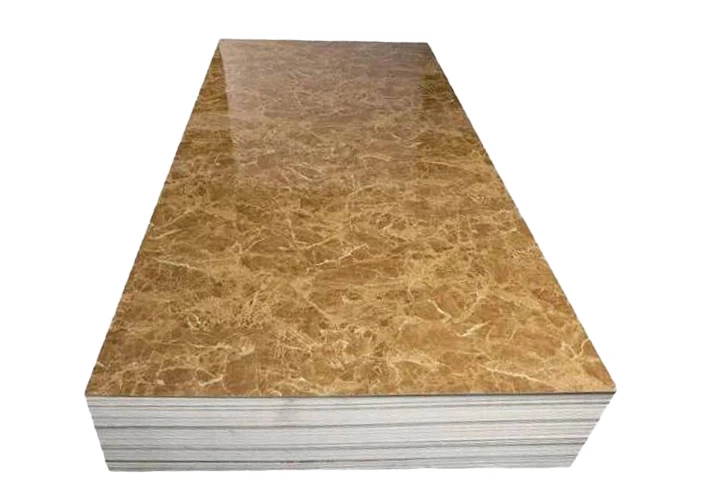
Caramel-vein PVC marble sheets are decorative wall panels designed to reproduce the visual characteristics of natural marble. Instead of using a solid stone slab, the product normally combines a PVC-based substrate with a decorative printed layer and a protective surface treatment.
The term "caramel vein" describes a marble pattern containing warm beige, cream, brown, amber, or golden vein elements. Compared with pure white marble designs, caramel-vein patterns can create a warmer and more luxurious visual effect.
This makes them particularly suitable for:
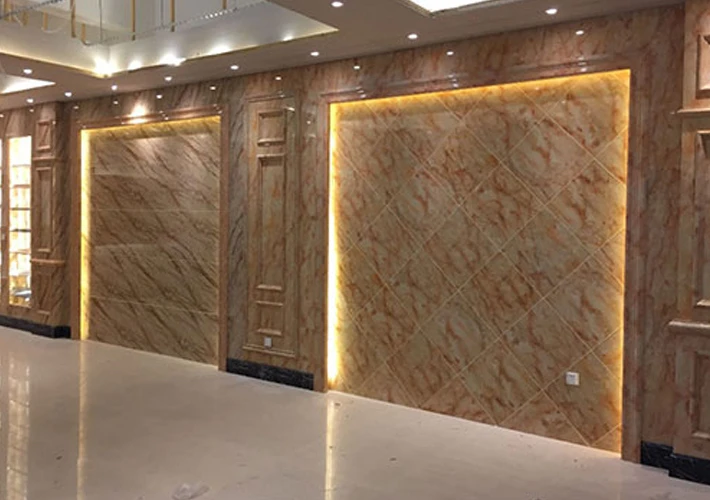
Hotel feature walls
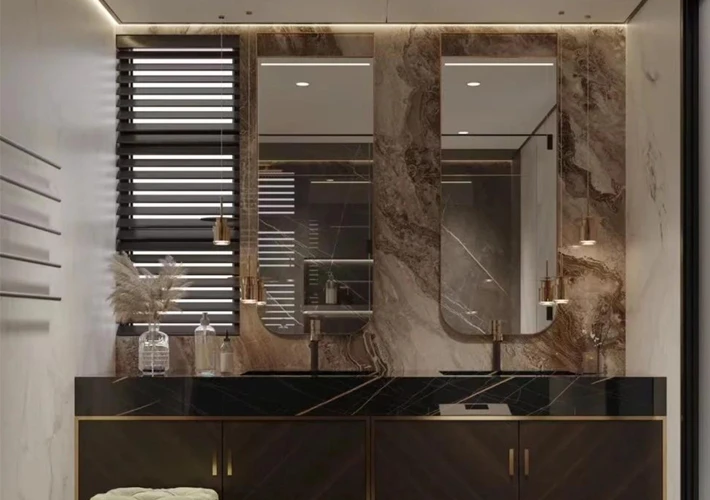
Hotel bathroom walls
Lobby decoration
Reception counters and backgrounds
Restaurant interiors
Espaços comerciais
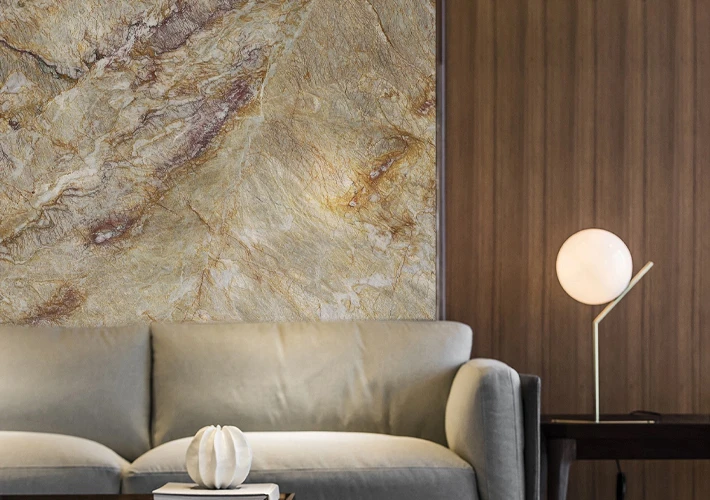
Residential feature walls
Commercial corridors
Apartment interiors
Office reception areas
Decorative columns
Interior ceiling or wall applications
A typical PVC marble sheet may consist of several functional layers:
PVC substrate
Decorative marble-pattern layer
Protective coating or film
Surface finish
Depending on the manufacturer's technology, the surface may receive a UV-cured coating or another protective treatment designed to improve resistance to surface wear, stains, moisture, and light exposure.
For this reason, the question of UV protection should always be connected to the actual product construction.
Are Caramel-Vein PVC Marble Sheets UV-Protected?
They can be, but UV protection is specification-dependent.
A quality PVC marble sheet intended for long-term decorative use can be manufactured with a UV-resistant surface layer. UV protection is particularly relevant because ultraviolet radiation can gradually affect decorative surfaces.
When a decorative panel is exposed to strong sunlight for extended periods, several changes may occur:
Color fading
Reduced color consistency
Yellowing of certain materials
Surface aging
Loss of visual depth
Degradation of the protective layer
A UV-protected PVC marble sheet is designed to slow these processes.
However, there is an important distinction between UV-cured coating e UV resistance.
A UV-cured coating refers to a coating that is cured using ultraviolet light during manufacturing. It does not automatically mean that the finished product is highly resistant to prolonged outdoor UV exposure.
This distinction is especially important for B2B buyers.
When evaluating caramel-vein PVC marble sheets, buyers should ask the manufacturer:
Does the product have a UV-resistant surface?
What type of coating is used?
Is the UV protection intended for indoor or outdoor exposure?
What testing has been conducted?
How long can the decorative surface maintain its appearance under the specified conditions?
Is the product recommended for direct sunlight?
Are there different surface options for high-light environments?
These questions provide much more useful information than simply asking whether the sheet is "UV protected."
How Does UV Protection Work on PVC Marble Sheets?
UV protection is generally associated with the surface construction of the decorative panel.
The printed marble pattern provides the visual effect, while the protective layer helps isolate the decorative surface from environmental factors.
For example, a PVC marble sheet may use a protective surface designed to improve resistance against:
Ultraviolet radiation
Surface abrasion
Moisture
Staining
Cleaning
Everyday contact
In a commercial hotel environment, this protection can be useful because walls may be exposed to artificial lighting, sunlight through windows, cleaning chemicals, fingerprints, and repeated maintenance.
The protective surface also helps preserve the visual characteristics of the caramel-vein design.
This is particularly important for marble-look products.
Natural marble has naturally occurring variations, but a printed PVC marble panel depends heavily on the quality and stability of its decorative layer. If the printed pattern changes significantly because of prolonged exposure, the visual consistency of the project can be affected.
UV Protection Is More Than a Glossy Surface
One common misunderstanding is that a glossy PVC marble sheet is automatically UV resistant.
Glossiness and UV resistance are different characteristics.
A glossy surface describes the appearance and reflectivity of the finish. UV resistance describes how effectively the material and coating withstand ultraviolet exposure.
A manufacturer can offer:
High-gloss finish
Matte finish
Stone-textured finish
High-definition marble print
UV-resistant surface
These characteristics can be combined, but they should not be treated as interchangeable.
For professional procurement, the buyer should request the technical specification rather than relying only on product photographs.
Why Is UV Protection Important for Caramel-Vein Marble Patterns?
The decorative pattern is one of the primary reasons buyers choose caramel-vein PVC marble sheets.
Caramel tones are often used to create a warm, elegant appearance. The combination of cream backgrounds and brown or golden veins can resemble luxury natural stone while providing a more lightweight and installation-friendly alternative.
If the decorative layer experiences excessive fading, the original design can become less visually consistent.
For example, imagine a hotel lobby featuring caramel-vein panels across a large wall. If some panels are exposed to direct sunlight while others remain in shaded areas, differences in exposure can potentially result in differences in appearance over time.
This is why UV performance should be considered at the project planning stage.
Hotel Applications
Hotels frequently use decorative wall panels in:
Guest rooms
Corridors
Casas de banho
Elevator areas
Reception areas
Restaurantes
Spa facilities
Meeting rooms
Many of these applications are indoors, meaning UV exposure may be relatively limited.
However, large glass windows, skylights, curtain-wall facades, and entrance areas can significantly increase sunlight exposure.
For projects with strong natural light, specifying a suitable UV-resistant surface can provide an additional level of protection.
Commercial Interiors
Retail stores, restaurants, offices, and showrooms may also contain large glass areas.
A decorative panel positioned close to a window can receive substantially more light than a panel installed in an enclosed corridor.
Therefore, the same PVC marble product may experience different environmental conditions depending on where it is installed.
What Affects the UV Resistance of PVC Marble Sheets?
UV performance is not determined by one factor alone. Several parts of the product and application environment can influence the final result.
1. Surface Coating
The protective coating is one of the most important factors.
A suitable coating can help protect the decorative layer from environmental exposure and everyday wear.
For premium decorative panels, manufacturers may offer different coating technologies depending on the target application and finish.
2. Printing Technology
The quality and stability of the decorative printing layer also matter.
A high-definition marble design requires accurate color reproduction and stable printing performance.
For caramel-vein designs, color consistency is particularly important because subtle differences in beige, cream, brown, and gold tones can change the overall appearance.
3. PVC Substrate
The substrate provides the structural foundation of the panel.
Its formulation, thickness, density, and manufacturing process can influence the overall durability of the product.
A high-quality surface treatment cannot compensate for every weakness in the underlying material.
4. Installation Environment
Indoor and outdoor exposure are very different.
An interior wall located away from windows may experience relatively low UV exposure, while an exterior-facing application can receive direct sunlight for many hours per day.
Therefore, the intended installation environment must be communicated to the manufacturer before ordering.
5. Geographic Location
UV intensity differs between regions.
Projects in tropical and subtropical markets may experience strong sunlight and high solar radiation. Similarly, buildings at high elevations can experience greater UV exposure.
For international B2B projects, the supplier should know the destination market and intended application.
Can Caramel-Vein PVC Marble Sheets Be Used Near Windows?
Yes, they can be used in many interior applications near windows, but the exact specification should be selected according to the level of sunlight exposure.
For example, a caramel-vein PVC marble sheet installed on a hotel bathroom wall with a small window may experience moderate indirect sunlight.
A feature wall directly opposite a floor-to-ceiling glass facade is a different situation.
The second application may require greater attention to UV resistance and long-term color stability.
Before purchasing, buyers should evaluate:
Distance from the window: Panels positioned directly beside or opposite large windows generally receive more sunlight.
Orientation: The direction of the building can affect the amount of sunlight received.
Glass type: Certain architectural glass systems can reduce UV transmission, although the actual performance depends on the glass specification.
Curtains and blinds: These can significantly reduce direct solar exposure.
Project location: Climate and solar conditions vary considerably by region.
For large commercial projects, requesting samples and discussing the installation environment with the factory is a practical step before confirming a bulk order.
AesthEdge PVC Marble Sheets for B2B Projects
AesthEdge is a China factory supplying decorative wall materials for international B2B customers.
Our PVC marble sheet range can be developed for applications where buyers require a combination of marble aesthetics, lightweight construction, easy installation, and practical surface performance.
The caramel-vein design is one example of how decorative printing can reproduce warm luxury-stone aesthetics for commercial interiors.
Custom Marble Designs
For distributors, contractors, and project buyers, standard colors are not always sufficient.
AesthEdge can support customization according to project requirements, including:
Marble patterns
Vein styles
Base colors
Surface finishes
Panel dimensions
Espessura
Embalagem
Private-label requirements
This can be particularly useful when a hotel group, interior design company, or distributor requires a specific decorative collection.
Surface Options
Depending on the project, buyers can discuss different surface effects, such as:
High gloss
Matte
Stone texture
Smooth finish
Marble-look finish
The appropriate surface should be selected according to both appearance and intended application.
Lightweight Alternative to Natural Stone
One of the key advantages of PVC marble sheets is their lower weight compared with traditional stone slabs.
For large interior wall projects, reducing material weight can simplify:
Transportation
Handling
Cutting
Instalação
Project logistics
This can be valuable for hotel renovation projects where installation speed and labor efficiency are important.
How Should Buyers Test UV Protection Before Bulk Ordering?
For B2B purchasing, a product claim should ideally be supported by technical information and testing.
Instead of purchasing a large quantity immediately, buyers can follow a structured evaluation process.
Step 1: Request a Product Sample
A physical sample allows the buyer to evaluate:
Cor
Surface gloss
Marble vein definition
Espessura
Flatness
Edge quality
Surface feel
It also allows the buyer to compare different finishes.
Step 2: Request Technical Information
Ask the manufacturer for available information regarding:
Surface coating
UV resistance
Product structure
Espessura
Dimensões
Weight
Application recommendations
Cleaning resistance
Installation method
Not every project requires the same technical specification.
Step 3: Explain the Installation Environment
Tell the supplier whether the panel will be installed:
In a bathroom
In a hotel lobby
Near windows
In a commercial corridor
In a restaurant
In a residential interior
In a semi-outdoor area
In a location exposed to direct sunlight
The supplier can then recommend the appropriate product construction.
Step 4: Ask About Testing
If UV performance is an important purchasing criterion, buyers should ask what testing is available and what test conditions were used.
This is more useful than relying on a general statement such as "UV resistant."
Testing duration, exposure conditions, test standards, and evaluation criteria should be considered when comparing products from different manufacturers.
Indoor vs. Outdoor UV Requirements
A critical point for buyers is that indoor UV resistance and outdoor UV resistance should not automatically be treated as equivalent.
Interior decorative panels are generally designed for indoor environments.
Even when an interior wall receives sunlight through windows, the exposure is usually different from an exterior wall exposed directly to weather.
Therefore, a PVC marble sheet designed primarily for interior decoration should not automatically be specified for exterior cladding.
If a project requires exterior installation, the buyer should clearly communicate this requirement to the manufacturer and request a product specifically designed and tested for that environment.
For most caramel-vein PVC marble applications, the strongest market opportunity is in interior decorative projects, especially hospitality, commercial, retail, residential, and renovation applications.
Caramel-Vein PVC Marble Sheets vs. Natural Marble
UV protection is only one factor when comparing PVC marble sheets with natural stone.
The two materials have fundamentally different structures.
Caraterística
Folha de mármore em PVC
Natural Marble
Main material
PVC-based composite
Natural stone
Weight
Relatively lightweight
Heavy
Pattern
Printed/design-controlled
Natural variation
Instalação
Generally easier
Mais exigente
Cutting
Relatively convenient
Requires stone-processing equipment
Transportation
Lower material weight
Higher weight
Design consistency
Elevado
Natural variation
Custom patterns
Highly flexible
Limited by natural stone availability
Surface options
Multiple decorative finishes
Depends on stone and processing
Project use
Interior decorative applications
Interior and architectural applications
This does not mean one material universally replaces the other.
Instead, they serve different project requirements.
PVC marble sheets are particularly attractive when buyers prioritize decorative appearance, lightweight construction, installation efficiency, design consistency, and cost control.
Natural marble may be selected when the project specifically requires genuine natural stone.
Buying Guide: How to Choose UV-Protected PVC Marble Sheets
For importers and project contractors, the following checklist can simplify purchasing decisions.
1. Confirm the Application
Clearly identify whether the panels will be used indoors, near windows, in high-light areas, or outdoors.
2. Confirm the Surface Structure
Ask whether the product includes a protective coating or film and what function it provides.
3. Ask About UV Performance
Do not simply ask whether the product is "UV protected."
Ask:
What type of UV protection is provided, and what testing or technical data supports the claim?
4. Compare Samples
A sample allows buyers to evaluate the actual color, finish, texture, and decorative effect.
5. Confirm Dimensions
Project requirements may vary significantly. Confirm the panel width, length, thickness, and tolerance before production.
6. Confirm Packaging
For international shipping, proper packaging is important.
The supplier should consider:
Panel protection
Edge protection
Moisture protection
Carton or pallet requirements
Container loading
Labeling
7. Confirm Customization
For private-label distributors or hotel projects, confirm whether the manufacturer can customize patterns, colors, sizes, packaging, and other specifications.
8. Evaluate Factory Capability
A reliable supplier should be able to provide clear information about production, quality control, samples, customization, packaging, and export experience.
For B2B buyers, working directly with a China factory can also simplify communication between product development and mass production.
Perguntas frequentes
Are caramel-vein PVC marble sheets UV resistant?
They can be manufactured with UV-resistant surface protection, but UV performance depends on the specific product construction, coating, and intended application. Buyers should confirm the specification with the manufacturer.
Does UV protection prevent all fading?
No material should automatically be assumed to be completely unaffected by ultraviolet exposure. UV-resistant construction is intended to improve resistance to degradation, but performance depends on exposure intensity, duration, product formulation, and environmental conditions.
Can PVC marble sheets be installed near windows?
Yes. Many interior PVC marble sheets can be used near windows, provided the product is appropriate for the expected level of sunlight exposure. For strong direct sunlight, buyers should discuss UV requirements with the manufacturer before ordering.
Are PVC marble sheets suitable for hotel bathrooms?
PVC marble sheets can be used for many interior bathroom wall applications, subject to the product's waterproof and installation specifications. Proper substrate preparation, sealing, and installation are still important.
Can AesthEdge customize caramel-vein marble patterns?
Yes. AesthEdge can discuss customized marble patterns, colors, surface finishes, dimensions, and other specifications for B2B projects.
Are PVC marble sheets suitable for outdoor walls?
Not every PVC marble sheet is designed for exterior use. Outdoor projects require a product specifically engineered and tested for weather and UV exposure. Buyers should communicate the application clearly before purchasing.
What should I ask a PVC marble sheet supplier?
At minimum, ask about the product structure, surface coating, UV performance, dimensions, thickness, application range, available testing, customization options, MOQ, packaging, lead time, and quality control process.
Final Takeaway
Are caramel-vein PVC marble sheets UV-protected?
The most accurate answer is: many can be manufactured with UV-resistant surface protection, but UV performance depends on the specific PVC marble sheet construction and specification.
For interior projects, particularly hotels, bathrooms, lobbies, restaurants, retail spaces, and feature walls, a suitable protective surface can help maintain the appearance of the decorative marble pattern over time. For areas receiving strong direct sunlight, buyers should pay closer attention to the UV-resistance specification and request appropriate technical information from the manufacturer.
For B2B buyers, the most important point is not simply whether a product is labeled "UV protected." Instead, evaluate the surface coating, decorative layer, substrate, intended application, exposure conditions, testing information, and manufacturer capability as a complete product system.
AesthEdge is a China factory supplying PVC marble sheets and other decorative wall materials for international importers, distributors, contractors, designers, and commercial projects. We can support customized marble patterns, colors, sizes, surface finishes, packaging, and project-specific requirements.
If you are sourcing caramel-vein PVC marble sheets for a hotel, commercial interior, bathroom, retail project, or distribution business, contact AesthEdge for product specifications, amostras, customization options, and a factory quotation.



 Portuguese
  English
  French
  Russian
  Spanish
  Arabic
  Japanese