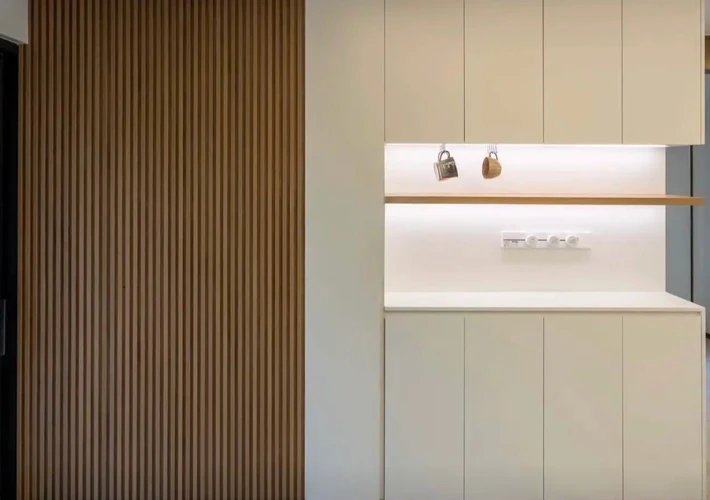
As global demand for fast-installation, eco-friendly, and visually appealing wall materials continues to rise, WPC wall panels (Wood-Plastic Composite wall panels) have become one of the most in-demand products in the decoration and construction industry. From residential interiors to large commercial projects, WPC panels offer unmatched benefits in waterproofing, durability, low maintenance, and modern aesthetics.
However, for B2B buyers—especially importers, distributors, and contractors—the most common question before purchasing is: “What is the standard size of a WPC wall panel?”
Understanding standard sizes helps you:
This comprehensive guide answers all your questions about WPC wall panel sizes, variations, thickness options, application-specific dimensions, and how to choose the best size for your project or wholesale business.
The most common standard size of a WPC wall panel is 170–195 mm in width, 9–12 mm in thickness, and 2700 mm or 3000 mm in length.
This specification is widely used in residential, commercial, and hospitality projects because it provides the best balance between installation efficiency, material strength, shipping cost, and market acceptance.
However, WPC wall panel sizes vary depending on the application. For example, 3D fluted panels are usually narrower and thicker for decorative feature walls, while outdoor WPC cladding panels require larger thicknesses for weather resistance.
For importers and distributors, selecting the right panel size is essential because it directly affects container loading efficiency, project installation costs, and local market demand.
For wholesalers and project engineers, WPC wall panel size determines cost, performance, installation efficiency, and market acceptance. Below are key reasons why size matters:
Wide and long panels cover more area in less time, reducing labor cost.
Panel length determines whether cargo fits into:
Optimized panel sizes reduce wasted space and maximize profit.
Corner lines, skirting, and U-channels must match the panel thickness and design.
Different countries prefer different WPC wall panel sizes:
Understanding the preference of your target market improves sales.

Although WPC wall panels come in many specifications, the global market has widely accepted a few standard sizes.
Below is the most recognized standard specification:
This specification dominates 70%+ of the global WPC wall panel market.
To help buyers quickly understand the differences between popular WPC wall panel sizes, the following table summarizes the most common specifications:
| WPC Wall Panel Type | Width | Espessura | Comprimento | Recommended Application |
|---|---|---|---|---|
| Standard Flat WPC Panel | 170–195 mm | 9–12 mm | 2700/3000 mm | Homes, apartments, offices |
| 3D Fluted WPC Panel | 140–240 mm | 12–20 mm | 2700/3000 mm | Feature walls, hotels, restaurants |
| Wide Decorative WPC Panel | 250–600 mm | 3–12 mm | 2700–3000 mm | Large walls and ceilings |
| Outdoor WPC Cladding Panel | 150–300 mm | 21–30 mm | 2900/3000 mm | Exterior walls and outdoor structures |
This comparison helps wholesalers, contractors, and designers select the right WPC wall panel profile based on project requirements.
Below is a detailed breakdown of all major WPC wall panel size categories in the global market.
I divide them into four major types:
1.Conventional Flat WPC Wall Panel
2.3D Fluted / Slat WPC Wall Panel
3.Wide Decorative WPC Wall Panel
4.Heavy-Duty Outdoor WPC Cladding Panels
These are the most widely used for interior decoration.
| Width (mm) | Thickness (mm) | Length (mm) | Aplicação |
|---|---|---|---|
| 170 mm | 9/10/12 mm | 2700 / 3000 | Interior walls & ceilings |
| 180 mm | 9/10/12 mm | 2700 / 3000 | Hotel rooms, apartments |
| 195 mm | 9/12 mm | 2700 / 3000 | Residential renovations |
| 200 mm | 12 mm | 2700 / 3000 | Offices & restaurants |
These panels provide simple, modern aesthetics and are favored in:
Increasingly popular in 2024–2025, especially in the U.S., Korea, Japan, and Europe.
| Width (mm) | Thickness (mm) | Length (mm) | Type |
|---|---|---|---|
| 140 mm | 12–15 mm | 2700 / 3000 | Single-line slat |
| 150 mm | 12–15 mm | 2700 / 3000 | 3D fluted |
| 160 mm | 15 mm | 2700 / 3000 | Deep grooves |
| 170 mm | 15 mm | 2700 / 3000 | Acoustic-look design |
| 200 mm | 18 mm | 2700 / 2900 / 3000 | Luxury slat panel |
| 240 mm | 20 mm | 2800 / 3000 | Premium interior panels |
These panels simulate real wood much more effectively due to:
Used for hotels, shopping malls, reception halls, and commercial projects.
| Width (mm) | Thickness (mm) | Comprimento | Aplicação |
|---|---|---|---|
| 250 mm | 9–12 mm | 2700–3000 mm | Large interiors |
| 300 mm | 12 mm | 2700–3000 mm | Feature walls |
| 400 mm | 3–6 mm | 2700 mm | Ceiling panels |
| 600 mm | 3–9 mm | 2700 mm | Large ceiling/wall coverage |
Vantagens:

While not strictly “interior wall panels,” many buyers classify outdoor WPC cladding under the WPC wall panel category.
| Width (mm) | Thickness (mm) | Length (mm) |
|---|---|---|
| 150 mm | 21–25 mm | 2900 / 3000 |
| 160 mm | 21–25 mm | 2900 / 3000 |
| 200 mm | 21–26 mm | 2900 / 3000 |
| 219 mm | 26 mm | 2900 / 3000 |
| 300 mm | 25–30 mm | 2900 / 3000 |
Used for:
Different installation environments require different dimensions.
Below is a complete guide:
170–195 mm width
9–12 mm espessura
Reason:
200–300 mm wide decorative WPC panels
Why:
3D slat panels: 160–200 mm widths
They enhance:
Widely used in the U.S., Australia, UK, Korea, and Singapore.
Fluted panels 160–240 mm wide
Vantagens:

Small thickness 3–6 mm
Width: 300–600 mm
Ceiling demands:
150–219 mm width
Thickness 21–26 mm
Why:
WPC wall panel preferences are different across global markets. Importers should consider local design trends, installation habits, and project requirements before selecting sizes.
European buyers commonly prefer:
These sizes are popular for apartments, hotels, offices, and renovation projects.
The US and Canadian markets show strong demand for:
Middle Eastern projects often prefer:
Common requirements include:
Choosing the right size based on regional demand can help distributors improve product acceptance and reduce inventory risks.
As a wholesaler or project contractor, choosing the right size affects profit, installation performance, and market competitiveness.
Here is the professional selection guide:
| Scenario | Recommended Size |
|---|---|
| Home renovation | 170–195 mm |
| Hotels & offices | 200–300 mm |
| Commercial spaces | 160–240 mm fluted |
| Ceilings | 300–600 mm |
| Exterior cladding | 150–219 mm |
Wider panels = Faster installation
Narrow panels = More detail and premium appearance
Most factories prefer producing 2.7 m or 3 m lengths because:
A 40HQ can load:
➤ 5000–7000 sqm of WPC wall panel
(depending on size & density)
Although a 40HQ container can normally load approximately 5000–7000 sqm of WPC wall panels, the final quantity depends on several factors:
For example:
Professional WPC manufacturers usually provide container loading plans before production to help buyers calculate landed costs accurately.
To ensure proper installation, panels must match accessories like:
Typical accessory size range:
Choosing the wrong size can cause installation gaps or loose fitting.

Not all manufacturers offer the same WPC wall panel size.
Why?
Each panel size requires a specific extrusion mold.
Some factories focus on high-end fluted panels; others on economic flat panels.
Advanced factories offer larger profiles, deeper grooves, and custom sizes.
Panel density affects weight and thickness.
You should always request:
before bulk ordering.
The most popular WPC wall panel size worldwide is 170–195 mm width, 9–12 mm thickness, and 2700–3000 mm length. This size offers a good balance between cost, installation efficiency, and market demand.
Yes. Professional WPC wall panel manufacturers can customize panel width, thickness, length, surface texture, colors, and packaging according to customer requirements.
For hotels and commercial projects, 200–300 mm wide decorative WPC panels are commonly preferred because they create fewer joints and improve installation speed.
Outdoor WPC cladding usually requires 21–30 mm thickness to achieve better resistance against weather conditions, impact, and long-term outdoor use.
Yes. Panel dimensions directly affect container utilization. Optimized sizes help reduce shipping costs per square meter and improve import profitability.
This size offers the best balance of:
But other sizes—from 3D slats, wide decorative panels, to outdoor cladding—are also widely used depending on application and market needs.
Working directly with a factory provides several advantages for global buyers:
A reliable manufacturer can help buyers develop products that match local market requirements and project specifications.
If you need:
We can provide OEM/ODM, full-range WPC wall panel solutions, and export services to over 80+ countries.
📩 Contactar-nos to get the latest catalog, price list, and free sample box.