The global demand for Painéis de parede WPC continues to grow as architects, contractors, interior designers, developers, distributors, and homeowners look for decorative wall materials that combine attractive appearance, durability, easy installation, and relatively low maintenance. As we move through 2026, understanding WPC wall panel price trends is becoming increasingly important for B2B buyers who need to control project budgets while maintaining consistent product quality.
For importers and distributors, WPC wall panel prices are not determined by one factor. Raw material costs, panel density, thickness, design, surface treatment, production technology, order quantity, packaging, transportation, and customization can all influence the final quotation.
Current 2026 market references show considerable variation between different WPC products. Standard indoor WPC wall panels may be positioned around the lower end of the wholesale market, while fluted, 3D, premium solid, co-extruded, and customized products can command significantly higher prices. Published 2026 industry pricing guides also indicate that factory-direct Chinese pricing is generally more competitive than retail or distributor pricing because buyers can purchase closer to the source.
For businesses planning procurement in 2026, the key question is therefore not simply “What is the price of WPC wall panels?” but rather:
What factors will influence WPC wall panel prices in 2026, and how can buyers obtain the best balance between price, quality, and long-term value?
WPC Wall Panel Price Overview for 2026
There is no universal WPC wall panel price because the product category covers a wide range of structures and finishes.
As a general B2B reference, 2026 wholesale and factory-direct pricing can be broadly divided into several levels:
WPC Wall Panel Type
Typical 2026 Wholesale Reference
Aplicações comuns
Basic indoor WPC panels
About $8–$15/m²
Residential interiors, offices
Decorative fluted/3D WPC panels
About $12–$25/m²
Feature walls, hotels, restaurants
Premium solid WPC panels
About $20–$35/m²
Commercial and high-end interiors
Outdoor/co-extruded WPC cladding
About $20–$45/m²
Exterior walls, balconies, facades
Customized/OEM WPC panels
$30+/m² depending on specifications
Branded and project applications
These figures should be treated as market reference ranges rather than fixed quotations. Actual prices can change according to material formulation, dimensions, surface technology, order quantity, packaging, delivery terms, and destination.
For example, a basic hollow indoor panel and a premium co-extruded exterior panel may both be called “WPC wall panels,” but their material consumption, production process, weather resistance, surface protection, and expected service conditions are very different.
A 2026 pricing guide from Aesthedge similarly places standard indoor products at the lower end of the market and premium decorative and outdoor products at higher price levels.
This means B2B buyers should compare equivalent specifications, rather than comparing only the price per square meter.
What Is Driving WPC Wall Panel Prices in 2026?
Several major factors are expected to influence WPC wall panel prices throughout 2026.
1. Raw Material Costs
Raw materials remain one of the most important components of WPC manufacturing costs.
WPC generally combines wood fiber or wood powder with polymers and various additives. Depending on the product, manufacturers may also use stabilizers, pigments, coupling agents, UV-resistant materials, and protective surface layers.
The exact formulation affects:
Material cost
Panel density
Mechanical strength
Dimensional stability
Moisture resistance
Surface quality
Color stability
Durabilidade
Lower-priced products may use economical material formulations, while premium products normally require more controlled raw materials and additional performance-enhancing additives.
Therefore, two panels with the same apparent dimensions may have substantially different production costs.
For B2B buyers, asking for the material composition, panel weight, density, and structure can provide a much clearer picture of why two suppliers quote different prices.
2. Panel Thickness and Weight
Thickness is another direct factor affecting WPC wall panel prices.
A thicker or denser panel generally requires more raw materials and can increase transportation costs. However, thicker does not automatically mean better for every application.
For interior decorative projects, lightweight panels may be sufficient. For demanding commercial environments or exterior applications, buyers may need stronger structures with higher density and better environmental resistance.
In other words, buyers should avoid paying for specifications that their project does not require.
The objective should be to select the right specification for the application, rather than simply choosing the thickest panel available.
3. Surface Finish and Design
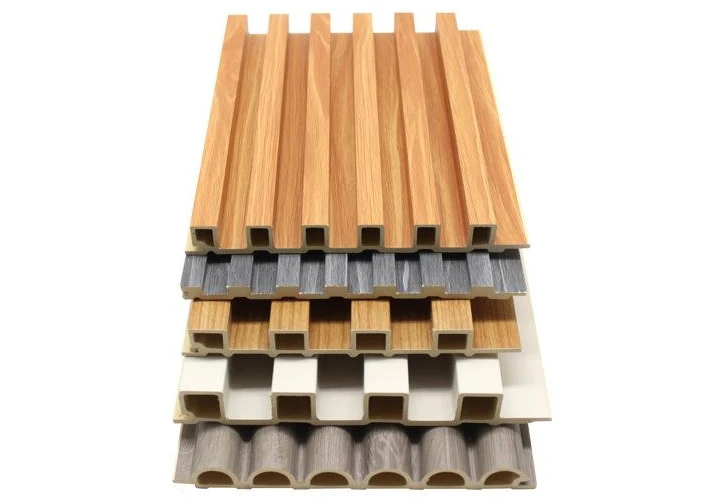
WPC wall panels are increasingly available in sophisticated decorative designs, including:
Fluted surfaces
3D patterns
Wood-grain textures
Embossed finishes
Matte surfaces
Two-tone designs
Stone-inspired textures
Customized patterns
More complicated surface treatments normally require additional production processes, specialized rollers, molds, finishing equipment, or slower production speeds.
A 2026 industry pricing guide notes that realistic wood grain, 3D embossing, and other complicated surface treatments can significantly increase manufacturing costs compared with simple finishes.
For distributors, this creates an opportunity to build multiple product tiers. Standard designs can target price-sensitive customers, while premium designs can be positioned as higher-margin decorative products.
4. Production Technology
Manufacturing technology also affects price.
Modern WPC extrusion lines can provide more consistent dimensions, surface quality, color, density, and production efficiency. Advanced production equipment may require greater initial investment, but it can improve consistency and reduce production variation.
For international B2B buyers, consistent production is particularly important.
A supplier may offer a very low first-order price, but if the color, dimensions, surface finish, or density vary significantly between batches, the buyer may face higher costs later through complaints, replacements, or project delays.
Therefore, the lowest factory quotation is not necessarily the lowest total procurement cost.
Will WPC Wall Panel Prices Increase or Decrease in 2026?
The short answer is: different WPC wall panel categories may experience different price trends.
It is difficult to say that all WPC wall panels will become either more expensive or cheaper in 2026.
Several factors can work in opposite directions.
Factors That Can Push Prices Higher
Raw material fluctuations, energy costs, labor expenses, international freight, exchange-rate changes, and higher-quality surface technologies can increase manufacturing and export costs.
Premium products are particularly sensitive to these factors because they use more materials and involve more complicated production processes.
Factors That Can Keep Prices Competitive
At the same time, China's mature WPC supply chain, large-scale manufacturing capacity, production automation, and competition between manufacturers can help keep factory pricing competitive.
Large-volume production can also reduce average manufacturing costs.
For buyers placing container-level orders, suppliers may be able to offer more competitive pricing than they can for small trial orders.
This is one reason why 2026 should not be viewed simply as a year of “rising” or “falling” WPC prices. Instead, buyers should expect price differentiation between product grades and specifications.
Basic products may remain highly competitive, while premium products can maintain higher prices because of their additional performance and design value.
How Order Quantity Affects WPC Wall Panel Price
For B2B buyers, order quantity is one of the easiest ways to influence the final unit price.
A factory needs to account for:
Raw material purchasing
Production setup
Mold or tooling
Labor
Embalagem
Quality inspection
Warehouse handling
Container loading
When the order is small, these costs are distributed across fewer square meters.
When the order becomes larger, production becomes more efficient and the fixed costs can be distributed across a larger quantity.
For example, a supplier may offer different pricing levels for:
Sample orders
Small wholesale orders
500–1,000 m² orders
1,000–5,000 m² orders
Full-container orders
Long-term annual purchasing
Some 2026 industry references indicate that larger wholesale quantities can achieve meaningful unit-price reductions compared with small orders.
However, buyers should not order excessive inventory simply to obtain a lower unit price.
A better strategy is to calculate:
Annual demand + storage cost + working capital + transportation cost + unit price
This gives a more realistic picture of the actual purchasing cost.
China WPC Wall Panel Price Trends and Factory-Direct Sourcing
China remains one of the major manufacturing bases for WPC wall panels, supported by an established supply chain for polymers, wood fiber, additives, extrusion equipment, packaging, and international logistics.
For international buyers, purchasing directly from a Chinese factory can reduce the number of intermediaries between manufacturer and end customer.
A 2026 Aesthedge guide notes that Chinese factory-direct pricing is generally more competitive for bulk buyers because of large-scale production, established supply chains, and direct OEM services.
Factory-direct sourcing can provide several advantages:
Competitive wholesale pricing
OEM/ODM customization
Private-label opportunities
Flexible colors and surface designs
Production-scale purchasing
Direct technical communication
Export packaging
Container loading optimization
However, buyers should still evaluate suppliers carefully.
A low quotation should not be accepted without checking the actual product specifications.
When comparing Chinese WPC wall panel suppliers, buyers should request:
Product specifications
Material composition
Panel weight
Thickness and dimensions
Surface treatment information
Available colors
Sample approval
MOQ
Production lead time
Packaging details
Export experience
Relevant test reports or certifications
Aesthedge focuses on supplying decorative WPC wall panels to international B2B customers and provides factory-direct solutions for distributors, contractors, importers, and project buyers.
Hidden Costs That B2B Buyers Should Consider
The quoted WPC wall panel price is not always the final project cost.
International buyers should calculate the complete landed cost.
Embalagem
Export packaging may include cartons, protective film, pallets, corner protection, waterproof wrapping, or customized packaging.
Premium packaging can increase the initial price but may reduce the risk of damage during international transportation.
Freight
Sea freight can significantly influence the landed price of imported wall panels.
The final shipping cost depends on:
Destination port
Container type
Shipping route
Freight market conditions
Cargo volume
Container utilization
For this reason, buyers should compare suppliers based on FOB, CFR, CIF, or other agreed trade terms, rather than comparing factory prices without considering logistics.
Accessories
Wall panel projects may also require:
Corner trims
End caps
Connecting profiles
Adhesive
Fasteners
Installation accessories
If these are purchased separately, they should be included in the project budget.
Instalação
Installation costs vary significantly by country and project complexity.
A panel with a slightly higher purchase price may still be more economical if it is faster and easier to install.
Therefore, professional buyers should evaluate the total installed cost, not just the panel price.
How to Get the Best WPC Wall Panel Price in 2026
Getting the best price does not mean finding the cheapest quotation.
A better procurement strategy is to maximize the relationship between price, quality, durability, and supply reliability.
Compare Like-for-Like Specifications
When requesting quotations from multiple suppliers, provide the same:
Espessura
Width
Comprimento
Panel structure
Surface finish
Cor
Embalagem
Quantity
Delivery terms
Otherwise, price comparisons may be misleading.
Purchase Directly from the Factory
For distributors and importers, direct factory sourcing can reduce intermediary margins.
It also makes communication easier when you need customized colors, packaging, dimensions, or private-label products.
Consolidate Orders
If your business has stable demand, consolidating purchases can improve production efficiency and shipping utilization.
Instead of placing many small orders, buyers can discuss a regular supply schedule with the manufacturer.
Select Standard Designs When Possible
Customized molds and unusual specifications can increase costs, especially for smaller orders.
If the project does not require a unique design, selecting a manufacturer's standard product can often provide a more competitive price.
Request Samples Before Bulk Orders
A sample allows buyers to evaluate:
Surface appearance
Color consistency
Panel structure
Weight
Dimensões
Installation method
Overall finish
This is especially important when sourcing from overseas.
A low unit price is not useful if the finished product does not meet the project requirements.
WPC Wall Panel Price Outlook for the Rest of 2026
The WPC wall panel market is likely to remain highly competitive throughout 2026.
Rather than expecting one universal price direction, buyers should watch several variables:
Raw materials → manufacturing costs → product specifications → order quantity → logistics → landed cost
Standard indoor decorative WPC panels are likely to remain highly competitive because multiple manufacturers can produce similar products.
Meanwhile, premium fluted panels, 3D decorative panels, co-extruded products, customized designs, and higher-performance exterior wall systems can maintain higher price levels.
This creates opportunities for distributors.
Instead of competing only on low prices, businesses can build product portfolios around different market segments:
Economy WPC wall panels
Mid-range decorative panels
Premium 3D and fluted panels
Commercial-grade products
Outdoor WPC cladding
OEM/private-label products
This approach allows distributors to serve multiple customer groups while maintaining different profit margins.
Frequently Asked Questions About WPC Wall Panel Prices in 2026
What is the average WPC wall panel price in 2026?
There is no single global price. As a broad wholesale reference, standard indoor WPC panels may be around $8–$15/m², decorative fluted and 3D panels around $12–$25/m², while premium and outdoor products can reach $20–$45/m² or more depending on specifications.
Are WPC wall panels cheaper when purchased directly from China?
For bulk buyers, factory-direct Chinese sourcing can often provide more competitive pricing because buyers can purchase closer to the manufacturing source and may obtain volume-based pricing.
However, freight, duties, packaging, and local expenses must be included when calculating the final landed cost.
Why do two WPC wall panel suppliers have different prices?
The difference may come from material composition, density, thickness, weight, surface treatment, production technology, packaging, order quantity, certifications, or trade terms.
A lower price does not necessarily mean the supplier is more efficient; it may indicate a different product specification.
Will WPC wall panel prices fall in 2026?
Prices may remain competitive in some standard product categories, but there is no guarantee of a universal decline. Raw materials, energy, freight, exchange rates, and product specifications can all affect quotations.
How can importers reduce WPC wall panel purchasing costs?
Importers can consider factory-direct sourcing, larger consolidated orders, standard product designs, optimized container loading, and long-term supply agreements.
Most importantly, compare suppliers based on total landed cost and product performance rather than unit price alone.
Is a higher-priced WPC wall panel worth buying?
It depends on the application. For simple interior decoration, an economical panel may provide sufficient performance. For hotels, commercial projects, high-traffic areas, or exterior applications, investing in better material quality and surface protection may provide better long-term value.
Conclusão
WPC wall panel price trends for 2026 are being shaped by raw material costs, manufacturing efficiency, product design, panel specifications, order volume, and global logistics. Buyers should therefore avoid treating WPC wall panels as a single standardized product with one fixed price.
For B2B importers, distributors, contractors, and project developers, the most effective purchasing strategy is to compare equivalent specifications, evaluate the total landed cost, verify product quality, and establish a reliable relationship with a capable manufacturer.
China remains an attractive sourcing market because of its mature manufacturing supply chain, production capacity, customization capabilities, and export infrastructure.
As a China-based WPC wall panel manufacturer, Aesthedge provides factory-direct WPC wall panel solutions for global buyers, including decorative, fluted, 3D, and customized products. We support OEM/ODM requirements and can provide product samples and quotations according to your project specifications.
Looking for competitive WPC wall panel prices in 2026? Contact Aesthedge for the latest factory quotation, product catalog, samples, and customized B2B solutions.
Aesthedge — Your Reliable WPC Wall Panel Manufacturer in China.



 Portuguese
  English
  French
  Russian
  Spanish
  Arabic
  Japanese